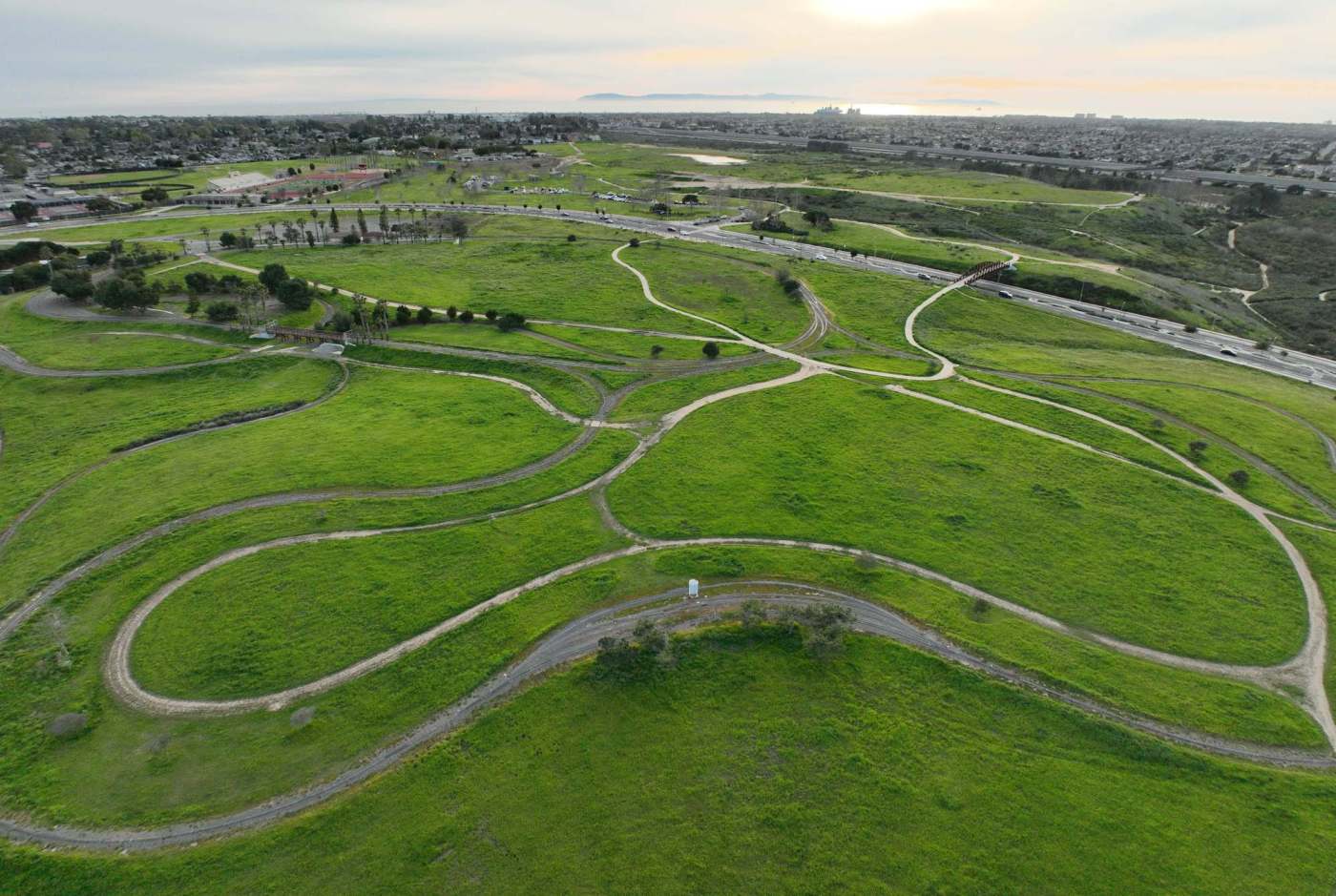
A long-awaited update to the Fairview Park master plan will determine the fate of a model aircraft flying field that has divided the Costa Mesa community.
At its Nov. 18 hearing on a draft of the revised plan, the City Council considered arguments for moving the airfield outside the park to mitigate harm to endangered wildlife and resources.
The draft of the new master plan also directs the city to enhance trails and public amenities, restore sensitive habitats and preserve tribal sites, among other recommendations.
The 208-acre Fairview Park is a biodiversity hotspot containing five habitat ecosystems with rare and endangered plants and animals, including the burrowing owl, Crotch’s bumble bee and coastal gnatcatcher. It’s also home to two Native American Nationally Registered Historic Sites and several vernal pools, wetlands where two federally protected species of fairy shrimp reside.
The pools were restored in the 1990s and are now among the last in the county. It’s the fly field’s proximity to these ecosystems that triggered calls from community groups and state agencies to move it elsewhere.
The Department of Fish and Wildlife said in a Sep. 25 letter to city staff that the fly field’s “continued operation in the vernal pool complex is in direct conflict with the preservation and management of this important park feature.”
“Master Plan Update, as stated in the publicly available technical documents, cannot be achieved while private citizens continue to take it upon themselves to grade and mow these sensitive habitats to maintain fly field runways on City property,” the agency wrote.
Debate over the location of the airfield and the impact of flying activities on the park’s biological resources has been ongoing for years. Members of Harbor Soaring Society, a remote-controlled airplane club, have flown gliders and model planes at the park since the early 1960s.
Mat Garcia, president of Harbor Soaring Society, said the airfield is already situated in the “best possible location” and called the biological analysis behind the draft master plan “incomplete, inaccurate and misleading.” He said a 1995 report commissioned by the city has already concluded that flying activities can coexist with protected wildlife species and pose minimal threat to the park’s ecosystems.
“Nothing in the last 30 years contradicts that,” Garcia said.
Kohl Crecelius, chair of the Fairview Park Steering Committee, supported finding an alternative site for the fly field and said the park’s resources could be better spent on projects that served more Costa Mesa residents, such as developing a nature play area or native plant growing opportunities.
“The real cost of this process is being paid by the rest of our city’s residents who are not getting the park they deserve,” Crecelius said at the Nov. 18 meeting. “So much of our time and energy is being put into the issue of the fly field.”
Costa Mesa bought the sprawling Fairview Park from the county in 1986. An original master plan was adopted in 1997 and modified in 2008. Though mostly covered in natural open space, the park also contains 7 miles of trails, 13 acres of manicured landscaping and a miniature railroad that offers rides to kids, as well as the model aircraft flying field.
City staff noted that the recent hearing on Fairview Park generated a record number of public comments, 155 of which opposed the draft plan, and 29 in favor. The other 11 provided general comments about the plan.
The City Council will continue discussing the draft master plan and the future of the fly field on Dec. 2. A final plan is expected to be adopted early next year.