Second of two parts
Every death inside Southern California’s county jails is put under a microscope. Every cause of death is analyzed, every lapse in services or employee misstep is scrutinized.
The question then becomes: What, if anything, can be done in Los Angeles, Orange, Riverside and San Bernardino counties to ensure jail time doesn’t become a death sentence?
Today, sheriff’s administrators install high-tech scanners to curb drugs and use electronic systems to track safety checks. They review suicides and other deaths to identify shortcomings. They hire more mental health and medical professionals to meet the needs of an increasingly sick and mentally disturbed jail population. They make Narcan accessible in every unit to counter the effects of fentanyl.
Yet, death still comes — the latest on Dec. 9 in L.A. County, the 479th death behind bars in the four-county region since January 2020.
Also see: Check out our searchable database with details on every in-custody death since January 2020
Sometimes, negligence is to blame. Sometimes, it’s inadequate care. And sometimes, as jail administrators say, it is because death in the jail, like death outside the jail, is inevitable.
“Just because you die in jail, and this is the key, it does not mean you died just because you were in jail,” Riverside County Sheriff Chad Bianco said. “You just died while you were in jail. It’s silly to actually think that jail is somehow supposed to miraculously stop people from dying.”
Critics of that view, however, say it’s important to note that many jail deaths can be prevented. The state attorney general noted that a third of the deaths in L.A. County jails were deemed preventable, and an Orange County grand jury in 2018 estimated that nearly half of in-custody deaths could have been prevented with better medical care.
“You’re confining them. No one else can help them but you,” said civil rights attorney Annee Della Donna. “You’re responsible for them. You have an absolute duty to make sure no one harms them or they don’t harm themselves. You have a duty to provide medical care.”
The populations within the jails are more complex than ever, yet many are still housed in facilities built half a century or more ago. At least 50% of inmates now suffer from mental illness — and that number is expected to grow.
Despite the challenges, jail officials in the four counties insist reforms are underway.
Part 1: Death behind bars: Who’s dying in Southern California county jails — and why
Mental, physical health
Consent decrees, settlement agreements and grand jury recommendations have pushed sheriff’s and health care officials in the four counties to make substantial changes to jail operations to better care for inmates.
Illness, overdoses and suicides are the three leading causes of death in all four counties.
In 2018, an Orange County grand jury concluded that 44% of the jail deaths there may have been preventable but for delays in medical care. Officials took heed.
“It’s a different culture in the jails. It’s very collaborative,” said Joanne Lim, director of correctional health services in Orange County. “We’ve changed so much of our policies, our protocol, and the Sheriff’s Department has been so proactive in supporting us.”
Inmates undergoing booking now are interviewed away from other inmates, giving them the privacy needed to talk candidly about their health conditions, Lim said.

Voluntary urine tests are taken during the booking process to determine recent drug use. Voluntary blood tests also are offered to spot sexually transmitted diseases as well as hepatitis and other sicknesses, Lim said.
Intake screening in the four counties now is more comprehensive to better determine if a new inmate is mentally ill, capable of self-harm or in need of medical attention.
More questions are asked to find out whether an inmate has suicidal tendencies. Are they a pillar of the community? Is this their first time in jail? Do they have a history of depression? Are there any past suicide attempts?
Their answers — and the flags they raise — determine whether they go on to another layer of screenings by a specially trained mental health professional.
The process also determines where the inmate will be housed, how closely they will be watched and whether they will be seen by a psychiatrist for medication.
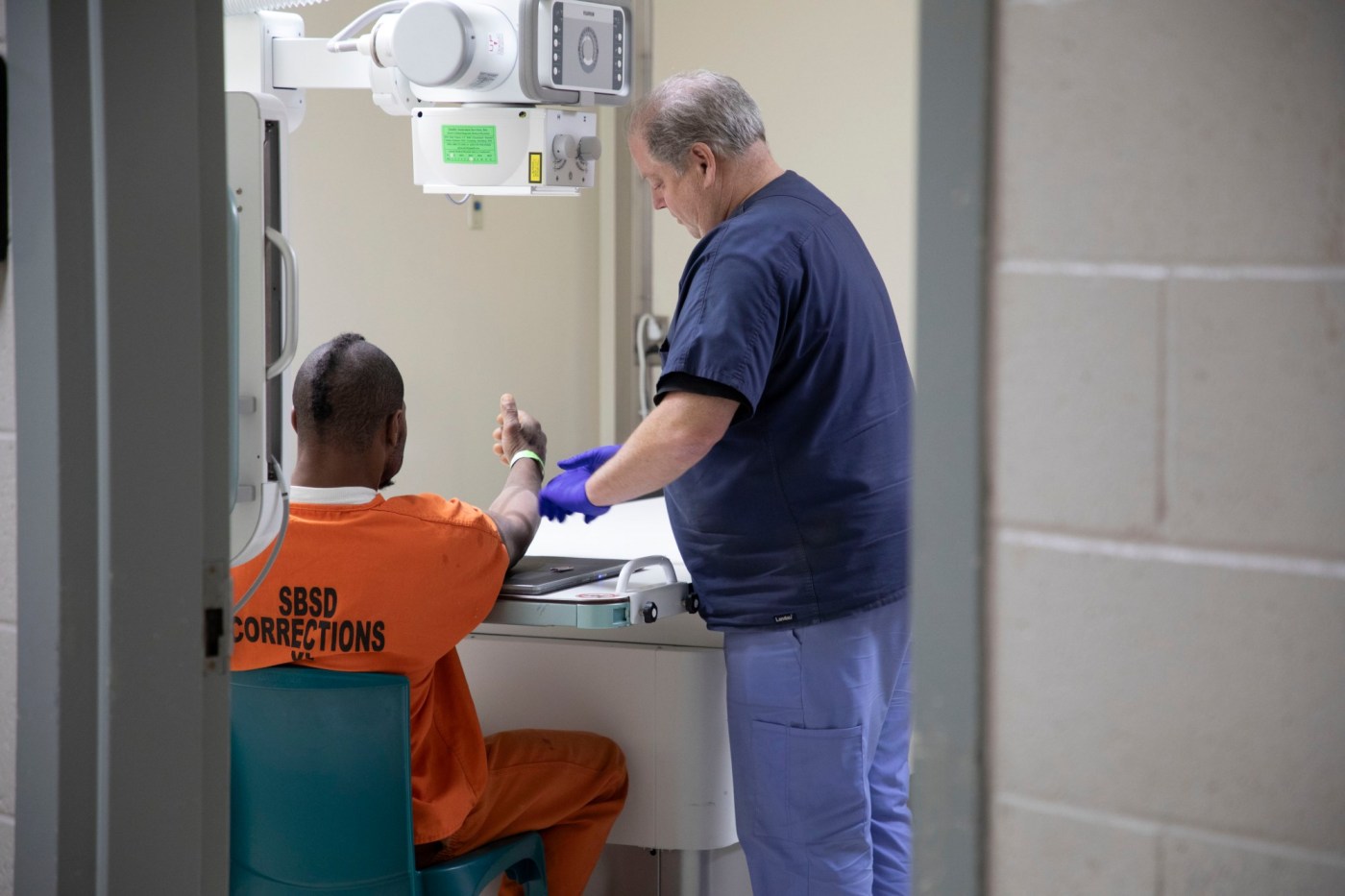
To meet the increased demand, more medical clinicians have been hired in the region’s jails in the past few years. In Orange County, more than 200 nurses are now available for a jail system with an average daily population of 4,283. A doctor is on duty from 7:30 a.m. to 10:30 p.m. and on call during off hours. However, critics contend that some inmates are seen virtually by a psychiatrist, who cannot adequately observe the patient in that medium.
Medical staff in the four counties are supposed to respond to all written requests from inmates for medical and mental health attention within 24 hours. The requests in Orange County are collected in boxes that are opened four times a day, and deputies do not have access to them.
In August 2025, San Bernardino County became the first of seven in the state to reach full compliance with a class-action settlement with the Berkeley-based Prison Law Office advocacy group to improve inmate conditions.
Under a court-ordered consent decree, the county agreed to, among other things, expand inmate health care services, allow inmates more time outside their cells, revise its deputy use-of-force policy and improve accommodations for inmates with disabilities.
The San Bernardino County Sheriff’s Department now employs more than 100 mental health professionals to evaluate, monitor and treat inmates, a massive increase from the two positions serving that role in 2016.
Riverside County also settled with the Prison Law Office in October 2015, and while making significant strides in improving inmate medical care, it still has a ways to go before reaching full compliance, said Sara Norman, a former Prison Law Office attorney now overseeing Riverside County’s performance as a private attorney.
“It is still sorely lacking in providing adequate mental health care,” said Norman, adding that staffing and treatment levels are still insufficient.
Sheriff Bianco blames the problem on prison realignment, which for the past 15 years has forced California’s county jails to incarcerate some state prison inmates and provide them with longer-term services and programming.
“The mental health care of our inmates is being met,” Bianco said. “Admittedly, we are not meeting our staffing levels that the court-agreed stipulation requires. The care is being met, simply with less people.”`
Los Angeles County also has embraced reforms, pushed by a series of consent decrees and settlement agreements over the past decade.
As part of an agreement with the U.S. Department of Justice, the county has agreed to 69 reform provisions aimed at enhancing its treatment and care of inmates with mental and physical illnesses.
Los Angeles County’s Correctional Health Services provided care to more than 44,000 patients — out of the 62,000 inmates that flowed through the jails — in 2024.
Inmates now have access to virtual doctor appointments to reduce the amount of time waiting for transfers, officials said, and the county has increased the number of mental health beds for people in crisis.
Officials in L.A. County said if they had the resources they would move toward a “population health” approach that uses data to identify health risks earlier, screens regularly for chronic health conditions, and follows standard treatment plans, shifting from a system that reacts to complaints to one with “proactive, preventative care.”
This year, Correctional Health Services, for the first time, began conducting death reviews separate from the Sheriff’s Department that focus on the care received by the inmate during intake and in the lead-up to their death.
Still, problems persist.
Inmates continue to express concerns about access to medical care and critics point to that lack of access as a reason for the county’s high number of natural deaths every year. In the past year, nearly half of the 1,100 grievances sent by inmates to the Los Angeles County Office of Inspector General pertained to their medical care.
During inspections in October 2025, members of the county’s Sybil Brand Commission, an oversight body, were told inmates had to wait as long as two months for medical appointments for respiratory issues, skin infections and bug bites. That same month, an inmate reported not receiving cancer treatments, one had an untreated broken nose, and another worried their diabetes wasn’t being handled appropriately, according to inspection reports.
Suicide prevention
In the four-county region, jail suicides decreased by 67% from a high of 21 in 2021 to just seven deaths in 2024.
Part of the reason for the decline could be jail programs that identify inmates with suicidal tendencies and prevent them — sometimes physically — from killing themselves.
The jails in the four counties place inmates identified as high risk in specialized observation units, with regular reassessments and more frequent safety checks.
Inmates at risk of suicide are mostly housed with a cellmate to keep them from hurting themselves without being noticed.
According to L.A. County, about 68% of the suicides since January 2020 occurred in single-man housing. The department said it can be “extremely challenging” finding appropriate and safe housing for inmates in High Observation Housing, who may have histories of recurrent violence, self-harm and inability to control their behavior.
The L.A. County Sheriff’s Department spokesperson described the use of single cells and restricted housing as a “last resort.” Inmates in such housing receive visits from mental health staff multiple times per week, the department said.
When suicides do occur, the counties probe each one to determine if staff could have done something better and whether policies were violated or need to be rewritten.
“We’re looking at anything we didn’t do that could have been done to mitigate suicides,” said Orange County Assistant Sheriff Nate Wilson.
For instance, the Orange County Suicide Prevention Review Board, formed in 2023, in one case found that a new inmate openly told arresting officers he wanted to die. It was documented in the paperwork, but not communicated to the other jail staff. In another case found by the review board, a corrections staff member, during the search process, failed to remove the shoelaces from a suicidal inmate who was being booked.


Orange County also spent $6.7 million to use steel plating to cover any gaps — such as in bunk beds and door handles— where an inmate could tie a ligature from which to hang themselves. The county also used the money to install fencing around second-tier walkways so inmates can’t jump, fall or be thrown to their deaths.
Deputies in the four counties undergo training in suicide and mental health intervention. Safety checks are conducted every 15 minutes to an hour, depending on the unit, and in Orange County those checks are now done randomly with a maximum interval of 45 minutes.
However, Riverside County’s Bianco said the best efforts sometimes aren’t enough.
“We are doing everything in our power to protect these inmates from themselves,” he said, adding that, regardless of resources and inmate monitoring, some suicides are inevitable. “If someone is hell-bent on killing themselves, there are many many ways you can kill yourself.”
Sometimes, however, red flags are missed, such as in the case of Aaron Aubrey’s suicide at the Riverside County’s Robert Presley Detention Center in December 2022.
The 28-year-old murder suspect told a correctional deputy that he “wasn’t going to do anything stupid,” but proceeded to cover up the window of his cell in the jail’s mental health unit with wet pieces of paper. He then wrapped a bed sheet around his neck — all visible from a security camera.
It took 46 minutes for a correctional deputy to discover Aubrey hanging from a bookshelf. He died at a hospital six days later. A suicide note found folded and tied to his wrist at the hospital read, in part: “I see how (expletive) up Riverside is toward people … they told me they don’t care if I kill myself … they sat there and let me make my (noose) on a camera in my cell.”
Bianco disputes criticism that his correctional staff does not adequately monitor inmates, especially ones housed in the jails’ mental health units. He said deputies conduct inmate checks every half-hour to an hour, but sometimes situations that arise that can disrupt the schedule, such as fights and medical emergencies.
“There are always anomalies that can happen that account for those discrepancies,” Bianco said. “It is absolutely physically impossible to do a security check every hour all the time. You don’t know what you’ll encounter.”

In another death captured on jail closed-circuit TV that went unviewed, 22-year-old U.S. Air Force veteran Maxwell Aguirre committed suicide in Los Angeles County jail in 2023. Aguirre could be seen on camera attaching a ligature to the door and covering the cell’s window. Later, his feet were visibly jerking beneath the cell door on surveillance footage, but no one was watching.
In a statement, the L.A. County Sheriff’s Department said it has 4,248 CCTV cameras in its facilities and that it cannot monitor all of them in real time “due to staffing constraints.” Officials said they plan to seek funding for contracted security services to do the job.
While Aguirre was hanging himself, four officers were gathered around a computer, watching YouTube videos instead, according to a lawsuit.
Aguirre’s family alleges officers logged falsified safety checks in violation of department policy and had failed to “conduct timely and adequate” checks in the five hours prior to Aguirre’s death.
The officers only learned about the hanging after other inmates called for help.
In the aftermath, the Sheriff’s Department blocked Internet access. But members of the Sybil Brand Commission, a few months after Aguirre’s death, reported seeing a deputy conducting safety checks walk past a noose hanging in a partially obscured cell. When they went to report it, they found officers gathered around a monitor watching pornography, with a stack of about “eight videos next to the computer monitor.”
L.A. County now is considering merging the Sybil Brand Commission with its Civilian Oversight Commission, a move that critics say would hinder unannounced inspections of the jails. Those inspections have repeatedly flagged environmental hazards, such as mold and rat infestations, and routinely call out substandard medical care and safety checks.
This year, the county also announced plans to roll out body cameras for all of its correctional deputies as an additional transparency mechanism.
Fatal overdoses
Drug smuggling in the jails, in the words of Orange County Assistant Sheriff Wilson, is “a problem that never stops. This is a population that continues to test us.”
The sheriff’s departments in the four counties have initiated efforts to combat drugs coming into their facilities and to follow the illicit substances back to their sources.
Riverside County has a six-deputy task force focused on drug trafficking in the jails, leading to suspects mostly outside the facilities, Sheriff Bianco said. DNA and fingerprint technology is used to track back drug-infused mail intercepted by deputies. The department plans to digitize incoming mail to prevent drug-tainted items from reaching inmates.
Similar efforts in Los Angeles County have led to the confiscation of more than 700 pieces of mail. The department consolidated its mailrooms in 2024 and trained personnel to work with Custody Investigative Services to help identify senders and recipients of contraband.
In the first three months of 2025, the L.A. County Sheriff’s Department served 48 search warrants related to jail drug trafficking, seized 14 pounds of narcotics and two firearms, and arrested 34 people.
The county also is considering restricting inmates known to participate in drug trafficking to specialized security housing where their movement, communication and opportunities to distribute narcotics would be more limited.
Airport-like body scanners also are employed or planned in all four counties.
Riverside County recently spent $1.8 million to purchase 13 new body scanners with AI technology that will replace older Tek84 body scanners — used in most of the other counties — purchased in 2020.
The Tek84 models needed to be replaced because some detainees figured out how to bypass them, according to Capt. Alyssa Vernal, commander of the Larry D. Smith Correctional Facility, during a recent tour of the jail.
“You can go on YouTube and learn how to beat the body scanners now,” Vernal said.
In September, an L.A. County Sheriff’s Department spokesperson said it plans to seek funding for body scanners that would “screen employees, vendors and visitors” alike, and to either pay for an internal security team or contracted services to carry out the screenings.
A subsequent L.A. County Office of Inspector General report in November 2025, however, stated the department had received 17 new body scanners, but would use them only to screen people in custody as it believes incarcerated people are the “primary source of narcotics and contraband entering the facilities.”
The Sheriff’s Department estimates it would need to extend employees’ shifts by two hours to compensate for the time in security and has deemed that “operationally unfeasible,” according to the report. The OIG has repeatedly criticized the department for how easy it is for staff to avoid searches of their bags and other belongings.
That decision follows the arrest last year of an L.A. County deputy caught smuggling heroin into North County Correctional Facility in Castaic. Eighteen others, including eight inmates, were charged alongside him.
Jail officials in other counties are resisting scanning of their deputies and jail employees, arguing that their investigations into drug contraband do not point to staff as the source. Body scanning would violate the employees’ civil rights, they say, arguing that the risk and criminal penalties for getting caught are a strong deterrent.
But there is also a strong incentive: trafficking in the jails can yield profits up to 10 times more than street value.
Paul Parker, former executive officer of the San Diego County Citizens Law Enforcement Review Board, believes the reluctance to scan jail deputies for contraband stems from a desire not to anger politically powerful law enforcement unions.
Detractors have repeatedly criticized the Los Angeles County Sheriff’s Department for not properly searching employees and contractors for contraband.
The OIG specifically flagged the transportation compound at Twin Towers Correctional Facility in downtown Los Angeles as one problematic area with “high vehicle and foot traffic” and minimal monitoring.
During one four-month period, 11 inmates were found unconscious waiting for, or on, transport buses, from suspected overdoses of various drugs, including seven men who passed out from burning and inhaling synthetic cannabinoids. Two of the 11 died.
Jail drug deaths were down in 2024 in most of the counties, believed in part because of the increased use of Naxolone, the nasal spray sold under the brand name Narcan.
Orange County, however, experienced an increase from one overdose in 2023 to four in 2024.

“We have Narcan available to all of our employees. We have Narcan available to the inmates. The nurses all have Narcan,” said Riverside County’s Bianco. “The beauty about Narcan is it’s not harmful. So even if you’re suffering some other kind of medical emergency, a dose of Narcan is not going to hurt you whatsoever.”
From January 2020 to November 2025, at least 57 in-custody deaths in the four counties involved fentanyl, records showed.
Bianco’s department launched a fentanyl awareness campaign in the jails with pamphlets, posters and warning messages continually scrolling across the bottom of television screens, “Don’t take fentanyl!”
“It’s a massive education effort to save these inmates from themselves. We don’t want them dying,” Bianco said.
Narcan nasal spray is affixed to the windows and doors of every cell or dayroom in Riverside County jails, with an alarm to alert correctional staff.
In Orange County, a basket of Narcan is available for inmates to take from the release area. Narcan was used by deputies on 63 individuals in 2023. That number dropped to 28 the next year and fell again in 2025 to 19. Those figures don’t account for doses administered by nurses, however.
In Los Angeles County, nearly 1,000 doses of Narcan — along with fentanyl testing strips — are available throughout the jails.
Narcan was used on 189 inmates in 2023 and 267 inmates in 2024. Most were deployed by staff, but 44 of the doses — multiple doses might be used on the same person — were administered by inmates directly. A year-to-date comparison of the first seven months of 2025 vs. 2023 showed a 77% increase in doses used, records showed.
Reviews by the Office of Inspector General suggest part of the reason for the increase in usage may be that Narcan is now deployed proactively even when there is no evidence of drug use and in emergencies later classified as natural deaths.
While many of the deaths in 2025 remain under investigation in other counties, L.A. County saw a jump from eight overdoses in 2024 to 10 this year, only one less than the worst year in the last six.
The data shows that methamphetamine-related overdoses overtook fentanyl this year. Narcan is not effective against nonopioids.
Building better jails
L.A. County Sheriff Robert Luna has noted that most county jails were not built with mental health, addiction and medical care in mind. He has been pushing for the construction of what he calls a “Care First Treatment Campus” to replace Men’s Central Jail in downtown Los Angeles that would hold inmates in a less restrictive environment, based on their clinical needs and in-custody behavior.
“A lot of the people who unfortunately pass away in our custody — not all of them — have never (sought) medical care ever in their lives,” Luna said at a recent Board of Supervisors meeting. “Those with substance abuse disorders, individuals suffering from serious mental illness remanded into our custody. We need to have a better system, we don’t have that, we never have had that.”
It would be the only facility within the county jail system built “specifically to serve the medically fragile, those with substance use disorders and those with serious mental illness,” according to the Sheriff’s Department.
However, the idea hasn’t gained traction with the Board of Supervisors, which supports the closure of decrepit Men’s Central without a replacement. As the supervisors envision, dramatic cuts to the county’s inmate population would come through diversion programs and access to mental health beds elsewhere.

Such a facility might have saved Ronald Forsyth’s life.
Forsyth, 53, died slowly inside Twin Towers Correctional Facility in Los Angeles after he was allowed to refuse medication for anemia and hypertension for months, though a court had deemed him mentally unfit to make such decisions. He was waiting for placement into a mental health hospital.
“It is supposed to be a medical facility there with medical staff to treat him,” his father Charles Forsyth said. “Obviously, they did not.”
Charles Forsyth doesn’t blame the deputies tasked with monitoring his son’s unit, saying he believes they have good hearts, but they’re “police officers” at the end of the day, not medical personnel, he said.
“They claim it (the jail) is the biggest psychiatric hospital in the state, but it sure isn’t set up for that,” he said. “If they’re going to have to take care of these people, they need a proper facility, or they’re going to keep ending up like Ron.”