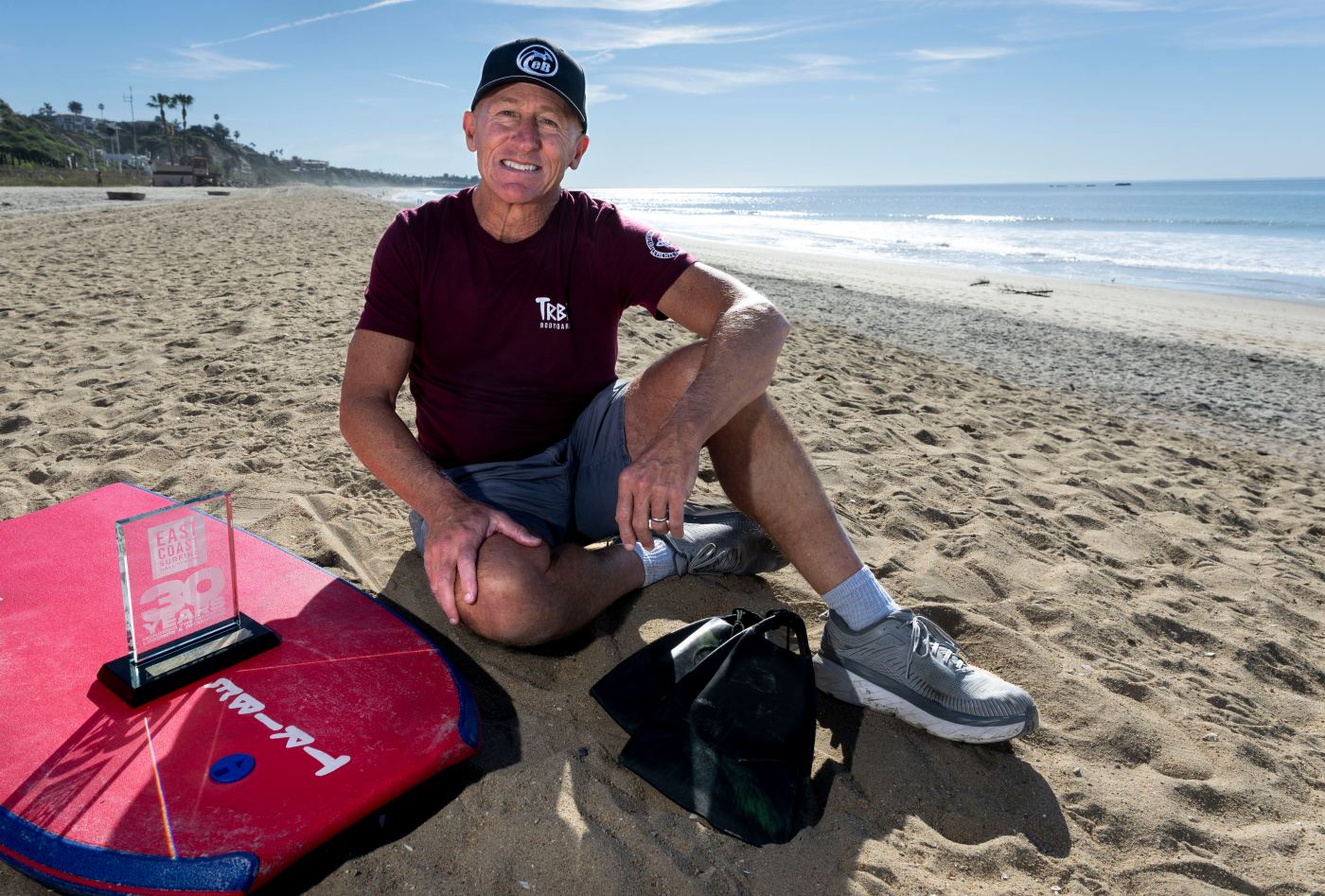
Jay Reale has a claim that few wave riders can brag about – he beat Kelly Slater in a heat.
Sure, Reale was already a professional bodyboarder at the time, an 18-year-old from Maryland who was making waves in the new competition category in Eastern Surfing Association contests. And no one could predict that Slater, just 10 at the time and entering the bodyboard division for fun, would go on to be an 11-time world surfing champion and the most famous figure in the sport.
“That’s my humble brag, I beat Kelly Slater in a wave-riding competition,” Reale said with a big chuckle, recounting the moment more than four decades ago. “No one needs to know how old he was or what he was riding – but I beat Kelly Slater!”
Reale has more than that moment decades ago to be proud of, the San Clemente businessman earning a spot in the East Coast Surfing Hall of Fame last week, held during Surf Expo in Orlando, a feat that’s nearly unheard of for bodyboarders.
His induction is only preceeded by Tom Morey, inventor of the Boogie board, and bodyboard champion Mike Stewart’s spot on the Surfers’ Hall of Fame in Huntington Beach nearly three decades ago. Reale is the only bodyboarder to earn the honor on the East Coast.
“If you think about it, it was a historic moment,” said Peter “PT” Townend, surfing’s first world champion, who emceed the ceremony. “He’s one of the founders of the popularity of the sport, without a doubt.”


Reale spent his early years in the suburbs of Washington, D.C., about 150 miles from the beach, before his parents bought a home in Maryland’s Ocean City when he was 12. By the following summer, he had a job renting out rubber surf mats to tourists on the beach.
“We’d take the rafts out and just for fun, that’s how I got the bug for riding waves,” he said.
Reale was 15 when his brother came home with a bodyboard, which, unlike the mat, could turn and go fast down the face of the wave.
His parents moved the family permanently to the beach a year later, and that’s when he really got into the beach life.
Morey and his team had created an exhibition and contest circuit, bringing competitors to the East Coast from California, showcasing demos and meet-and-greets with pros.
“We were just blown away, I couldn’t believe what people could do,” Reale recalled.
He was 18 when the Eastern Surfing Association added a new category for bodyboarding. That’s when he had his heat, and won against Slater, to earn the championship.
At one point, Maryland wanted to ban bodyboarding. Reale, along with ESA director Kathy Phillips, spearheaded efforts against the ban, eventually getting finless bodyboards allowed – without blackball restrictive hours like surfboards had – across the state.
“That was the saving grace for the bodyboarders in town, we could go anywhere as long as we didn’t have the fins at the bottom,” Reale said.
After college, Reale saved his money for a move to be closer to the bodyboarding pro scene, first to Oceanside. Months later, he was lured to San Clemente, home to T-Street, a popular bodysurfing spot that has non-surfing hours during summer when bodyboarders get the waves to themselves.
He competed — and won — many events through the years, his biggest prize when he met and married his wife, Vicki, an Australian pro bodysurfer he met while traveling in 1990, he said.
“I’ve always thought he was a legend, that’s why I married him,” she said. “He deserves that recognition.”
Reale competed professionally until 1998, a consistent competitor who knew how to promote the sport to the mainstream.
Bodyboarders and surfers haven’t historically gotten along, especially in the ’80s, when conflicts in the water were commonplace. Reale joked that he’s been called plenty of derogatory names through the years by surfers in the water competing for waves.
“You had to have thick skin and work your way out to the hierarchy in the surf,” he said. “It took a long time, at certain spots there’s still that animosity toward bodyboarders. But it’s less than it was years ago.”
These days, Reale and his wife run eBodyboarding, a company that sells bodyboarding products around the world, out of San Clemente. They host group bodyboarding trips, from Fiji to wave pools, and also offer a bodyboarding summer camp near the San Clemente Pier to inspire the next generation of board riders.


“We want to bring a new, younger generation of bodyboarders into it,” said Reale, 61. “The camp is really a manifestation of that effort to get younger riders back into the sport and get them psyched on it.”
Reale, in recent weeks, has been landlocked, hitting his head on a sandbar in Australia, a wipeout that fractured several vertebrae.
While he grieves his time out of the water, he said the Hall of Fame induction was a nice distraction, and a “massive source of pride,” a chance for the sport he loves to get the respect and recognition it deserves.
“When they told me I was going to get inducted, I was kind of flabbergasted and really proud of bodyboarding,” he said. “Not just myself, but the sport to be recognized by the group. It’s a big deal.”