Students are stuck in a modern catch-22 situation, a new national research report by the Chapman University-based Or Initiative says about the state of civil discourse among youth.
Youth are eager to grapple with the world’s most polarizing issues, but in a digital age where headlines are incessant and social media often doubles as a primary news source, they may lack spaces where they can slow down, talk face-to-face about these topics and engage in an evidence-based exchange of ideas.
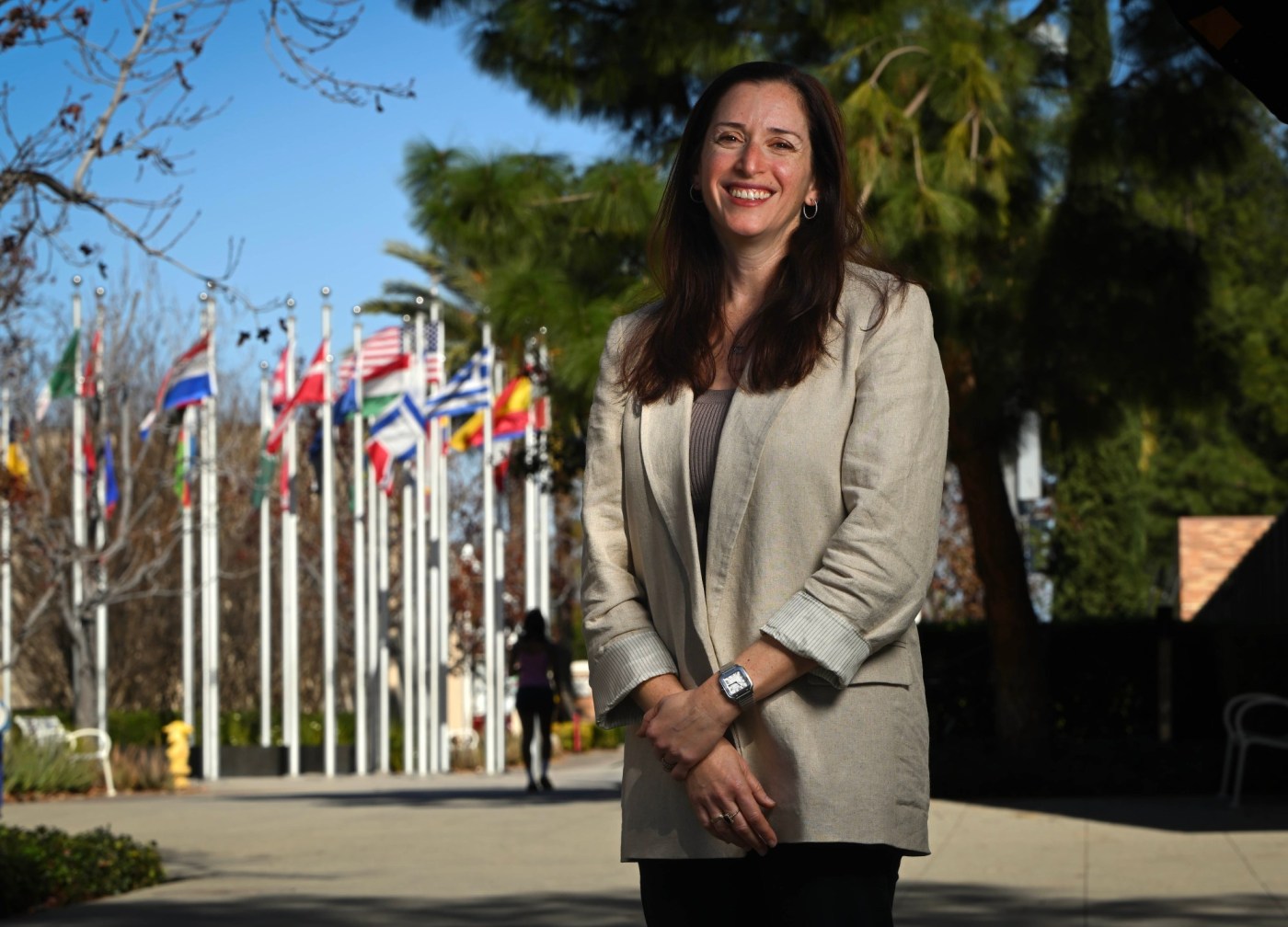
“I saw that coming out of the pandemic, teaching this class on civil discourse,” said Vikki Katz, the Or Initiative’s executive director and the Fletcher Jones Professor of Free Speech in Chapman University’s School of Communication. “And for a couple of years, they had a really hard time talking to each other face to face.”
“I’m seeing that less now. But it still doesn’t mean that they didn’t spend their formative years far more isolated than would have been ideal,” Katz said. “This, to me, is part of the correction: How do we start leveraging the time that kids are together?”
Helmed by Katz and a team of university researchers, curriculum designers and educators, the Or Initiative was founded in 2025 out of Chapman University to tackle that question and leave teachers with long-term curriculum and tools to discuss political issues.
The program’s mission to equip students with civil discourse skills “crystallized” around students mobilizing at the height of the Israeli-Palestinian conflict, which is now the initiative’s first curricular focus.
The initiative found financial footing with a $1.85 million grant from the Samueli Foundation, which helped fund interviews last year with 52 eighth grade and 11th grade students across public and private schools in Southern California and New York City between May and November.
As part of the Or Initiative’s launch, the report, “Coming of Age in Polarized Times: Teaching Civil Discourse in a Digital Era,” will be released Monday, Feb. 9, during a two-day convening at Chapman’s Orange campus, where attendees will practice implementing the report’s curriculum models for discussing within classrooms topics ranging from immigration to climate change.
Algorithms
Max, identified only as an eighth grader from Southern California, told researchers of learning about “the murder of Charlie Kirk, the robbery of crown jewels from the Louvre, and the government shutdown” from social media first, according the report.
Max’s experience is hardly unusual. Social media platforms such as Instagram and TikTok, the researchers said, are often primary news sources for students, even as students understand how content reaches them.
“Knowing that their feeds are curated, both by the social media algorithm itself and by their own behavior, often heightened, rather than reduced, teens’ information skepticism,” the report’s authors said.
And with AI-generated content becoming more pervasive on social media, along with a growing community of news-influencers, the report found teens’ media literacy skills “are no match for their digital environments,” and it’s becoming increasingly difficult to identify what’s real and fake.
It doesn’t help, Katz said, that algorithms create “echo chambers” of opinions, where the loudest opinions are most heard and absorbed.
“It’s a very small number of people who hold the extremes, but that’s another thing that social media distorts,” Katz said. “It makes the groups that are on the far ends of an issue look much larger and much scarier than they would otherwise.”
Katz said she sees the phenomenon on college campuses, “it’s not showing where people are finding common ground, where they’re figuring out how they talk about hard things.”
On Sept. 11, the morning after Kirk’s fatal shooting, Katz walked into her civil discourse and communication class and was surprised to hear from her students that not one of their other professors had acknowledged what had happened.
“Even in classes in social psychology, and other topics that should be related, where it should come up, no one wanted to touch (the topic),” Katz said.
But she made sure her students didn’t shy away.
“And what we did in that class — which had students who are leftists and a young man who would come in in a MAGA hat — we got to things that we could all agree were true. And then we realized that whatever we build on top of that, we had a shared space,” she said.
The Or Initiative, Katz said, “is an effort to treat tech like a tool that we can leverage and use as a springboard to help motivate young people to want to jump in. How do we do that in ways that help to kind of glitch the matrix?”
Classrooms
“Glitching the matrix” is a top-down effort, Katz said, that begins with giving educators the tools to facilitate civil discourse within their classrooms.
“Like students, educators view classrooms as a precious space for young people to engage in difficult issues,” the researchers said in their report. “But they also described feeling pressured to spend time meeting academic standards, to respect a wide range of family beliefs, and to avoid becoming the next viral controversy.”
“Many teachers tried to create ‘small sanctuaries’ within these constraints with episodic lessons that allow for reflection and dialogue. Without institutional backing and coherent curricular support, these efforts are isolated and fragile.”
Katz said she hopes the initiative can create opportunities for educators to regularly convene, where they can troubleshoot how to best facilitate civil discourse in their classrooms, and “eventually develop a research-based protocol” to help with that undertaking.
As part of the report, the Or Initiative’s team interviewed educators and reviewed 84 organizations and curriculum models to identify ways learning could be improved.
Three key themes emerged: Students are learning and discussing polarizing topics in online spaces without support from adults; digital literacy curricula emphasize the risks of online engagement, but fail to recognize opportunities to spark meaningful discourse; there are opportunities for “creating and implementing AI tools that scaffold civil discourse skills.”
“AI is coming into classrooms. We can yell, scream about that,” Katz said, “or we can build more affirmative models of how that doesn’t derail the learning kids need to do.”
“We don’t have all the answers,” Katz said. “But we want to build with students, and we want to refine and test and evaluate it until we know we’ve really got something.”
Some of that work begins with an inaugural fellowship where four Civil Discourse Accelerator Fellows will be given up to $50,000 over two years to “develop digital and AI-driven technologies,” Katz said, to integrate with Or Initiative’s evolving curricula.
“I mean, to me, the stakes are unacceptable,” Katz said. “If we fail to act, we are leaving young people alone in algorithmically engineered environments that are not teaching them how to think about any issues with matter, and it’s completely degrading their ability to trust each other.”