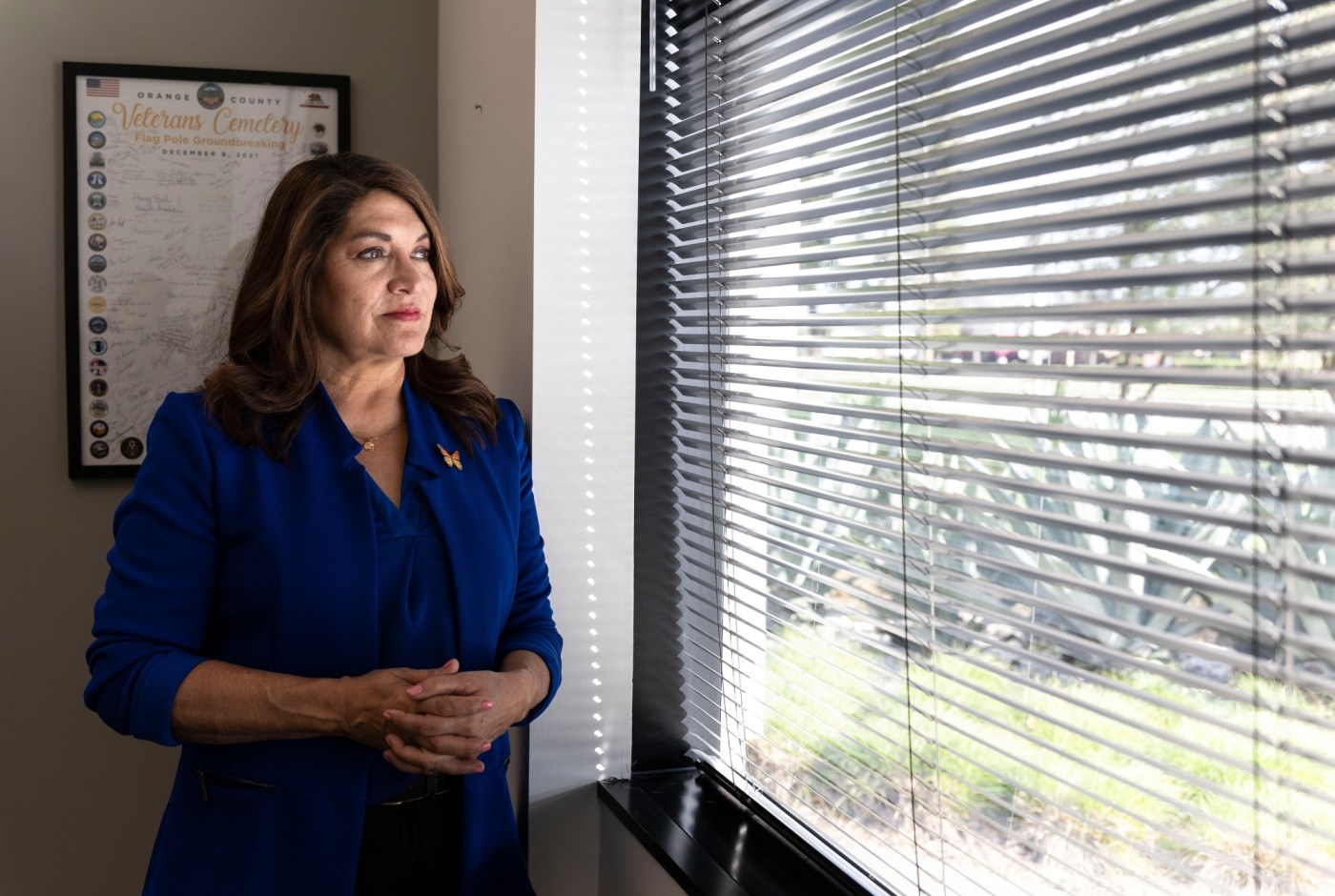
The weather in Sacramento this time of year is rather cold. That’s particularly true at 6:30 a.m., when the sun isn’t even peeking out, and the Capitol is covered with fog and darkness.
But still, Assemblymember Sharon Quirk-Silva is bundled up, ready for a few quick laps around the statehouse.
This is what she does in Sacramento, aside from other legislative duties: holds meetings — “walk and talks,” she calls them — while traversing around the domed building and the state park and the World Peace Rose Garden before many legislators and lobbyists are even awake.
On this particularly frigid January morning, she’s talking about homelessness and housing policy, progress with Orange County’s veterans cemetary and her future.
Quirk-Silva, a Fullerton Democrat, is in the midst of her final year in the California Legislature, prevented from running again due to term limits.
And while she could vie for a different elected position or even go back to teaching, Quirk-Silva has decided to retire.
Quirk-Silva has spent 20 years in elected office, eight of those with the Fullerton City Council, the other 12 in the Legislature.
It’s been “a complete and full experience and opportunity to serve,” Quirk-Silva said in an interview. “I feel like the time spent has been well used.”
It’s housing and homelessness policy that Quirk-Silva has, perhaps, become the most well-known for and well-versed in during her legislative tenure.
She chairs the Orange County Homelessness and Mental Health Services committee and sits on the Housing and Community Development committee. She also leads the Assembly’s budget committee that oversees policies dealing with housing and homelessness, as well as banking, veterans, employment, insurance, elections and more.
She’s the author of a relatively recent law that mandates California’s elementary students learn cursive, an effort that garnered widespread media attention.
She has focused, too, particularly over the last year, on protecting her constituents during the massive immigration raids that have taken place during the second Trump administration. During a roundtable with state lawmakers and community organizers last year in Orange County, Quirk-Silva pushed for more data on who was being detained and where they were taken.
“I am very proud of the investment and work that I have focused on relating to housing, housing production and homelessness,” said Quirk-Silva.
“Innovation related to housing, modular housing, 3D, I’ll be working on some of that this last term,” she added. “I really feel that when we talk to everyday Californians, neighbors, friends, family, they really still have the ‘American dream’ to attain a home and be able to provide for their families.”


Quirk-Silva spent 30 years working with Fullerton Elementary School and was first elected to the Assembly in 2012, then upsetting the Republican incumbent. But she lost reelection two years later to eventual U.S. Rep. Young Kim, R-Anaheim Hills. She tried for the seat again in 2016, this time defeating Kim.
Quirk-Silva vowed then to “get to work investing in the people of California through better schools, more affordable colleges and helping mall businesses thrive.”
She’s been reelected ever since.
Her voting record has leaned a little to the left of moderate, according to an analysis from CalMatters’ Digital Democracy project.
When asked about any regrets during her legislative tenure, Quirk-Silva thought for a minute before talking about increased partisanship and political tempers.
“There is always an opportunity for both parties to work closer together,” Quirk-Silva said. “I’m dismayed that the rhetoric has become so loud that it makes it very difficult. I think there are always ways to reach out. And so I would say I and others could do that on a more regular basis.
“I really think neighbors need to start talking together, interacting together,” she said. “We need to go back to what we try to teach our kids, which is: If you’re on a soccer field, you’re not a Republican or a Democrat, you’re cheering for your kids and your neighborhood and your community. And I think we’ve lost a lot of that.”
Building community is still in Quirk-Silva’s future as she retires. She’ll be spending “much-needed” time with friends and family, including her 2-year-old grandson, she said, and contemplating what’s next.
“I still see myself working potentially in housing in the future, working to help people bring housing forward,” said Quirk-Silva. “I am just avid about that; we need more housing units at all levels, and if I can do anything to help bring those forward, I will.”
She may become an advocate for foster youth through California’s Court Appointed Special Advocate volunteer program. Or offer mentorship at Sunburst Youth Academy, which operates at the Joint Forces Training Base in Los Alamitos and serves high school students who need additional support.
And then there is the walking. She hopes to discover some moderate hiking trails, tackling them every week or so.
“I’m not sure who would want to walk and talk with me just as a neighbor,” laughed Quirk-Silva, who plans to walk with her family and husband, Jesus Silva, who is also a former Fullerton council member and teacher.
But, as Quirk-Silva is apt to point out, she isn’t retired yet.
There’s still work to do in the statehouse, on housing policy, on immigration, on youth services and more.
This year, she’s behind a bill that would expand statewide rental caps for mobile home parks over the course of a 12-month period.
She’s also pushing a bill that would streamline probate and juvenile court processes by automatically terminating temporary probate guardianships at the juvenile court’s initial dependency or wardship petition hearing. The idea, according to her office, is to ensure the juvenile court can act swiftly so that children and their caregivers can access emergency funding and services more easily.
Her office, too, is still very much focused on constituent services, she said, a particular point of pride for the legislator.
“I really believe that I’ve served in a way that has been much like a teacher, which has been to listen to my constituents and try to serve them,” she said.
And then there are her “walk and talks,” her way to meet with other elected officials, stakeholders, constituents and journalists in town from the warmer Southern California climate.
It’s a way to combat the rampant polarization in politics.
“There have often been times where you could find common ground,” she said, reflecting on her last two decades in elected office, “and even if you weren’t from the same political party, you could find ways to work together as you should for the betterment of your community.”
Quirk-Silva has taken the “golden handshake” of retirement, she said.
But she’s not finished working quite yet.