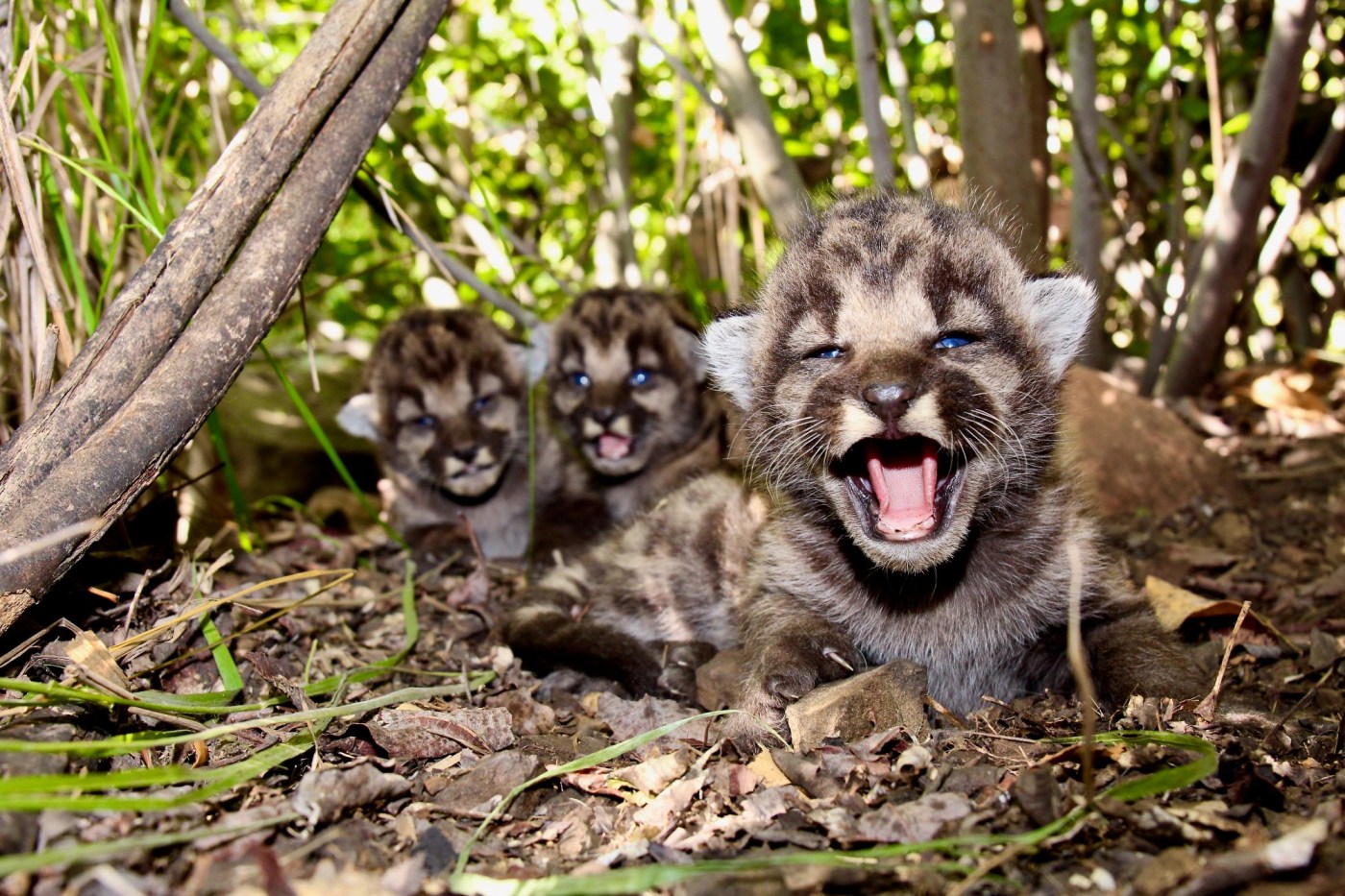
The imperiled mountain lions of Central and Southern California were granted permanent protection on Thursday, Feb. 12, by the California Fish and Game Commission.
By deeming six populations of pumas as “threatened” under the California Endangered Species Act, it will mean any entity proposing new developments or roads near mountain lion habitat must formulate a plan to mitigate the harm to these big cats.
It could also bring in funds for additional wildlife crossings to increase the mobility and safety of wildlife movement.
Already, the nearly $100 million Wallis Annenberg Wildlife Crossing being built over the 101 Freeway in Agoura Hills with mostly private dollars will enable penned-in mountain lions in the Santa Monica Mountains to cross safely into northern ranges. This will enable them to roam in a more expansive area, for food and to find mates in order to perpetuate the species.
Biologists are examining the possibility of building another crossing over the 5 Freeway in the area between Kern and northern Los Angeles County. Also, the status could generate dollars and support to help keep the wild cats off the toll roads in Orange County and off I-15, where many are struck and killed by vehicles every year.
Two environmental groups, the Center for Biological Diversity and the Mountain Lion Foundation, received a positive response to their nearly seven-year-old petition for more protections for six subsets of mountain lions. These cougars are located in the Santa Cruz Mountains, the Central Coast, Santa Monica Mountains, San Gabriel and San Bernardino Mountains, Santa Ana Mountains and Eastern Peninsular range in San Diego County.
Mountain lions need wide ranges to hunt, usually for deer, and for males to find unrelated females for breeding. These large felines are boxed in by freeways and when they dart across lanes of speeding traffic, they are usually killed, making vehicle strikes the leading cause of death. Secondly, they can get sick with weakened immune systems that can lead to death from eating small prey such as rats, mice and squirrels that have ingested rat poison left outside near wildlands, as the poison transfers into their systems.
This marks the first time California has recognized pumas as a threatened species. That presents a legal mandate for all state agencies to protect these six pockets of cougar populations, according to the Center for Biological Diversity.
“This is a major milestone for a California icon,” said Tiffany Yap, urban wildlands science director at the Center for Biological Diversity.
“Mountain lions are a marvel but too many across the Golden State and are struggling in the diminished and fractured wild places where they live. This state isn’t willing to stand back and watch our precious wildlife vanish forever,” Yap added.
The new status is a bittersweet development, signaling these animals are in danger of extinction due to inbreeding if nothing is done. But it also brings more attention to their plight and possibly more help.
“This is an epic win for California’s iconic big cats,” said Katie Nolan, Wild Animals campaigner for In Defense of Animals, an international animal protection group based in Marin County. Nolan, who spoke at the meeting Thursday, said in a statement: “Not only will protection give inherently valuable individuals a much-needed lifeline, it will have a cascading impact that will improve biodiversity.”
Mountain lions in these locations face multiple threats, from badly planned development, widespread use of rat poison, car strikes when crossing highways, wildfire and disease.

This November 2014 photo provided by the National Park Service shows the Griffith Park mountain lion known as P-22. He died on Dec. 17, 2022. (National Park Service, via AP, File)
Southern Californians fell in love with P-22, a mountain lion that crossed two freeways, only to end up in Griffith Park, a city of Los Angeles park with trails, wild areas, but also with playgrounds, kitty rides and the Griffith Observatory.
P-22 was the only wild cat to live in a city park. He lived there for 10 years, until disease and being hit by a car caused him to be so ill that he was euthanized on Dec. 17, 2022. A celebration of his life was held at the Greek Theater in Griffith Park a few months later, the first public memorial service for a wild animal in Los Angeles history.
“I’m celebrating this vote as a new chapter for pumas and I hold so much hope for their future,” said Yap.