After a multiyear effort that included a rigorous application process, some pushback from state institutions and other challenges, Santiago Canyon College is offering its first-ever baccalaureate program.
Starting in 2027, SCC will offer a bachelor of science degree in digital infrastructure and location sciences.
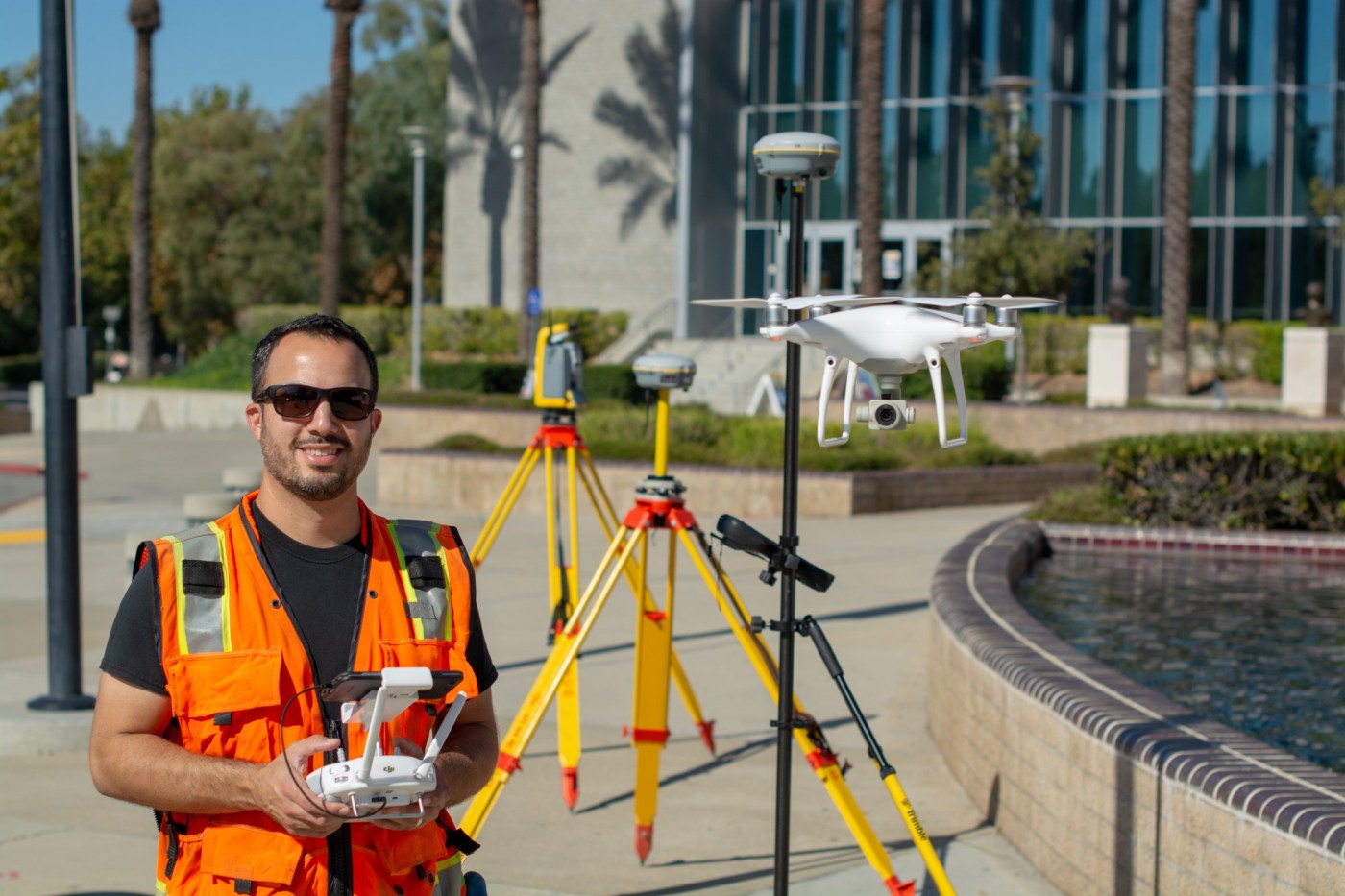
The curriculum, which builds on the college’s existing certificate and associate’s degree programs in land surveying, is designed to equip students with foundational skills in construction surveying, remote sensing, plane surveying, construction surveying and geographic information systems, said Mark Counts, an adjunct professor in SCC’s Surveying-Mapping Sciences department.
Counts, who is a senior transportation surveyor and chief of office surveying systems for Caltrans, spearheaded the effort and developed the curriculum for the new bachelor’s degree, which will be offered completely online.
The degree is specifically designed to address workforce gaps in operations, maintenance, and asset management and connecting project delivery with ongoing infrastructure management — skills that are increasingly in demand, said Counts, senior transportation surveyor and chief of office surveying systems for Caltrans.
“We need a professional who can leverage all of the principles of land surveying and delivering it in a way where an enterprise like Caltrans can leverage it to make better decisions,” Counts said. “Because we can’t make these types of decisions without this type of surveyor. So that’s the difference between the entry-level surveyor that’s going through the two-year program. …We’re applying it in new ways now. Ways that are unprecedented.”
A bachelor of science in digital infrastructure and location sciences qualifies graduates for careers in land surveying, with a pathway to licensure, infrastructure asset management and operations and maintenance analysis for public agencies and private firms, Counts said.
A 2014 California law allows community colleges to offer baccalaureate programs in order to provide more accessible and affordable pathways to career-specific bachelor’s degrees, leading to higher wages and social mobility.
With a total student cost of less than $12,000, compared with thousands more at a Cal State or UC, affordability is a huge benefit for students wanting to pursue the bachelor’s degree at SCC, said Denise Foley, dean of business and career education at SCC.
“Not only is there a job waiting for them, they are not going to be in debt,” Foley said. “Because from start to finish, if they pay for the whole thing, it’s going to be less than $12,000 for the degree. So, it really kind of helps give people a leg up if they choose this path.”
According to the 2014 law, a bachelor’s degree program at a community college must not duplicate existing degrees offered by the California State University of California systems.
For that reason, Cal States and UC’s need to sign off on the proposed bachelor’s degree at a community college.
The bachelor of science degree had the support of SCC administration and the backing of multiple organizations that could potentially hire the SCC graduates.
Multiple organizations, including Caltrans submitted letters in support of the specialized degree.
“Caltrans firmly believes that graduates of the ‘Digital Infrastructure Location Science’ program will play an instrumental role in helping us deliver projects using Building Information Modeling for Infrastructure … ,” wrote Scott Martin, deputy division chief in the Division of Right of Way and Land Surveys for Caltrans. “Building Information Modeling … for Infrastructure is one of the core Caltrans’ Strategic Goals for implementing its Strategic Plan. The success of this Strategic Goal will be highly dependent on cultural change. Graduates from programs such as this will be key leaders to embracing that cultural transformation.”
Counts first raised the idea for a bachelor’s degree in the field about five years ago.
The process involved a lengthy application phase, along with attempts to coordinate with state universities.
But after some pushback from four-year state schools, a third-party assessment was ultimately made before the program was given the stamp of approval from the Board of Governors.
“The third-party assessors came back and said that we are actually a very unique program,” Counts said. “There’s just such minimal overlap between us and any other program in the CSU. So, then that was their report, and then they recommended us.”
A second baccalaureate program offering a bachelor of science in water science, is also making its way through the approval process.
Foley anticipates more bachelor’s degrees in the future, reflecting the college’s evolution to meet workforce needs and support returning students.