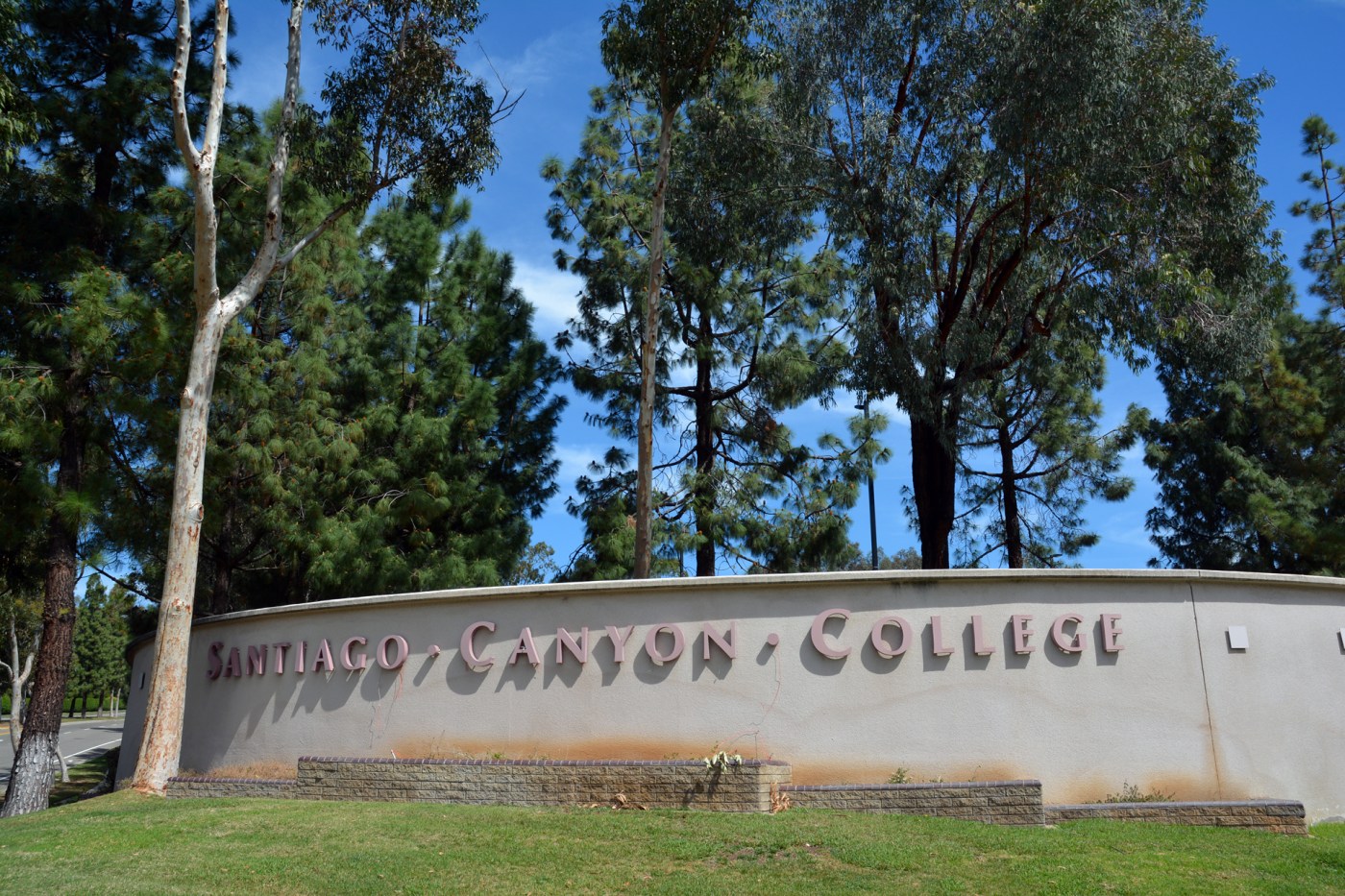
Santiago Canyon College has expanded its academic offerings with a new Associate of Arts degree for transfer in music, creating a pathway for students pursuing music studies to continue their education at four-year institutions.
The new degree addresses a gap in SCC’s academic infrastructure and course sequence for students seeking transfer opportunities in music, a goal Eleanor Núñez, co-chair of SCC’s Performing Arts department, has pursued since taking on the role in 2024.
“This was a vision I had,” Núñez said. “I was looking at what we’re offering, what other local programs offer and how we can better serve our students. The reality is our high school and middle school students in the region didn’t have a local community college with a music program.”
Núñez, with support from Alex Taber, SCC professor of economics and department co-chair, wrote the curriculum for 16 new music courses and secured CSU and UC transferability for an additional 16 courses, resulting in a two-year degree that satisfies lower-division music major state requirements for students who transfer to a four-year college.
“They will have already completed essentially half of their requirements,” Núñez said of the degree.
The course work is structured in a four-tier sequence. The first tier of studies includes theory and musicianship courses, or what Núñez calls “the grammar of music.” Classes like Music Theory 1 guide students through concepts such as diatonic and secondary dominants, four-part writing and multiple-voice exercises, including singing and dictation.

department (Photo courtesy of RSCCD Communications)
Levels 2, 3 and 4 of theory and musicianship courses increase in complexity and feature concepts such as four-part voice writing, chromatic harmony and other 20th century techniques.
“What’s interesting about our Level 3 and 4 theory courses is that they are equivalent to upper-division theory classes at the four-year universities,” Núñez said. “So, it’s actually really quite advanced, and it’s pretty advantageous for the students to take them at community college because it’s so much cheaper.”
The second tier of studies in the program includes the course sequence that satisfies all piano requirements. The third tier focuses on applied lessons, or private lessons, and the way Núñez designed this coursework is unique to SCC.
Typically for college-level music students, their first two years of private instruction are offered in 30-minute lessons. But all SCC music major students will be receiving hourlong lessons with their instructors.
“I wrote the class in such a way here at SCC that it’s a full lecture hour for the student and the instructor, so they’re receiving 16 one-hour lessons,” Núñez said. “It is the most intensive and best education for the student. …We’re really lucky to have the support of our administration on this.”
The fourth tier of the program is students’ participation in large performance ensembles. SCC has traditionally offered choir, but will now also offer concert band, jazz band, orchestra and guitar ensembles.
The degree was completed and approved within one year and began accepting students into the full two-year track last fall. The program is for all music majors, regardless of their instrument of specialization, and requires an audition for acceptance.

department co-chair
(Photo courtesy of RSCCD Communications)
“Students need to demonstrate proficiency on their instrument because we’re taking them to the professional level,” Núñez said. “We prep them to transfer, and we are working on getting them job-ready.”
Some of the career paths open to students who earn degrees in music include public or private school teaching, military musician, professional performer or the entrepreneur track, which could include positions such as private lesson instructor, music studio owner, producer, engineer or instrument sales.
“The reality is that most musicians do a little bit of everything,” said Núñez, whose own career has followed a similar path. “It’s really important for our students to see that you can get a career in music and your career is really multifaceted.”
Students in the new Associate of Arts degree program will benefit from the small class sizes and instructor access found in all SCC departments.
“Compared to the higher cost of going to a four-year (university) for your first two years, it’s just a great opportunity to be in a class where you have very easy access to the instructor because their primary focus and their primary responsibility is for the students,” Taber said.
Some of the degree courses are offered through the SCC Early College Program, a dual enrollment option that allows middle and high school students in the district to take classes such as music fundamentals and vocal training.
Núñez’s goals for students pursuing the performing arts at SCC do not stop with music studies. Her next steps include developing similar degree plans for theater and dance, and she envisions future facilities that would bring the music, theater, dance and visual arts programs together into one campus location.
“That’s the long-term vision,” Núñez said of SCC’s Performing Arts department, “building a comprehensive arts environment on this side of eastern north Orange County.”