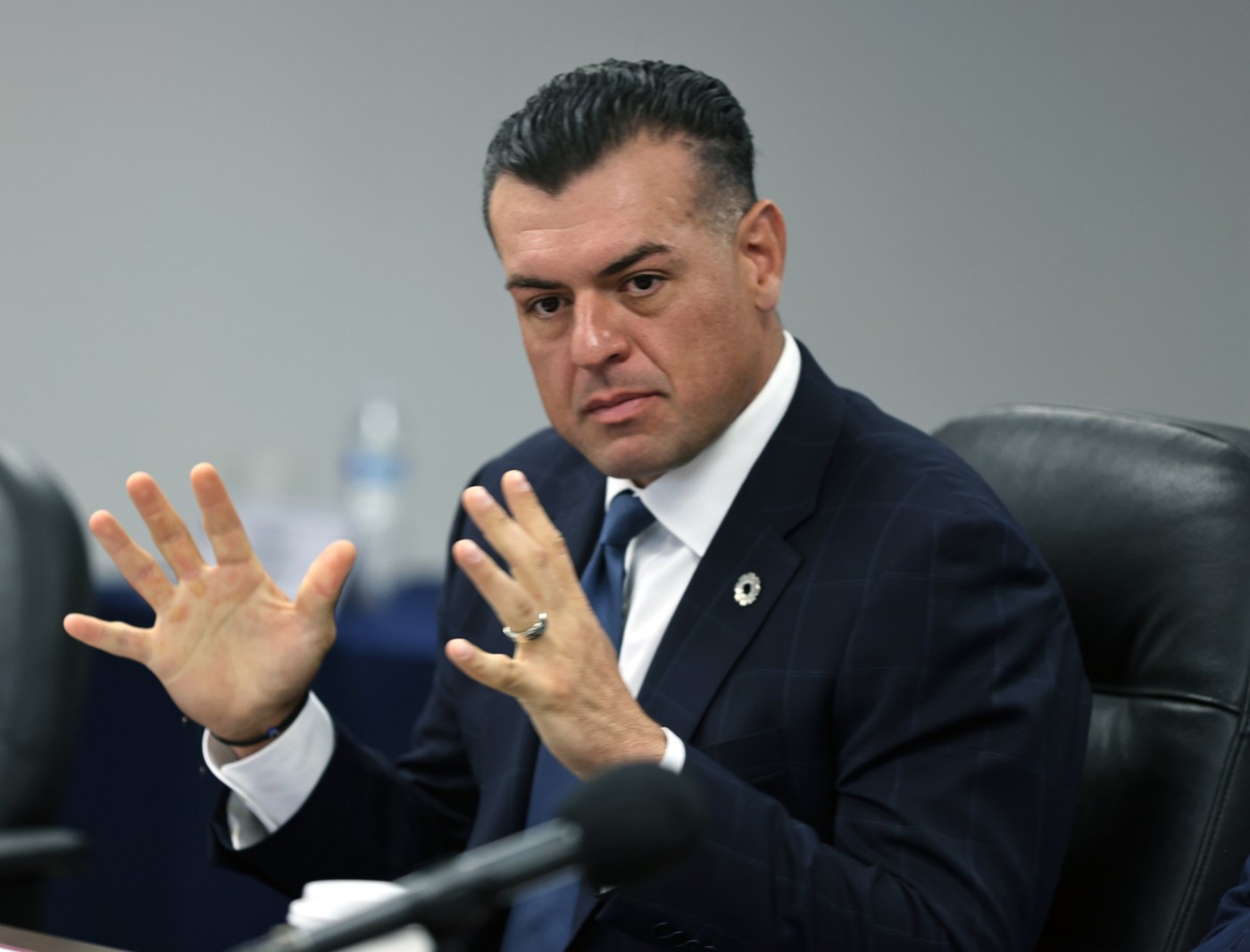
There are clear signals that young men and boys are struggling, Assemblymember Avelino Valencia said, and California can do more to address their mental health needs.
That includes requiring the state’s Office of Suicide Prevention to focus its efforts on that specific population, according to Valencia, who is behind a new bill that would mandate just that.
The Anaheim Democrat recently introduced Assembly Bill 1956, which would direct the Office of Suicide Prevention to add young men and boys to its priority population list. The office already focuses on groups disproportionately impacted by suicide, including tribal populations, older adults, veterans, LGBTQ+ people and youth in general.
“Young men and boys are sending us clear signals that they are struggling,” said Valencia. “Suicide accounts for one of the leading causes of death for people aged 10 to 24, and four out of five youth suicides are male.”
“The losses of these lives are incomprehensible, and we must focus our resources on addressing preventative strategies to uplift and protect our young men,” he said.
Gov. Gavin Newsom last year issued an executive order creating a statewide response to improve mental health outcomes and reduce stigma, an effort to address the rise in suicides and feelings of disconnection among the state’s young men.
“Too many young men and boys are suffering in silence — disconnected from community, opportunity and even their own families,” Newsom said then. “This action is about turning that around. It’s about showing every young man that he matters, and there’s a path for him of purpose, dignity, work and real connection.”
The governor’s executive order pointed to a study that found 78% of those who died by suicide in 2021 were male.
And Valencia’s office also noted that men are less likely than women to seek mental health treatment.
“By explicitly recognizing young men and boys as a priority population, the bill directs the Office of Suicide Prevention to develop targeted outreach, prevention strategies and intervention methods tailored to address the specific challenges facing young men and boys,” a news release about Valencia’s bill said.
AB 1956 was only recently introduced and has not yet been assigned to a committee for a hearing.
In other news:
• Assemblymember Phillip Chen, R-Brea, is behind a bipartisan new effort meant to modernize state laws regulating plasma donation centers. Assembly Bill 2009 would update operational continuity requirements, expand donor identification, streamline licensing and remove outdated blood bank standards.
“California prides itself on being a leader in innovation and health care, but outdated laws are holding us back. This bill will improve our ability to collect source plasma efficiently and better meet the needs of patients who depend on these therapies every day,” Chen said.
“In fact, California is one of only 10 states in the nation that does not collect enough plasma to meet the needs of its residents, forcing reliance on long, out-of-state supply chains for essential medicines,” he added. “AB 2009 brings California’s policies into alignment with modern medical practice, without compromising safety.”
• Sen. Tony Strickland, R-Huntington Beach, unveiled what he called his public safety legislative package last week, consisting of bills that address prostitution and human trafficking, as well as exploiting minors.
Strickland’s Senate Bill 1015 would create a specific felony for someone who uses a minor to exploit, groom, harass or harm another minor. This eliminates a loophole that excludes minors from extortion liability, Strickland’s office said, which was meant to avoid criminalizing consensual conduct between two minors.
The other bill, Senate Bill 1027, would create a multi-agency task force that would review data and enforcement challenges in an effort to combat street prostitution and human trafficking. The task force would sunset at the beginning of 2030, two years after a deadline to issue a public report with its findings and policy recommendations.
“Together, these two measures send a clear message: California will not tolerate the exploitation of our children or the unchecked rise of street prostitution and human trafficking,” Strickland said in a statement. “By protecting our most vulnerable and giving law enforcement the tools they need, these measures are taking meaningful steps to keep our communities safe.”