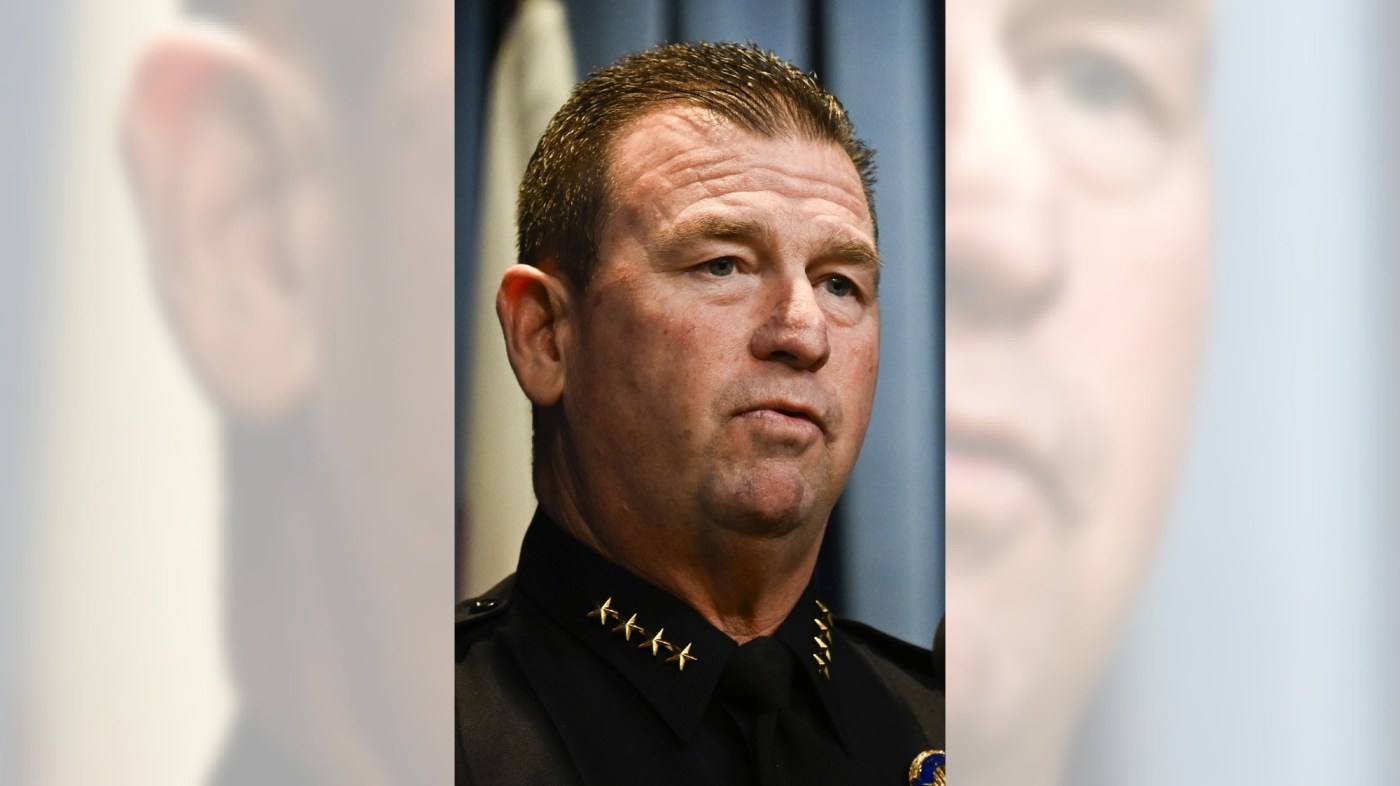
The Riverside Police Department plans to fire three patrol officers who were discovered with disabled military veteran license plates on their personal cars in 2025, Police Chief Larry Gonzalez said Friday, Feb. 27.
The officers were all rated 100% disabled by the Veterans Administration — which certified that they were eligible for the DMV-issued license plates — according to a lawsuit filed against the department on their behalf in July 2025.
The lawsuit states that when the officers were suspended on May 21, 2025, department officials told them they were being accused of making false claims about their physical limitations in order to obtain the plates, which provide parking privileges and reduced fees. Those suspensions, the lawsuit says, discriminated against the officers based on their status as disabled veterans.
The officers — Timothy Popplewell, Raymond Olivares and Richard Cranford — were summoned to department headquarters on Wednesday afternoon, where they were handed discipline notices.
Saku Ethir, an attorney for the union that represents Riverside police officers, met with the three officers outside the station on Wednesday. She declined to comment on Friday.
Matthew McNicholas, the attorney who filed the discrimination lawsuit, has said they did nothing wrong. The Riverside City Council on Tuesday rejected a proposed settlement of the lawsuit.
The officers, who remain on leave, are entitled to what is known as a Skelly hearing, where they can review and respond to evidence.
“I tell them, ‘Tell me something I don’t know that I didn’t read in the investigation,’ ” Gonzalez said. He declined to say why he believes the officers should be terminated.
Popplewell served in the military from 2008 to 2011 and, like the other two officers, joined the department in 2019, according to the lawsuit. He has served in the SWAT unit. Olivares was in the military from 2013 to 2019. He was in the department’s Honor Guard at the time of his suspension. Cranford was in the military from 2010 to 2014. He has also been a SWAT officer.
A veteran is eligible for a plate when a doctor, an optometrist, a chiropractor or another health care professional certifies that he has a severe mobility issue, has lost the use of a limb, has suffered permanent blindness or has been certified as 100% disabled by the U.S. Department of Veterans Affairs.
The VA considers several illnesses, injuries and mental health issues in calculating a disability rating, which is also used to determine monthly compensation.
The DMV must accept a VA certification, according to the DMV website. The decision to issue plates does not take into account a person’s current employment.
McNicholas said in a previous interview that how the VA determines disability is misunderstood.
“Their disability ratings are not the same as saying, ‘You are disabled for work,’ ” McNicholas said
The condition must have been developed during a veteran’s service, from a pre-existing condition that was aggravated by the service, or be a condition that did not appear until after the service member was discharged but was presumed to be caused by the service.
Popplewell was previously in the news for smashing a resident’s skateboard in January 2025 in an incident captured on surveillance video. He and another officer, who photographed the broken skateboard, were convicted of vandalism; the misdemeanor charges were dismissed after they paid fines and completed community service.