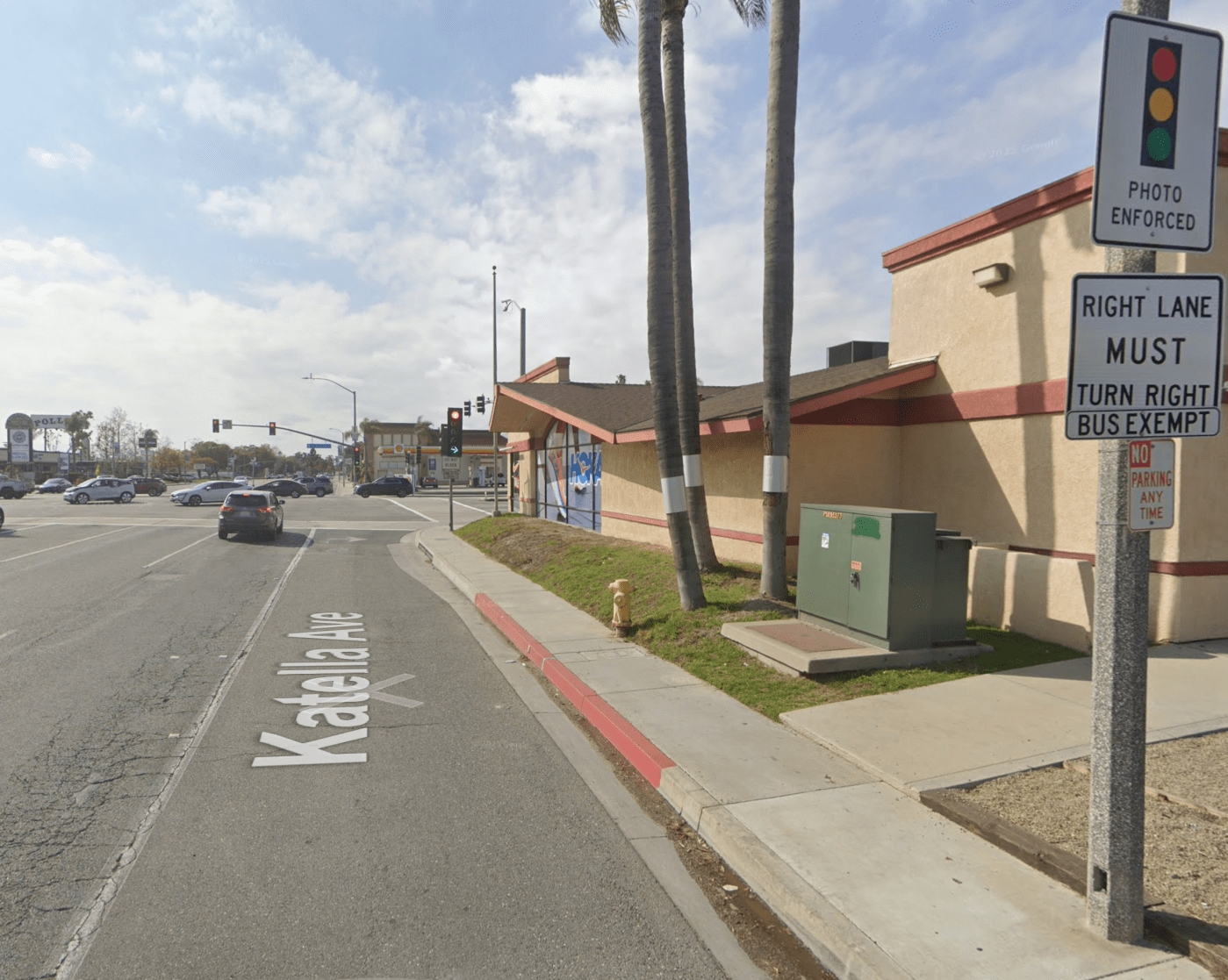
Q: Honk: I saw your response on speed cameras, but what about the red-light cameras? Must signs be posted so you know they are about? I read that a new 2026 law allows cities to start giving automated citations via red-light cameras now. The yellow lights go from one second to 10 seconds, so that’s unfair. If it was posted, I’d be super conservative at those lights.
– Don Field, Coto de Caza
A: Honk didn’t know about this new law until Don brought it to his attention: There will soon be two kinds of red-light cameras.
Under both types, drivers must be warned via a posted sign before they get to intersections with a red-light camera.
The number of red-light cameras in Southern California has gone way down in the last couple of decades, in part because some cities didn’t have them set up properly, and likely due to politicians knowing many drivers detest them.
Honk doesn’t like driving near them, either; he is scared of the fine and another stint with traffic school. Yes, he was collared once by a red-light camera when hoping the yellow would last longer than it did.
But one of his all-time favorite traffic engineers told him a long ago that T-bone collisions — which these cameras try to stop — are extremely dangerous.
Los Alamitos got its first red-light camera in 2005, so your traffic sage reached out to Robert Acosta, the support services manager for that city’s P.D.
For these old-school red-light cameras, under state law, at least one warning sign must be posted within 150 feet of the intersection.
In Los Al, and in many other jurisdictions, Acosta said, at least two such signs exist.
“The intent of the signage and the program overall is traffic safety and collision reduction, not citation revenue,” he said in an email.
What about the length of yellows?
Acosta says the state has established minimums: “Yellow-light durations range from approximately 3.0 seconds at 25 mph up to 5.8 seconds at 65 mph.
“These timings are calculated using nationally accepted engineering standards that account for vehicle speed, driver perception-reaction time, and safe deceleration rates,” he explained.
In Los Alamitos, and likely many, if not all, other jurisdictions with the old-school system, a violation can cost one point on the motorist’s Department of Motor Vehicles record unless a traffic-school session wipes that out.
But like Don figured out, there is another layer of red-light cameras coming to town. So the ol’ Honkster reached out to the office of the law’s author, Sen. Angelique Ashby, D-Sacramento.
A staffer in the majority leader’s office gave him the goods:
The second red-light camera system comes with a much softer hammer. Instead of a possible point against your driver’s record, this newer version is only about the fine, which the senator’s office says would be capped at $100 for the first such violation instead of a traditional red-light camera fine that can exceed $450.
Also, this violation goes against the vehicle’s owner instead of the driver. Easier to prove.
Both types of red-light cameras can co-exist in the state, the staffer said. Because this newest type of red-light cameras just became law on Jan. 1, it is too early to say what cities or counties will add them.
For these red-light cameras, warning signs must be visible to traffic within 200 feet of the red-light camera intersection.
HONKIN’ FACTS: In 2024, there were 35,983,261 vehicles registered in the state, while on Dec. 31 of that year there were 27,951,17 licensed drivers (Source: Department of Motor Vehicles).
To ask Honk questions, reach him at honk@ocregister.com. He only answers those that are published. To see Honk online: ocregister.com/tag/honk. Twitter: @OCRegisterHonk