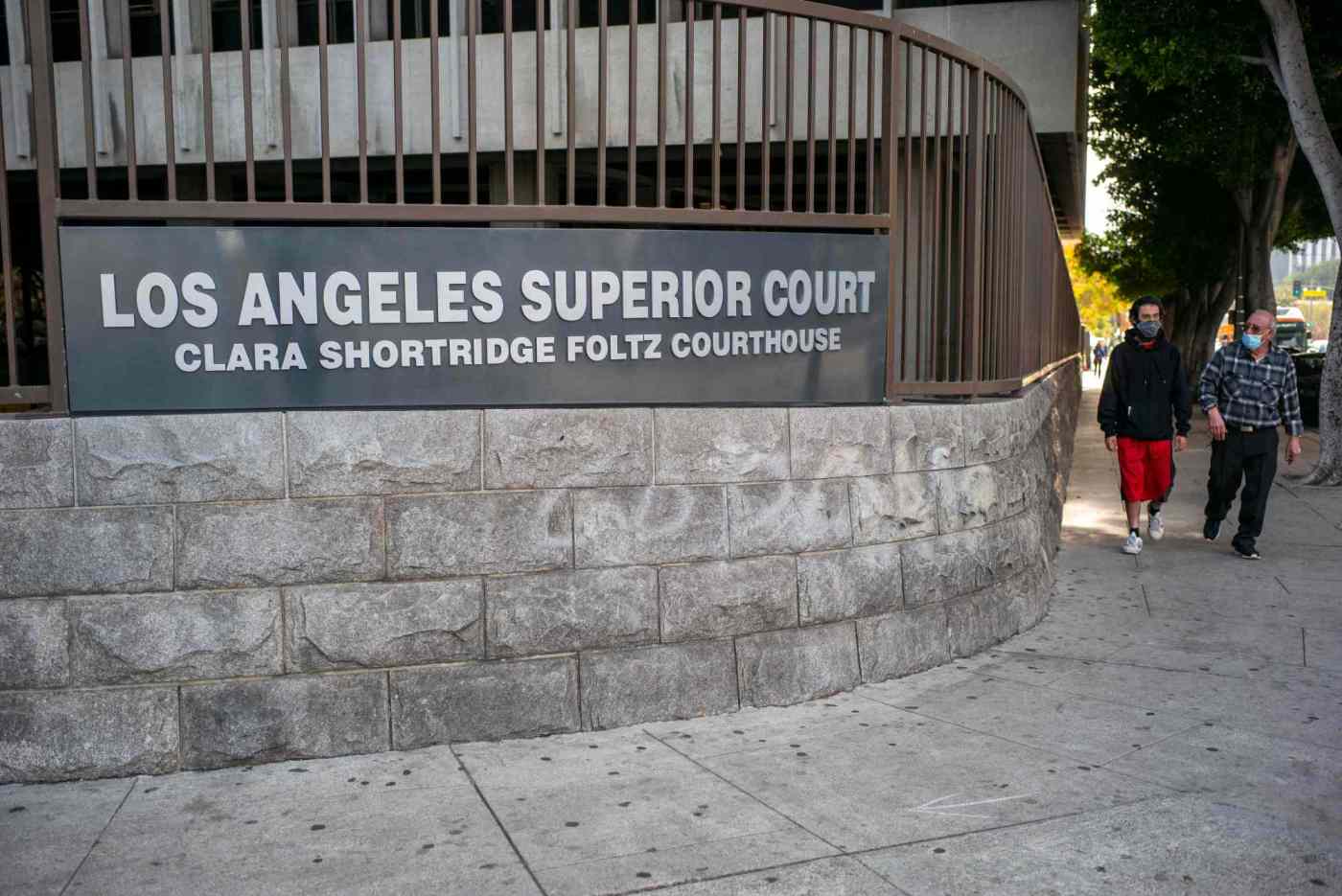
Nearly 330,000 people whose convictions in Los Angeles County went unreported for decades will soon have their rap sheets updated and, potentially, their employers notified for the first time.
Some could lose their jobs if the conviction would have disqualified them from the position they have, while others may have professional licenses revoked or firearms confiscated, experts say.
The massive update to criminal histories follows the discovery of an error within the Los Angeles County Superior Court’s previous case management system that prevented 464,000 arrest disposition reports, including 147,631 felony convictions and 233,003 misdemeanors, from being added to a statewide criminal record repository from 1980 to 2023.
As a result, background checks relying on the California Department of Justice repository may not have listed those convictions before now, potentially allowing people to obtain jobs they shouldn’t or wouldn’t have been hired for otherwise.
That includes the “Live Scan” fingerprint checks commonly used by licensing boards, law enforcement agencies, schools, health care providers and financial institutions throughout the state.
“The lack of conviction information in the DOJ database may have led someone to pass a background check who otherwise would not have passed if the information had been in the database,” according to the Superior Court’s website. “How licensing agencies or employers will treat the new information is unknown to the Court.”
Nearly 40,000 of the people whose felony convictions went unreported did not have any prior or subsequent DOJ record and may have appeared to have a clean record due to the error.
Another 84,000 cases ended in dismissals, but that outcome wasn’t reflected in their criminal history either.
The Los Angeles County Public Defender’s Office, which offers free expungement services, has requested additional information from the courts to “better understand the scope of this announcement, as well as the extent of the impact it will have on the people we serve,” communications director Natalin Daldalian said. “At the same time, we are proactively working to identify matters that may be eligible for reduction, vacatur, sealing, or that may no longer constitute crimes due to changes in legislation, and the resources needed to provide support for those impacted.
“Any interaction with the criminal legal system can have serious consequences,” Daldalian added. “The decades-long delay in reporting amplifies immigration risks, firearm eligibility issues, employment barriers, and professional licensing impacts for people who did not have the opportunity to properly address their records.”
About a quarter to a third of all jobs require a government-issued license, said David Schlussel, a staff attorney with the Legal Aid Foundation of Los Angeles, a nonprofit that operates expungement clinics.
“It could throw into question some people’s ability to hold those licenses or jobs,” he said. “That would not only create financial instability, but also create new stresses that could be another challenge among the many barriers and obstacles that people with a record are facing as they’re trying to reintegrate into society and build successful lives for themselves and their families.”
Updates expected in 6 weeks
The DOJ expects to process the bulk of the missing records over the next six weeks, though it estimates roughly 10% of the cases could take longer to finish, according to its website.
Employers and licensing boards that receive ongoing arrest updates for employees will be automatically notified once the cases are processed. Others would need to conduct new background checks to obtain the fixed criminal histories.
“As DOJ updates the criminal history summary records, employers, licensing agencies, and agencies issuing certificates, may receive notice of the updates made to your criminal record,” the DOJ’s website states. “The applicant agency will determine whether the criminal history is grounds for any adverse employment, licensing, or certification decision.”
LAUSD could be affected
The Los Angeles Unified School District, the second largest employer in the county, has not received any notifications from the DOJ and is not aware of any affected employees.
Employees and volunteers both must complete a Live Scan at LAUSD.
The district receives DOJ results when fingerprinting candidates for certificated and classified positions during its employment verification process. Candidates for classified positions also are checked through the FBI, but as the DOJ is “solely responsible” for providing arrest and dispositions from California to the bureau, the same records may have been missing there as well.
The state Education Code permanently prohibits anyone convicted of a “violent or serious” felony, with few exceptions, from working in schools, and an LAUSD spokesperson stressed such people “cannot be employed by the district” if their criminal record changes.
“Other cases may be reviewed for potential disciplinary action depending on a variety of factors consistent with state law and district protocols,” the district spokesperson said.
Arrests in all of the cases may have shown up on rap sheets visible to law enforcement agencies and prosecutors, but without a conviction, that information couldn’t have been used by employers to disqualify an applicant, at least not in the past eight years.
Restrictions for employers
California’s “Fair Chance Act,” in effect since January 2018, bars public and private employers with five or more employees from asking about convictions on job applications and from considering arrests that did not result in a conviction when determining whether to hire someone.
Convictions older than seven years, based on the date of the disposition, can’t be used either.
Background checks can be performed only after a job offer is made and an applicant’s written consent is secured.
If a criminal history is found, employers must conduct an “individualized assessment” to determine if the conviction is likely to come up in the workplace.
Employers “required by law to conduct background checks or restrict employment based on criminal history” are exempt. That includes many of the public agencies that utilize Live Scans.
Some could be blindsided
Though the DOJ may notify employers after it processes the backlog and those employers, in turn, must notify employees before taking action, there are no plans to notify people directly.
The DOJ states that anyone who wants to know if they are included in the missing records can request a copy of their criminal history, a process that requires an individual to submit fingerprint images and pay a $25 processing fee.
Some affected by the Superior Court’s backlog may have passed background checks over the years, depending on how old their cases are and could be blindsided when they apply for their next job or license.
“There’s a lot of repercussions that come from the fact that we have a system that creates massive amounts of these complicated statuses for the people who have been through them,” said Amy Gruber, a professor of law at USC’s Gould School of Law.
Someone with an unreported felony may have even applied for and obtained a firearm, she said. If their status changes and they’re then found in possession of that firearm, even if it isn’t used in a crime, they could face up to 10 years in prison, she said.
The DOJ’s website indicates that “persons convicted of charges with firearm prohibitions whose criminal history information is updated will be required to surrender their firearms.”
Keeping track of the massive paper trail involved in criminal records can be daunting. It’s possible that someone passed a background check and assumed their case was dismissed, expunged or not disqualifying, Gruber said.
“They’re governing themselves according to that mistake,” she said. “It kind of compounds this lack of knowledge.”
Under recent California law, some misdemeanor and nonviolent felonies are eligible for “automatic record relief” and may be withheld from prospective employers following review by the DOJ. It is unclear if the newly discovered trove of records will receive such a review prior to notification of employers. The DOJ did not respond to a question about it.
Schlussel, the expungement attorney, said the records should be proactively reviewed, especially if affected people won’t be notified in advance.
It can be “nearly impossible” for a person to otherwise know if they are affected, he said. Different background checks can have different results and applicants don’t typically get a copy. There may even be instances where someone already worked with an expungement clinic to clear the convictions visible on a Live Scan, only to now have a decades-old case added to it, he said.
“It’s unfortunate that it is difficult for such a large group of people to know if they’re affected or not, or how they’re affected,” Schlussel said. “This reflects a larger pattern of inconsistent record keeping about criminal histories and the opaque procedures for correcting errors.”
Problem uncovered in mid-2025
The Superior Court discovered the missing reports in June 2025 while implementing a new case management system and decommissioning its old one. It took six months to identify the full scale of the error and to weed out duplicates.
The new case management system validates all arrest disposition reports before they are sent to the DOJ and sends reports to court staff to address when a validation fails, according to the Superior Court’s website.
Those safeguards will “ensure no further ADRs fail to transmit to the DOJ successfully,” court officials said.
“The court is committed to building public trust and confidence in the judicial system, and that demands transparency when the court falls short of its standards,” said David W. Slayton, executive officer and clerk of court, in a statement. “At the end of the day, it is most important that the criminal history records be complete and accurate, and the court has taken steps to ensure this is the case.”