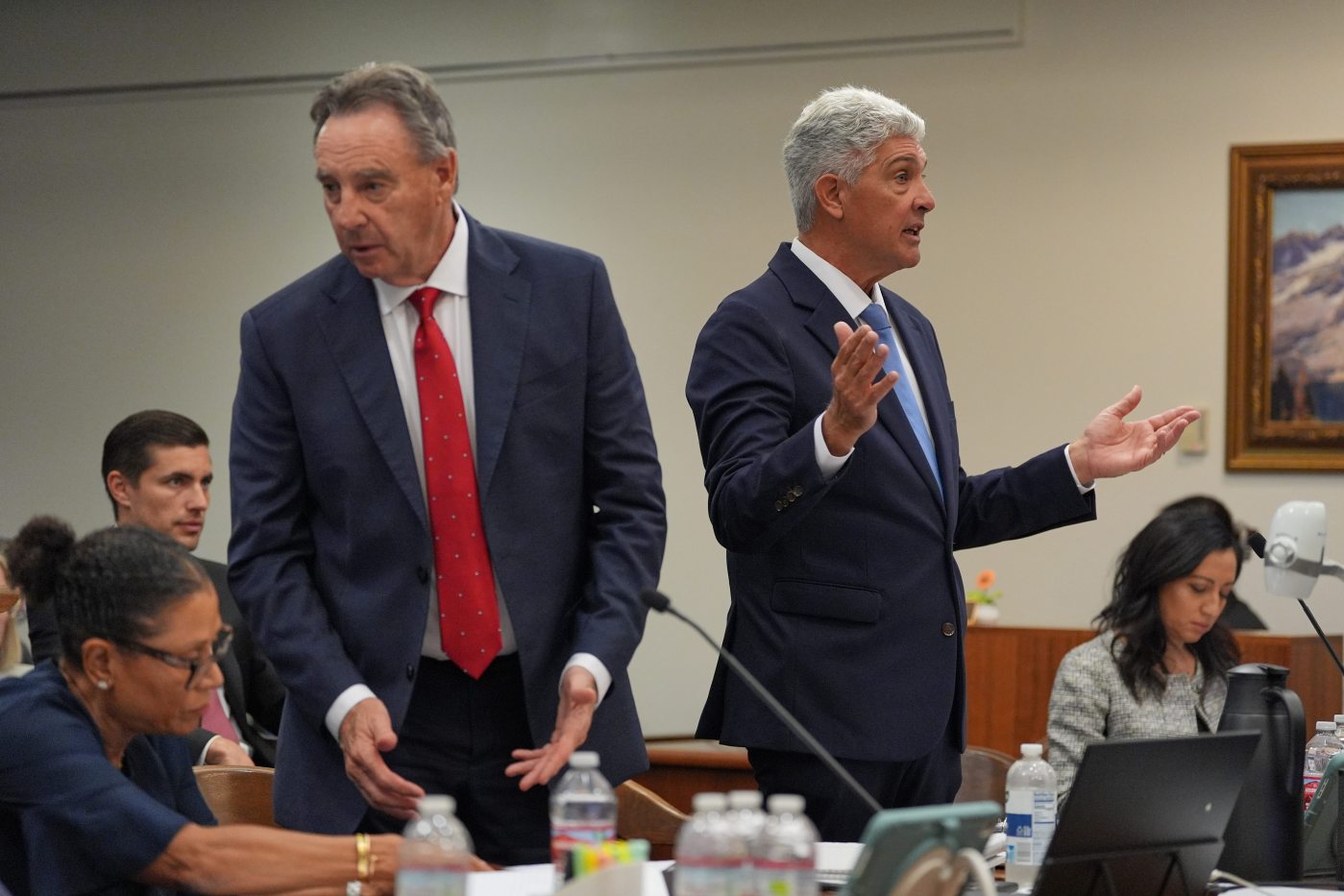
Attorneys for the Los Angeles Angels hope to prove that Tyler Skaggs was a drug addict for so long and went to such great lengths to hide his addiction that there was no way for the team to prevent his 2019 death, a lawyer for the organization told an Orange County Superior Court judge on Monday, Dec. 1 as the ongoing wrongful death trial against the ballclub entered the defense phase.
Attorneys for Skaggs’ family — who contend the Angels knew about his drug issues and the fact he was receiving illicit opioids from former team communications staffer Eric Kay — rested their case on Monday morning, after more than a month and a half of testimony from roughly two-dozen witnesses.
Attorneys for the Angels — after briefly telling Judge H. Shaina Colover outside the presence of the jury what they expected to be the main focus of their defense in the civil lawsuit — kicked off their case by playing for jurors a deposition video with former Angels first baseman C.J. Cron.
Cron said Skaggs, a starting pitcher, was the one who tipped him that Kay could get him the opioid pills. Cron didn’t know the exact year that conversation took place and said he couldn’t recall why Skaggs suggested he reach out to Kay for the pills.
“I’m sure it was for a reason,” Cron said in the video. “Maybe I was complaining about something and he mentioned it. But I don’t really remember what it could have been or how it came up.”
Under questioning by a team attorney, Cron said he received pills from Kay on five to seven occasions during the 2015, 2016 and 2017 seasons and would occasionally take them on off days. Cron said he spoke to Kay about getting the pills when they were on the field or in the clubhouse. He added that he paid Kay in cash and kept the pills hidden in a shoe in his locker.
Cron said he assumed Kay was getting the pills from a physician, and was unaware that Kay was instead obtaining the opioids from “street dealers.” According to evidence presented in the civil trial, Kay met his drug sources online.
Skaggs didn’t talk with him about his own opioid use, Cron said.
“He didn’t say anything other than he got it from Eric Kay,” Cron testified.
Cron said he enjoyed his time with the Angels, the team that first drafted him.
“It was good,” Cron said. “They gave me my first opportunity. I played behind Albert Pujols, so I didn’t see the field much of the time. But I got my foot in the door.”
“Did you ever get injured when you played with the Angels?” Attorney Stephen Ladsous asked Cron.
“Yeah,” Cron chuckled. “Pretty much every year.”
“I’ve had seven surgeries, and I think four or five of those were with the Angels,” he added.
The team gave him time to recover from injuries, Cron said, and didn’t pressure him to return to the field before he was ready. Cron said he was unaware of any evidence that the team knew Kay was providing drugs to players.
The Angels, like other Major League Baseball team , allowed players to drink on team flights and didn’t institute curfews or generally limit what players did in their off-time during team trips
“Generally speaking, did the major league teams treat you like adults and expect you to turn up for work the next day?” Ladsous asked.
“Yeah,” Cron responded.
Cron was traded to the Tampa Bay Rays in February 2018, more than a year prior to Skaggs’ death. He was traded back to the Angels in 2023, a year after he admitted to opioid use during Kay’s criminal trial. A communications staffer briefly spoke to him about what to say if anyone asked about Skaggs or drug use, Cron said, but that was the extent of his discussions about it with the Angels.
“Did anyone in the organization ask you if you were still using Oxycontin?” Skaggs family attorney Daniel Dutko asked Cron about his return to the Angels.
“No,” Cron responded.
“Did anyone in the organization ask you if you were getting drugs from any source?” the attorney asked.
“No”
Another player, former Los Angeles Angels pitcher Mike Morin, previously testified to taking illicit opioid pills provided by Kay in order to deal with the pressure to stay on a major league roster.
Earlier Monday, the final witness for attorneys for the Skaggs — economist and University of San Francisco professor Dr. Daniel Rascher — estimated that Skaggs would have likely earned between $102 million and $114 million between 2021 and 2026.
There is no dispute that Kay provided Skaggs and the other players with the opioid pills. He is currently serving a more than 20-year prison sentence for his role in Skaggs’ death. The question for the current civil jury is whether the Angels also share responsibility.
Skaggs died in July 2019 in a Texas hotel room at the start of an Angels road trip. He had snorted a counterfeit pill containing fentanyl that Kay had provided him and consumed oxycodone and alcohol. Attorneys for the Angels contend the mix of the counterfeit pill, the oxycodone and the alcohol killed Skaggs, while attorneys for the Skaggs family counter that the counterfeit pill alone would have resulted in his death.
Employees who worked with Kay in the Angels front office — including the communications team and the HR department — have denied knowing that Kay was addicted to opioids or distributing drugs to players. Those former co-workers acknowledged that Kay acted erratically at times, but explained they believed it was due to mental health or related prescription drug issues.
Several former member of the team clubhouse, however, have testified that Kay’s drug use was well known in the organization. Kay’s ex-wife has testified that team officials were warned that Kay was providing drugs to Skaggs.
Family members have acknowledged that Skaggs, while playing for the Arizona Diamondbacks in 2013, told them he had a problem with Percocet. The family members said they were unaware of any issues Skaggs had with opioids during his time with the Angels.
Testimony in the civil trial, which is expected to last until mid-December, continues Tuesday.