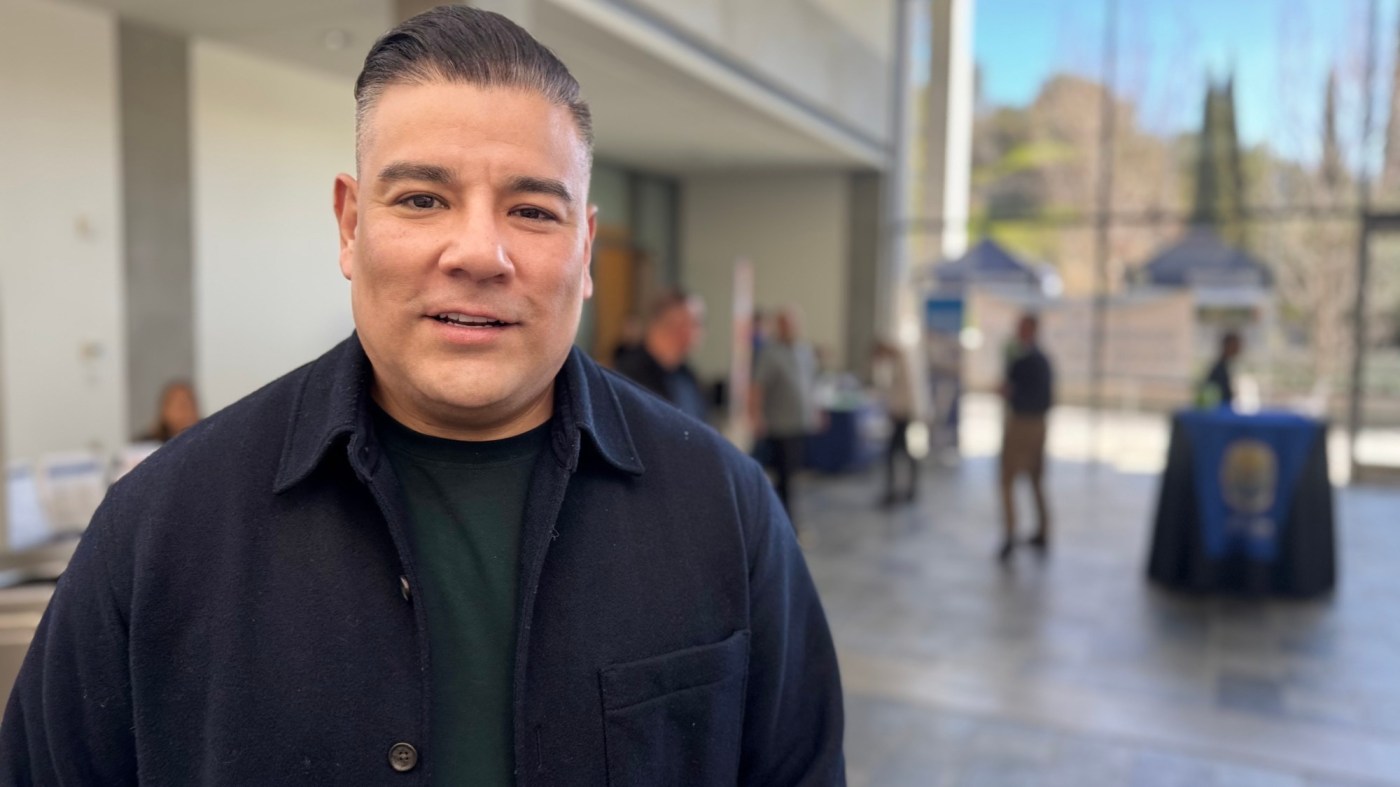
A few weeks after California Insurance Commissioner Ricardo Lara rattled consumer groups with a proposed overhaul to the insurance-rate review process, the embattled state executive ended up at his parent’s home in East Los Angeles to catch his breath away from a chorus of calls urging him to resign.
The proposal in September capped a tough year for the commissioner, who was grappling with upheaval in California’s home insurance market and the aftermath and recovery from the January 2025 wildfires in Los Angeles County.
Away from the weight of the job, he shared a quiet dinner of fried potato tacos and red salsa with mom and dad, somewhat surprised his mother wasn’t grilling him about work in her usual style.
“As I’m leaving, she says, ‘Hey, chin up, keep fighting. I didn’t come to this country and suffer what I did so that you could give up. We’re not giving up. Finish the job that you were elected to do.’ “
After dealing with more than 120 wildfires and listening to myriad stories of death and financial ruin, Lara in an interview with the Southern California News Group said he was struggling to figure what’s next, with many issues still at hand as his two-term nears its end in early 2027.
“You take these fires home with you,” Lara said. “I’ve dealt with depression and anxiety after seeing so much devastation, seeing so much heartbreak, and seeing grown men cry with desperation.”

Lara has an active agenda in the coming year — perhaps his legacy, he says — and takes stock in what he’s already achieved to help L.A. rebuild from the wildfires that destroyed 16,250 structures, killed 31 people in Pacific Palisades and Altadena and displaced thousands of residents.
“I really haven’t had a moment to reflect,” he said. “It’s been disaster after disaster since 2019. I need a mental break from elected office. I think it’s time for me to see what else I can do.”
In his crosshairs before he leaves is making insurance giants like State Farm Mutual Insurance Co. more transparent with its financials, and reforming the Fair Access to Insurance Requirements, or FAIR Plan, the state’s insurer of last resort.
Lara had plenty to say about Los Angeles-based nonprofit advocacy organization Consumer Watchdog and proposed regulation that would gut compensation for groups that intervene in insurance rate cases — something that CW says goes against the spirit of Proposition 103. Lara says the money can be spent better by holding insurers accountable with his department’s new “sustainable insurance strategy,” or SIS.
SIS allows insurance companies to increase rates based on the growing threat of climate change, passing on to their customers costs for insuring high-risk homes. In exchange, insurance companies are expected to write more polices in fire-prone parts of the state, where they’ve ended coverage for hundreds of thousands of homeowners over the past decade.
The goal of SIS is to help transition property owners off the FAIR Plan, which has written 668,609 homeowner policies as of Dec. 31, 2025, up 146% since 2022, while its total exposure has jumped to $724 billion, a 230% increase over the same period.
Consumer advocates, however, say SIS reforms will lead to a continued spike in rates. They are deeply skeptical that insurers will actually write more policies in fire-risk communities. They also cite what they describe as “loopholes” in the regulations, including the exclusion of many fire-prone neighborhoods from state maps where insurers must write more policies.
Insurance insiders counter those concerns.
“The SIS was the best, politically-feasible answer to this reality,” said Rex Frazier, president of the Personal Insurance Federation of California. “It requires insurers to commit that they’ll maintain a reasonable presence in high hazard areas in exchange for being able to attempt to achieve approval of reasonable rates. It doesn’t even give certainty of a rate increase.”

Rates rising?
Following the January fires, six of the top 10 policy underwriters in California sought to increase their rates for homeowners by a combined $1.7 billion by utilizing Lara’s new SIS ratemaking process. The SIS standards grew out of last year’s wildfire recovery efforts, along with Lara’s resolve to keep insurers from leaving the state or slipping off a financial cliff — as nearly happened with State Farm.
The rate hikes tied to the six insurers do not include a 35.8% rate increase sought by the state-mandated FAIR Plan, filed on Sept. 29 with state regulators. If approved by the state insurance department, the changes could go into effect as soon as April 1, 2026.
Two of California’s largest home insurers recently got approval to raise rates for customers by an average 6.9% later this year, according to Lara, who said they were the first insurers to fall under SIS.
The fifth largest, California State Automobile Association, the Walnut Creek-based insurer for northern and central California, will begin implementing its rate increase for nearly 481,800 homeowners starting March 15 — bringing in $71.5 million more in premiums for policyholders. Rates for more than 650,000 customers with Mercury Insurance, the third-largest home insurer in California, will begin to change in July — leading to roughly $85 million more in premiums, according to a tally by Consumer Watchdog.
A Mercury spokesman refused to confirm the amount of the additional premiums to be paid by its policyholders.
The watchdog thorn in his side
Lara’s chief critic since he began his job in 2019 has been Consumer Watchdog, the group that wrote the state’s 38-year-old Proposition 103 insurance law.
The ballot initiative transformed auto and homeowner insurance by requiring prior approval for rate increases from an elected insurance commissioner and allowed consumer intervention in rate cases to ensure insurance is affordable and fair.
In September, Lara proposed a regulation that would cut organizations representing consumers out of rate reviews — a gambit that ultimately led to several such groups calling for his resignation last fall. Consumer Watchdog says it has used the regulatory process to save homeowners and motorists $6.5 billion since 2002.
“The rules are geared toward denying compensation for any organization that the commissioner is not in sync with,” said Carmen Balber executive director of Consumer Watchdog. “It would hamstring any organization’s ability to participate in the process, because it makes it hard to get paid.”
Since 2013, Consumer Watchdog has received the lion’s share of nearly $14.3 million in compensation awarded to a handful of intervenors in rate cases and rules making, according to department spokesman Gabriel Sanchez. Other consumer groups getting a slice of compensation include Consumer Federation of California Education Foundation, National Asian American Coalition and United Policyholders.
In his interview with SCNG, Lara traced the tension with Consumer Watchdog back to his first day in office. That’s when the group demanded he adopt resolutions mandating disclosure of insurers’ fossil fuel investments due to climate change, which Lara refused to do.
Lara also rejected a Consumer Watchdog-based petition at the time that would have barred insurance companies from using education and occupation to rate auto insurance, a pervasive practice that discriminates against lower income and communities of color, according to Balber.
State Farm woes
Last year, Lara also took on State Farm, which teetered on insolvency in the state after the L.A. wildfires.
State Farm is made up of several mutual companies in the U.S. In California, the State Farm General division, which is the largest insurer in the state, insures more than 1.2 million policyholders for homeowners’ insurance.
In June, the company filed for a 31.4% rate change, for $1.13 billion. That was separate from State Farm’s emergency 17% rate increase for homeowners approved in May by Lara. This hike was made contingent on State Farm meeting conditions like a cash infusion and halting its non-renewals.
State Farm received an immediate $400 million cash infusion from its parent company to address its serious financial condition.
“I wanted them to have some skin in the game from the parent company to demonstrate that they’re at least invested financially in solving this issue. There was no way I was going to allow them to come in and not even go to their parent company for help,” Lara said. “We still need to understand what State Farm is going to do to stay solvent, and what is their plan — not just in California, but nationally.”
State Farm’s request for higher rates without adequate financial documentation has put Lara in a tough spot. The commissioner said he relied on conversations with retiring Texas Insurance Commissioner Cassie Brown to understand how State Farm’s parent company stepped in to help after a catastrophe in her state.
Lara is concerned that State Farm is becoming too big to fail since it holds roughly a fifth of the insurance market in California and sizeable chunks of market share in other big states — like Texas and Illinois. In discussions with other state insurance commissioners, Lara worries that the bigger that State Farm grows, the more risky the marketplace becomes if a dominant player fails and leaves millions of policyholders with nothing after a catastrophe.
After the L.A. wildfires and with hundreds of complaints from consumers who encountered trouble getting claims paid out, Lara began a “market conduct exam” of State Farm to determine compliance with state laws. The study is due in February and will make recommendations on how to keep State Farm from stumbling again.
“It’s something that we constantly worry about and is a constant discussion point that we have when we all get together,” said Lara of meetings and calls with other state commissioners.
A market conduct examination in insurance is a state-led review of an insurer’s business practices, such as sales, underwriting and claims handling. The exam examines whether a company complied with insurance laws, regulations and fair treatment of consumers.
Lara also said that his department is closely watching litigation filed by lllinois Attorney General Kwame Raoul to force State Farm to hand over nationwide homeowner insurance data (premiums, coverage and claims) as part of an investigation into potential discriminatory practices, leading the company to counter-allege that Illinois’s insurance director, Ann Gillespie, is overstepping by trying to control nationwide regulation.
California hasn’t yet decided whether to join in the Illinois lawsuit, Lara said. “We need transparency, and we need that information to be able to assess and understand State Farm.”


FAIR Plan reform
A big push is still to come from Lara who said he wants a legislative overhaul of the nearly 60-year-old FAIR Plan. He believes the department of insurance needs more power to guide ratemaking and coverage for homeowners, plus speedier payouts from claims resulting from disasters.
He is currently working on a plan with state Assemblymember Lisa Calderon, who represents the 56th district in eastern Los Angeles and chairs the influential Assembly Insurance Committee.
He declined to discuss details of the proposed legislation, but did indicate that “transparency” is a step in the right direction. A hearing on the FAIR Plan overhaul is scheduled for Jan. 28 in Sacramento, according to Calderon’s legislative schedule.
“This effort is in tandem with seeking to depopulate the FAIR Plan through commitments from insurance companies to expand coverage in wildfire distressed areas [as part of the SIS strategy],” Lara said. “The FAIR Plan should be a last resort, not a first option.”
In July, Lara sued the FAIR Plan for “systematically denying and limiting smoke damage claims from wildfire survivors.” Consumer Watchdog maintains the filing has yet to stop FAIR Plan from illegally denying smoke damage claims and has not done anything to fix the situation.
Frazier at the Personal Insurance Federation says the smoke damage claims are getting paid. He points out that the insurance department’s claims tracker for the L.A County wildfires says insurers have paid $22.4 billion through Nov. 17, 2025.
“If there is a systematic nonpayment of claims, someone needs to explain how that occurs when the insurance industry has paid multiple times any other government or non-government source to help people in need,” Frazier said.
The Calderon proposal also could expand the FAIR Plan’s insurance offerings. Lara said he’s tired of dealing with lawyers fighting in court — wasting taxpayers’ money — and wants to shake-up the FAIR Plan charter with legislation.
For instance, in early December, a state appeals court blocked a state insurance department regulation issued in 2021 that would have required the FAIR Plan to offer additional coverage beyond basic fire policies. The court ruled that the department’s plan to have the FAIR Plan offer liability insurance was not the intent of the legislature when it established the insurer of last resort in 1968.
Lara said the new legislation would give him the authority to make the FAIR Plan provide comprehensive policy option.
“I don’t have a crystal ball to determine what catastrophe we might have to deal with in the future — but I have to make sure that the next commissioner has a FAIR Plan that’s responsive, that’s transparent and is consumer-centric, especially when it comes to smoke claims.”