BEIJING — Canada will lower tariffs on some Chinese electric vehicles and China will do the same for Canadian canola products, a major shift in policy that was announced Friday during a landmark state visit by Prime Minister Mark Carney of Canada to Beijing.
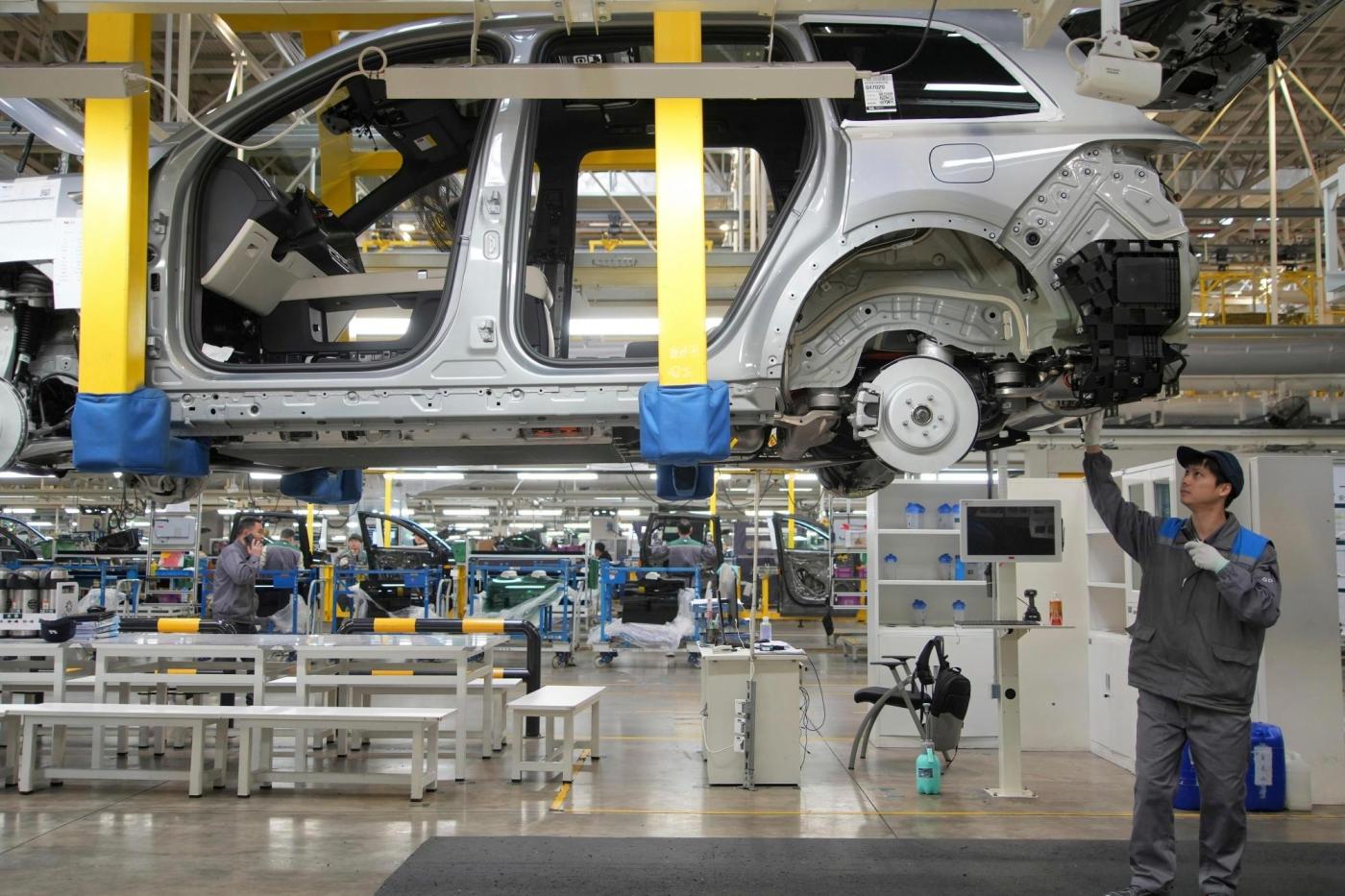
Carney announced that Canada will allow up to 49,000 Chinese electric vehicles into the Canadian market under a preferential tariff rate of 6.1%. That is much lower than the current rate of 100% that Canada imposed in 2024 at the behest of the United States.
Carney made his announcement after meeting with President Xi Jinping of China in Beijing on Friday, where the two leaders hailed a new “strategic partnership” between the countries, as the previously frosty relationship showed signs of a thaw.
The Chinese government’s summaries of the talks were broader, with no specific mention of changes to the tariffs on either canola or Chinese electric vehicles.
The tariff changes Carney announced were modest, but they signal an important break with the United States as Canada seeks to urgently diversify its trading partners and reduce its reliance on the United States.
President Donald Trump has imposed tariffs on some key Canadian exports like lumber, steel and autos. He has also threatened Canadian sovereignty, a shift Carney has described as a “rupture.”
The turmoil in the relationship between Canada and the United States has led to a near freeze in trade talks between the two allies. A review of their free trade agreement, which includes Mexico, is expected later this year.
Carney told the news media in Beijing on Friday that China had become a more “predictable” partner to deal with than the United States and that “you see results coming from that.”
Wu Xinbo, the dean at the Institute of International Studies at Fudan University in Shanghai, said: “I think China not only views Canada as an important economic partner, but also as a useful diplomatic counterweight in dealing with the United States.”
Carney also announced Friday that China would make a “considerable investment into Canada’s auto sector” within the next three years as part of the agreement to lower tariffs on electric vehicles.
In exchange, Carney said China will lower tariffs on Canadian canola seed to a combined rate of approximately 15%, down from about 85%, and would remove its 100% tariffs on canola meal, offering relief to a major Canadian agricultural sector. There was no immediate confirmation from China about the tariff changes Carney described.
“President Xi and I are announcing that Canada and China are forging a new strategic partnership,” Carney said.
Xi’s remarks to Carney, according to Beijing’s summary of the talks, suggested that China welcomed the opportunity to embrace Canada as it pivots away from the United States. He said that improving economic ties and other relations between the countries would benefit the world.
But Xi sought to lay down some conditions, saying that the two countries should treat each other with respect, a warning against seeking to criticize China’s internal affairs or human rights record. He also said that China’s “high-quality development” — a reference to China’s industrial policy and export strength — would benefit Canada. That message implies that tariffs on Chinese exports like electric vehicles would not be conducive to the relationship.
Diplomatic relations between the two nations ruptured in 2018, when China arbitrarily detained two Canadian citizens after Canada arrested a Chinese business executive wanted in the United States. All three were released in a swap in 2021, but the relationship between Canada and China was practically frozen until now.
Carney said on the campaign trail last year that China posed the biggest security threat to Canada, a statement he sought to move away from on Friday. Critics in Canada said he was cozying up to a superpower that Canadian security forces have accused of meddling in Canadian political affairs and of seeking to control and surveil Chinese-Canadians on Canadian soil.
Asked Friday about China’s human-rights record, Carney said Canada had to be pragmatic in pursuing economic and trade deals with China where possible.
Carney said he brought up concerns about China in private discussions with Chinese officials. But it does not help to make public statements about those concerns, he added.
“We take the world as it is, not as we wish it to be,” he said.