Fullerton resident Roya Saberzadeh tells a frustrating tale of her emigration to the United States from her native Tehran in 1989.
“It was after the war with Iraq,” she told me. “European countries wouldn’t let us in, and the U.S. wouldn’t give me a visa. We were all children of the revolution.”
Her husband was already a student in Florida. It was a waiting game for the couple. “I finally got in under student acceptance,” she said.
When it came time to buy a house, she considered moving to Westwood or Irvine, where they had larger Persian communities, Roya said. “But I thought, if I wound up there, it would be just like Iran. Plus, I really wanted to learn English.”
Roya talked about growing up with Persian cuisine, which relies heavily on rice, grilled meats, fragrant herbs, (especially cinnamon, turmeric, cardamom, saffron and dried limes) and nuts.
“My mom was a working mom,” she recalled. “She would get up in the morning, cook and go. I mostly watched. She had five sisters, and my dad had two sisters. I learned more about cooking being in their homes. When we were younger, we would visit my mom’s mom. They got water from a well and milk from the farm, which they served warm for breakfast. It smelled, and we complained. They called us pasteurized city kids.
“There was not much home baking,” she added. “There were no ovens. Everything was cooked on top of the stove. Bakery bread was baked in a hole in the ground. It was usually bread that didn’t rise up, like flatbreads. There were pastries, but they were mostly Danish. Whenever my dad got his paycheck, he would buy pastries.”
Roya said her maternal grandmother would come to stay with the family for a couple of weeks at a time.
“Before she would come, my mom would buy pounds of limes and lemons for making juice. Also, they made tomato paste at home, carrot jam, barberry jam. They put whole dried lemons in the stew.”
Super King in Anaheim, which is a Middle Eastern market, sells them. The dried limes look like walnuts.
“You poke holes in them and throw them in the stew,” Roya said. “They also sell it in powdered form.”
Tahdig, a traditional Persian rice with a crusty bottom, is very popular, as are pickled vegetables called torshi.
“Persian pickles are saltier and crunchier than American pickles. For torshi, you could use eggplants, carrots, cauliflower, even whole garlic,” she said. “It changes the color and texture, becomes very soft.”
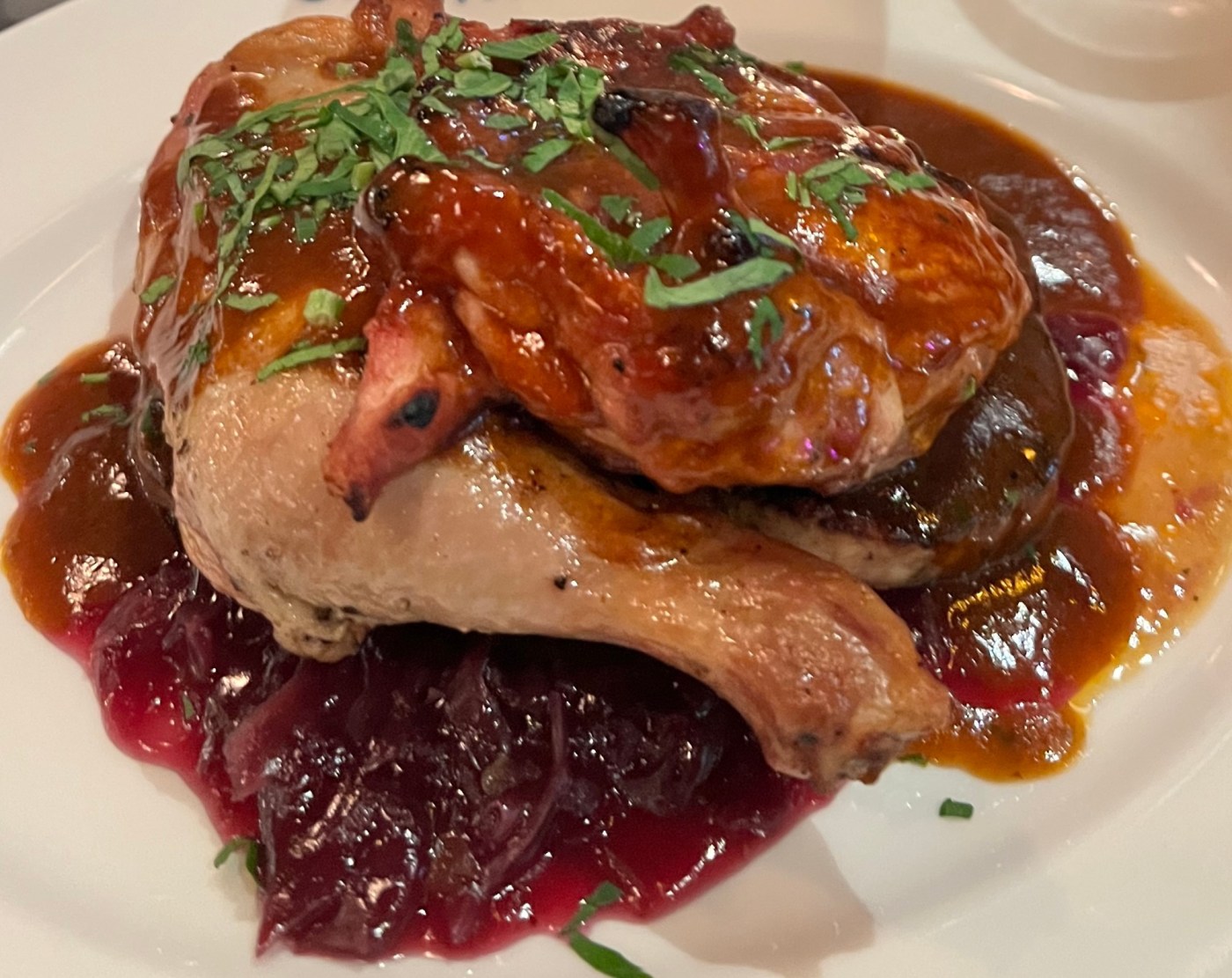
One of Roya’s favorite dishes is this stew with pomegranate and walnuts from her well-used cookbook, “New Food of Life” by Najmieh Khalili Batmanglij (Mage Publishers).
“You can substitute meatballs or make this recipe vegetarian or even vegan,” she noted.
Fullerton’s Judy Bart Kancigor is the author of “Cooking Jewish” and “The Perfect Passover Cookbook.” Her website is cookingjewish.com.
Pomegranate and walnut khoresh, or stew, with chicken
From “New Food of Life” by Najmieh Khalili Batmanglij; yields 4 servings
Ingredients:
• 2 large onions, peeled and thinly sliced
• 2 pounds chicken legs, cut up, skin removed
• 3 tablespoons butter or oil
• 1 teaspoon salt, or to taste
• 1/2 pound (2 cups) shelled walnuts, finely ground
• 1/2 cup pomegranate molasses dissolved in 2 1/2 cups water, or 4 cups fresh-squeezed pomegranate juice
• 1/2 teaspoon cinnamon (optional)
• 1/4 teaspoon ground saffron dissolved in 1 tablespoon hot water (optional)
• 2 tablespoons sugar, or more to taste (optional)
• 2 tablespoons whole fresh pomegranate seeds
Method:
1. In a Dutch oven, brown onions in butter until golden brown, then add chicken to brown and salt.
2. Add remaining ingredients (except pomegranate seeds), cover and simmer for 1.5 hours or until chicken is fully cooked, stirring occasionally with wooden spoon to prevent nuts from burning. Stew should be dark brown and sweet and sour. Taste the sauce and adjust for seasoning and thickness. Add more pomegranate molasses for a more sour stew or sugar for a sweeter taste. If the stew is too thick, add warm water to thin it. It will be thicker once it’s off the heat. If too thin, mix 1 teaspoon cornstarch with 1 tablespoon cold water and stir into the stew for a few minutes.
3. Transfer stew from the Dutch oven to deep oven-proof casserole. Cover and place in a warm oven until ready to serve with saffron–steamed rice. Just prior to serving, garnish with pomegranate seeds.