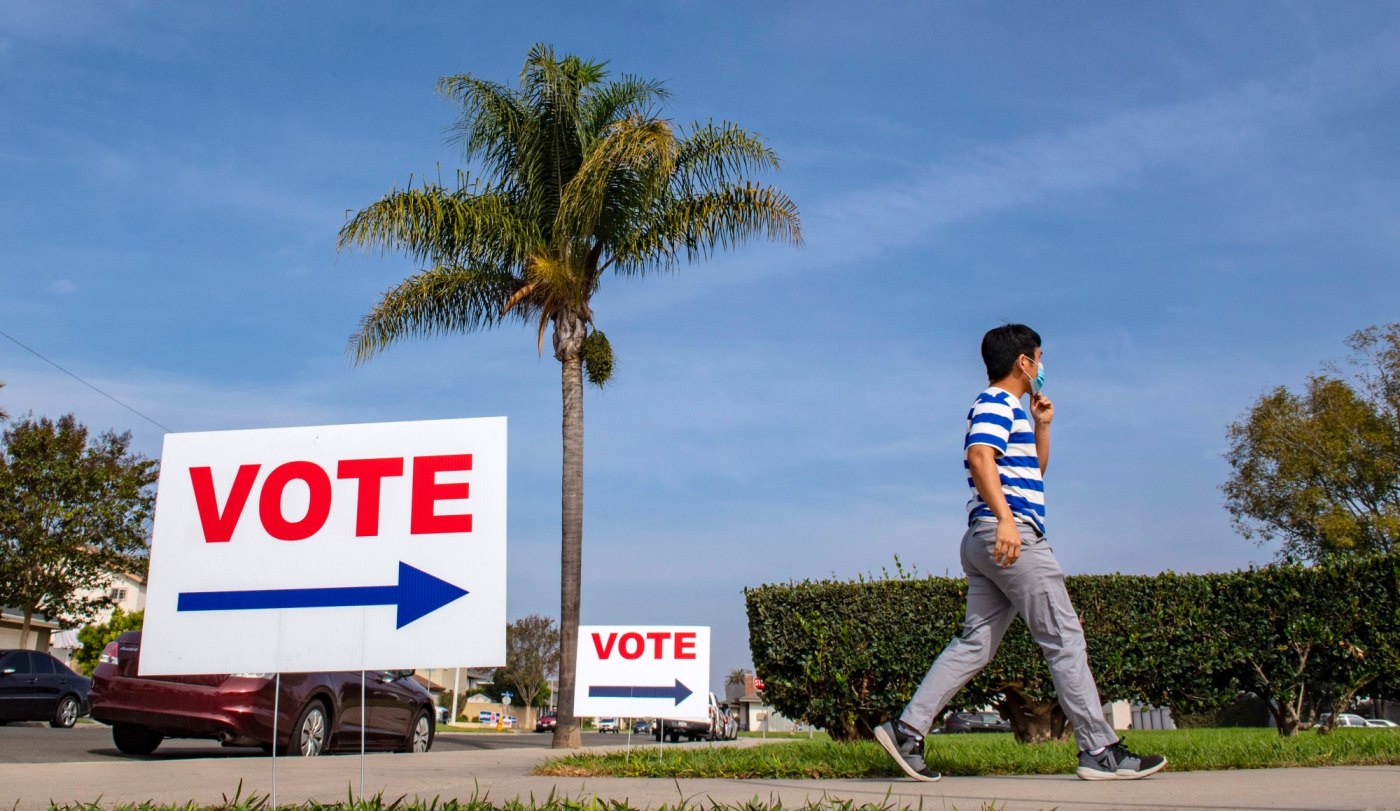
After multiple losses at the state level, Huntington Beach will now look to the US Supreme Court to uphold Measure A, which would allow the city to require voters to show identification at local polls.
A unified City Council decided to keep fighting for the measure and ask the country’s highest court to review a California appeals court ruling that struck down the city’s voter ID measure. The decision came just a week after the California Supreme Court declined to take up the city’s appeal.
“Polls show that over 80% of the country supports the common-sense idea of requiring voter ID to vote in elections,” Mayor Casey McKeon said in a press release about the council’s Tuesday, Feb. 3 closed session vote. “Identification is required to participate in most adult endeavors in this country. Therefore, voter ID should be required for the fundamental, time-honored sacred basis of a free society: Elections.”
McKeon cited in his statement a 2008 Supreme Court decision that Indiana’s voter ID statute did not violate the 14th Amendment, saying, “We are optimistic that the U.S. Supreme Court will take up this fundamental constitutional issue that voter ID does not violate the equal protection clause.”
In March 2024, Surf City voters passed Measure A by 53%. The charter amendment would allow the city to require voters to present identification when casting a ballot in local elections starting in 2026. City officials have yet to outline how that might work.
The following month, state Attorney General Rob Bonta and Huntington Beach resident Mark Bixby, who publishes the Surf City Sentinel Facebook page, filed separate lawsuits against the city to block the implementation of the measure. Bonta said at the time that the policy “undermines that process and threatens the constitutionally protected right to vote.”
In December 2024, Gov. Gavin Newsom signed into law a bill barring cities from enacting their own voter ID laws.
The 4th District Court of Appeals ruled in November that Huntington Beach’s proposed local voter ID requirement would violate state election law — a decision that overturned an earlier trial court ruling, which supported the city’s argument that being a charter city allows local leaders greater control over municipal elections. The California Supreme Court on Jan. 28 denied the city’s appeal.
US Supreme Court justices receive roughly 7,000 to 8,000 appeals per year and grant arguments in about 80 of those cases.