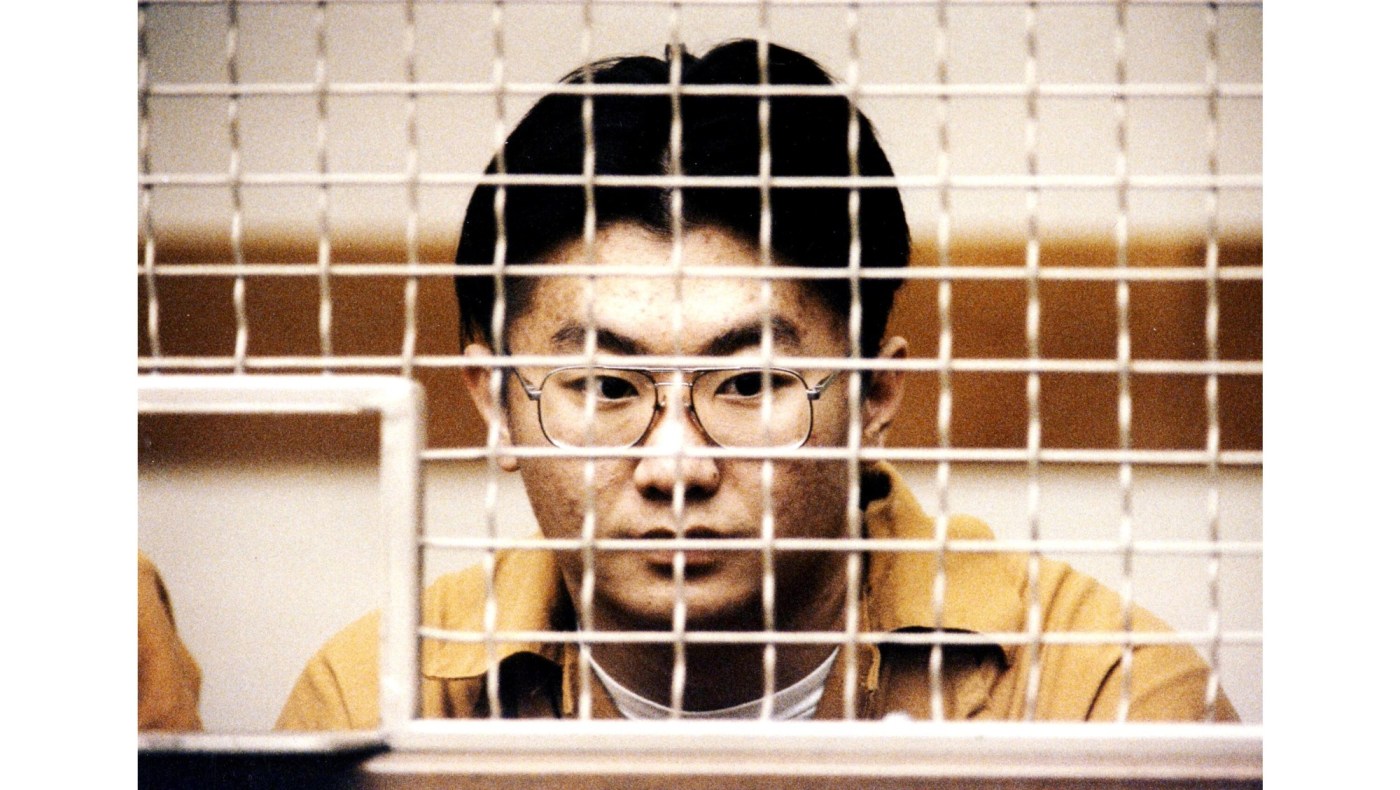
Three decades after the Orange County “honor roll murder” of a 17-year-old carried out by a group of his fellow teens drew international attention, the question of whether a man long ago convicted for serving as a lookout during the slaying shares full legal responsibility for the deadly plot was once again the center of courtroom argument on Tuesday, March 3.
Whether Kirn Young Kim, then 16, was a knowing participant in the plot to kill Stuart Tay at a Buena Park home on New Year’s Eve 1992, or if a plan he believed to be pure fantasy suddenly became all to real, will ultimately determine whether Kim’s decades-old murder conviction will stand.


Kim — an honors student who served more than a decade behind bars for Tay’s killing as a model prisoner before his parole — has spent seven years working to overturn his murder conviction. In a series of hearings beginning late last week, he finally got a chance to testify on his own behalf and for his attorney on Tuesday to argue the case for vacating the high-profile conviction.
Robert Chan — at the time a valedictorian candidate at Sunny Hills High School in Fullerton — orchestrated Tay’s killing after Chan and Tay had a falling out over what had been a mutual plan to rob a computer salesman. Prosecutors allege that Chan laid out his plan to kill Tay to four other teens — including Kim — and showed them a shallow grave he had dug in one of the teen’s backyard. Chan also walked the others through a “rehearsal” of the killing.
Chan convinced Tay to go with him to the Buena Park home by suggesting they were going to get a firearm. Instead, Chan and another teen beat Tay with baseball bats — and at one point a sledgehammer — for seven minutes while he begged for help. Chan then forced Tay to drink rubbing alcohol and sealed his moth with duct tape — forcing him to choke on his own vomit — before burying him in the makeshift grave.
Kim was sitting in his car down the street while Tay was being beaten to death, with prosecutors describing him as acting as a lookout. After Tay was dead, Kim drove Tay’s car to Compton and abandoned it.
During testimony on Thursday and Monday, Kim acknowledged hearing Chan say he planned to kill Tay, but added that he didn’t believe Chan was actually going to go through with it.
Chan had a history of threatening to kill people or falsely claiming he had killed people, Kim testified, and the plan that Chan had crafted for Tay seemed “unbelievable.” And Kim added that he was distracted playing video games at times when Chan was describing the deadly plot to his friends.
“It was basically an ad hoc, hastily thrown together, ridiculous plot hatched by a person (Chan) who was ostensibly the smartest of the group,” Ray Chen, Kim’s attorney, argued on Tuesday. “It is not whether or not Mr. Chan said ‘We are going to kill him (Tay) and put him in this hole,’ it is whether he (Kim) believed it would come to fruition.”
The killing of Tay — an honors student — by a group of his fellow academically-gifted teens who mostly grew up in well-off families drew widespread attention to the case. It also drew attention from Hollywood, with the 2002 crime drama Better Luck Tomorrow being loosely based on the Tay killing, according to interviews by Justin Lin, the film’s director and writer.
Changes to state law mean that unlike at the time of Kim’s trial, the prosecution cannot simply argue a “natural and probable consequences” theory that anyone involved in the plot that led to Tay’s death — including Kim — could face the same charges as those who actually killed Tay.
Instead, the prosecution now argues that Kim was fully aware of the plot, was an active participant and aided and abetted the killers.
The prosecutor, Brian Fitzpatrick, argued that Kim’s recent testimony was “unbelievable on its face.” Kim saw the makeshift grave, he was there when Chan purchased latex gloves for the group, he heard Chan say multiple times he planned to kill Tay, and he agreed to serve as a lookout, Fitzpatrick said.
“Defendant (Kim) knew what was going to happen, he intended to help it happen, and he played his role just like it was talked about,” the prosecutor said. “How many times did Robert Chan have to say he was going to kill Stuart Tay that day?”
Kim will have to wait a little while longer to learn whether his murder conviction will be vacated.
Orange County Superior Court Judge Gary S. Paer asked both attorneys to provide to him written briefs outlining their arguments in the coming weeks, noting that whatever decision he makes will likely be heard by appeals court judges in the future.