Orange County’s nonprofits, hit by federal funding cuts and policy changes, are struggling to keep pace with the surging demand for housing and food assistance, particularly among vulnerable seniors, according to a review of calls to the county’s 3-digit assistance helpline.
Callers who dial 2-1-1 are connected to a range of social services, including housing, food and mental health support. The hotline, which has 25 operators, handles about 12,000 calls and 7,000 texts on a monthly basis.


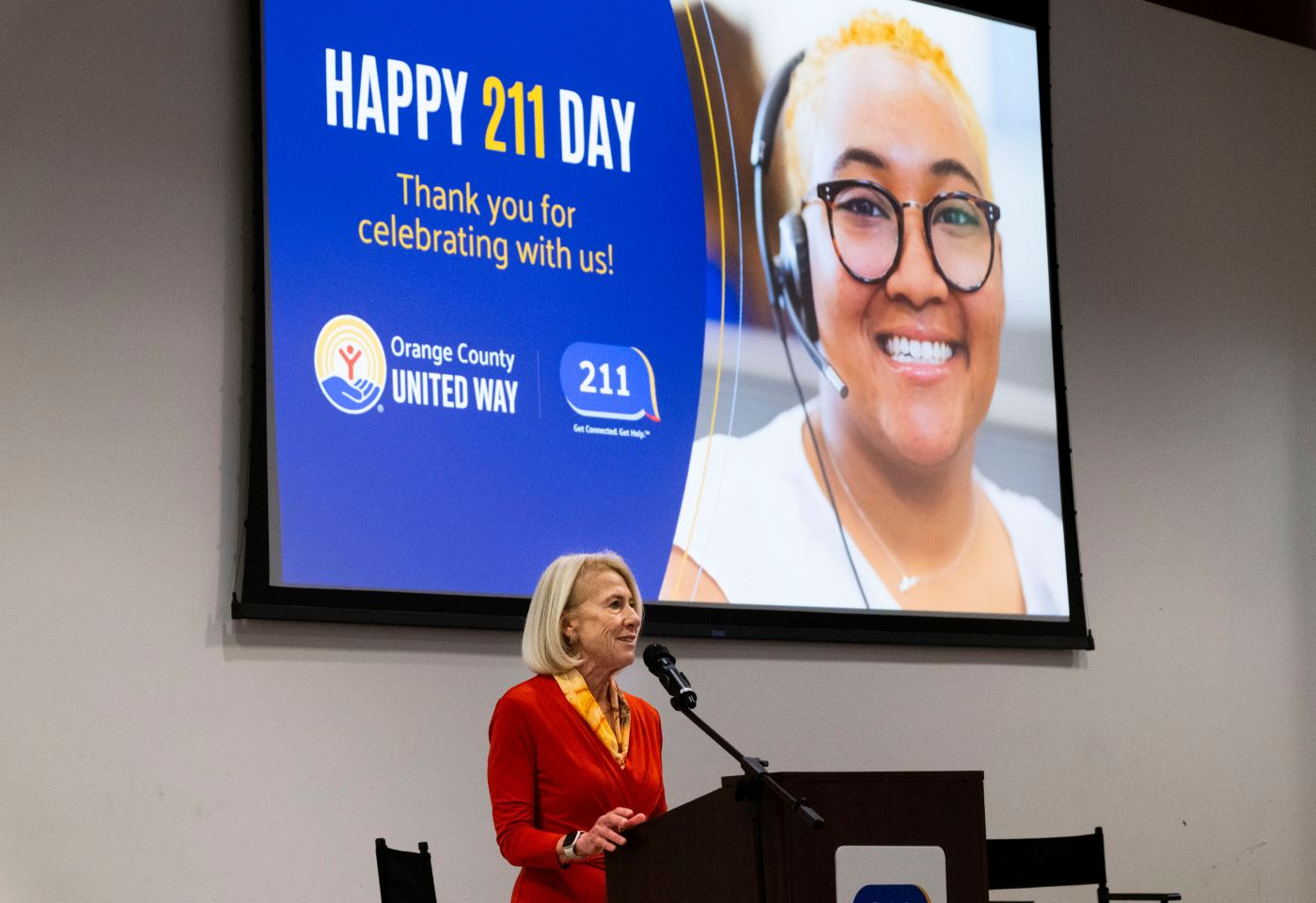
Orange County United Way, a social services nonprofit that operates 211OC, held a panel discussion on Wednesday, Feb. 11, to share what the last few years of call data reveal about residents’ needs and how community groups can better coordinate services. Several hundred nonprofit and government agency leaders attended the “Pulse of OC” event, now in its second year, at the Delhi Center in Santa Ana.
Elizabeth Andrade, the executive director of 211OC, said demand for critical services has continued to rise in both “volume and complexity,” with residents often seeking multiple resources at one time, such as both food and rental assistance.
The data is “not just about what needs are rising, it’s about how we strengthen coordinated care and how we improve outcomes together.” Andrade said. “Our goal isn’t just to track the need, it’s starting to understand coordinated care pathways and how people who get stuck across the system get unstuck.”
Housing remains “the most persistent and central need” for OC residents and accounts for roughly half of all referrals made by 211OC, according to the new report that draws on three years of call center data from November 2022 to October 2025.
Service referrals for affordable and senior housing, as well as rental assistance programs, have increased 54% since 2022, the report found.
Acute hunger is another “persistent and intensifying challenge” for residents that’s heavily influenced by housing instability and steep living costs. Referrals to food pantries, soup kitchens and other emergency programs have jumped 82% since 2022.
“Taken together, these trends point to a shift from single-need requests toward more layered, coordinated responses, as 211OC staff conduct deeper assessments and connect residents to a broader range of supports,” the report said.
Claudia Bonilla Keller, chief executive of Second Harvest Food Bank, said people have been “turning to the charitable food system ever since COVID-era benefits were sunset.” As state and federal moneys dry up, she said, food pantries that are already stretched thin will need support from the corporate and philanthropic sectors.
An Tran, director of the county’s Social Services Agency, said there’s an “institutional gap” between the cost of living and people’s ability to meet their most pressing needs.
“When faced with the reality of whether they’re going to pay for rent, utilities, or medicine that they need, food is an easy choice to give up,” Tran said.
Seniors are a particularly vulnerable group whose needs have increased dramatically, call center data revealed. Service referrals for people aged 65 and older have more than doubled in the past three years, driven by requests for food, housing assistance and community support services.
Yet, even as referrals for older adults have soared, the number of people served within the homeless system has hardly changed — a finding that reflects the “growing gap between need and available service capacity” for at-risk seniors, the data showed.
“The data tells us two things: Orange County as a whole is aging, so we expected to see those trends,” Andrade said. “We’re working on aligning specific senior services to make sure we meet the demand. Right now, support for seniors does not match the demand.”
Recent funding cuts have affected how homelessness-related services are delivered across the county, the report said. While demand for street outreach continues to rise, fewer homeless individuals are being served through available projects because funding shortages have reduced program capacity.
The findings also signal a shift in how residents are requesting help. Over the past three years, text contacts to the center have increased 63%, while call volume rose by just 8%. Web searches, though still the most common method of finding assistance, have decreased by 18%, which researchers said signals a growing preference for live interaction.
On a positive note, the report found that greater investments in prevention efforts have allowed homelessness advocates to serve more at-risk individuals before they fall into crisis.
Referrals made by 211OC have increased 62% over the past three years, up 25% from 2023 to 2024 and an additional 29% the last year — a trend that the report’s authors say indicates “sustained growth in service coordination activity.”
Keller said increased coordination between nonprofits and government agencies will be the key to bridging service gaps.
During the government shutdown in October, Keller said food pantries worked with 211OC and the county’s Social Services Agency to manage an anticipated surge in demand for free food. They kept up-to-date information about the various pantries’ opening hours and food levels so that people could be referred to locations with enough inventory.
“That kind of coordination between providers and the county, quarterbacked by 211,” Keller said, “is going to be absolutely crucial going forward for this crisis that we’re facing,”