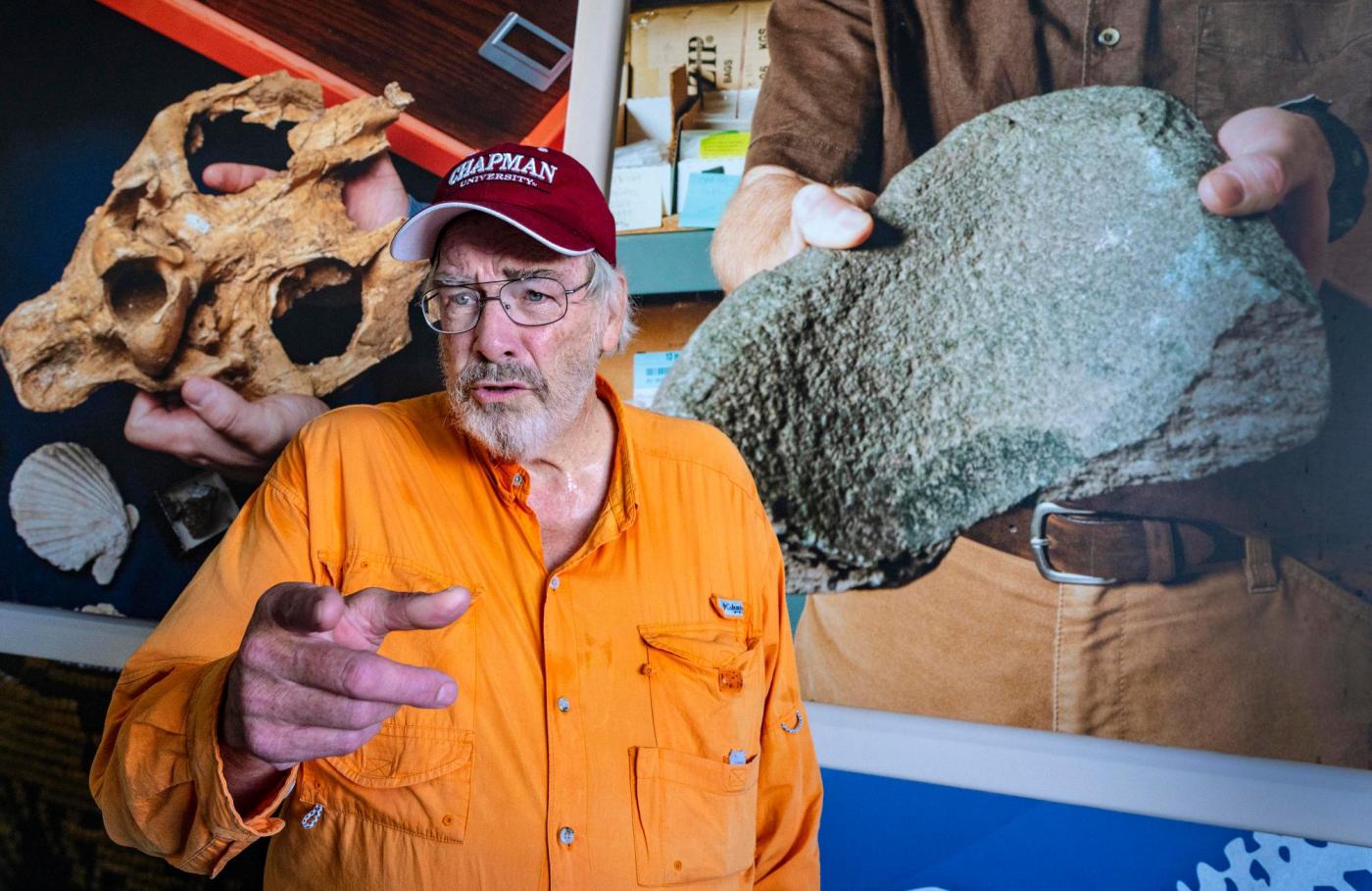
John “Jack” Horner, lecturer and famed paleontological advisor for the first five “Jurassic Park” films, is “no longer with” Chapman University, the parting following his appearance in the latest release of Epstein files.
After retiring from his 33-year tenure as regents professor of paleontology at Montana State University in Bozeman, Horner joined Chapman University in 2016, as a lecturer and presidential fellow. During his 10 years with Chapman, Horner developed the school’s dinosaur lab and led research trips to a ranch in Montana to help excavate and study fossils.
But Horner is no longer with the university, Chapman University spokesperson Robert Hitchcock said Monday, March 3, though he would not provide any information on how the parting came to be. The Chapman student paper, The Panther, first reported it on March 2.
“In keeping with standard employment practices, we cannot provide any more information beyond that,” he said.
Emails recently released by the Department of Justice indicate Horner, who inspired the “Jurassic Park” franchise’s Dr. Alan Grant, was a guest at Jeffrey Epstein’s New Mexico Zorro Ranch in 2012 and, during the visit, Horner asked Epstein for project funding while serving as a professor at MSU. It also appears he visited a second time in 2016 with a graduate student as part of a geology tour.
In a statement to a Montana TV station, Horner said “my decision to pursue him as a donor, was extremely poor judgment” and added he observed “nothing weird or suspicious” during the trip.
Back-and-forth messages in 2012 between Horner and Epstein’s assistant, Lesley Groff, that were released by the DOJ include planning and flight arrangements for visits to the Zorro Ranch for a dig for dinosaur bones, as well as thank you notes and additional information for funding requests.
“First off, many thanks for the invitation to your ranch, I had a great time, especially spending time with you and the girls, and seeing your Cretaceous sediments and the old railroad,” Horner said in a Sept. 1 email to Groff, who vowed in a response to pass the message along to Epstein.
Horner, in the same message, also thanked Epstein for his “considering of funding” for a project summit meeting; Horner attached to the email a proposal for his “DinoChicken” project summit, which he estimated to cost about $15,000.
“I very much appreciate your considering the funding of this meeting. It is obviously the most important first step, and I thank you for suggesting we do it,” Horner said, ending the message with: “Please give all the girls my very best wishes, and to you, whom I envy.”
On Sept. 19, Horner reached out to Epstein again, this time sending another proposal for the conference with a slimmed-down budget of $8,650, and later he extended to Epstein an invitation.
Epstein responded the same day: “great, check made to ???”
In an August 2012 email exchange with a redacted person, Epstein wrote, “dinosaur and fossil hunting with jack horner on the ranch, found 90 million year old clams and fossils. right up your alley.”
Horner did not respond to requests for comment sent to multiple emails and representatives attached to him.
But in a press statement to KTVQ in Montana, Horner said he was “aware that (Epstein) had previously been charged with soliciting a prostitute and had served a sentence, but I was not aware of any additional allegations or misconduct.”
“I want to make it perfectly clear that I knew nothing more than that! No amount of money in the world would have lured me to meet with a known sexual predator! I understand now that there was much more to his conviction, but that many of his other charges had been sealed.” Horner said.
“Those present besides the ranch manager and his wife included Epstein, a chef, Epstein’s secretary and four women who were introduced to me as college students, two of whom claimed to be adept in genetics. There was nothing weird, inappropriate, or out of the ordinary,” he said.
He added he regretted his “use of the term ‘girls’ in emails referring to the students, rather than using more appropriate language.”