Two meetings will be hosted this month for public input on a proposal to restore a degraded estuary in South Laguna at Aliso Creek.
Proposed by the Laguna Ocean Foundation, the project envisions restoring 9 acres of the marshy area and sand berm at the mouth of Aliso Creek, improving the link between the ocean and the nearby canyons and wildlands area.
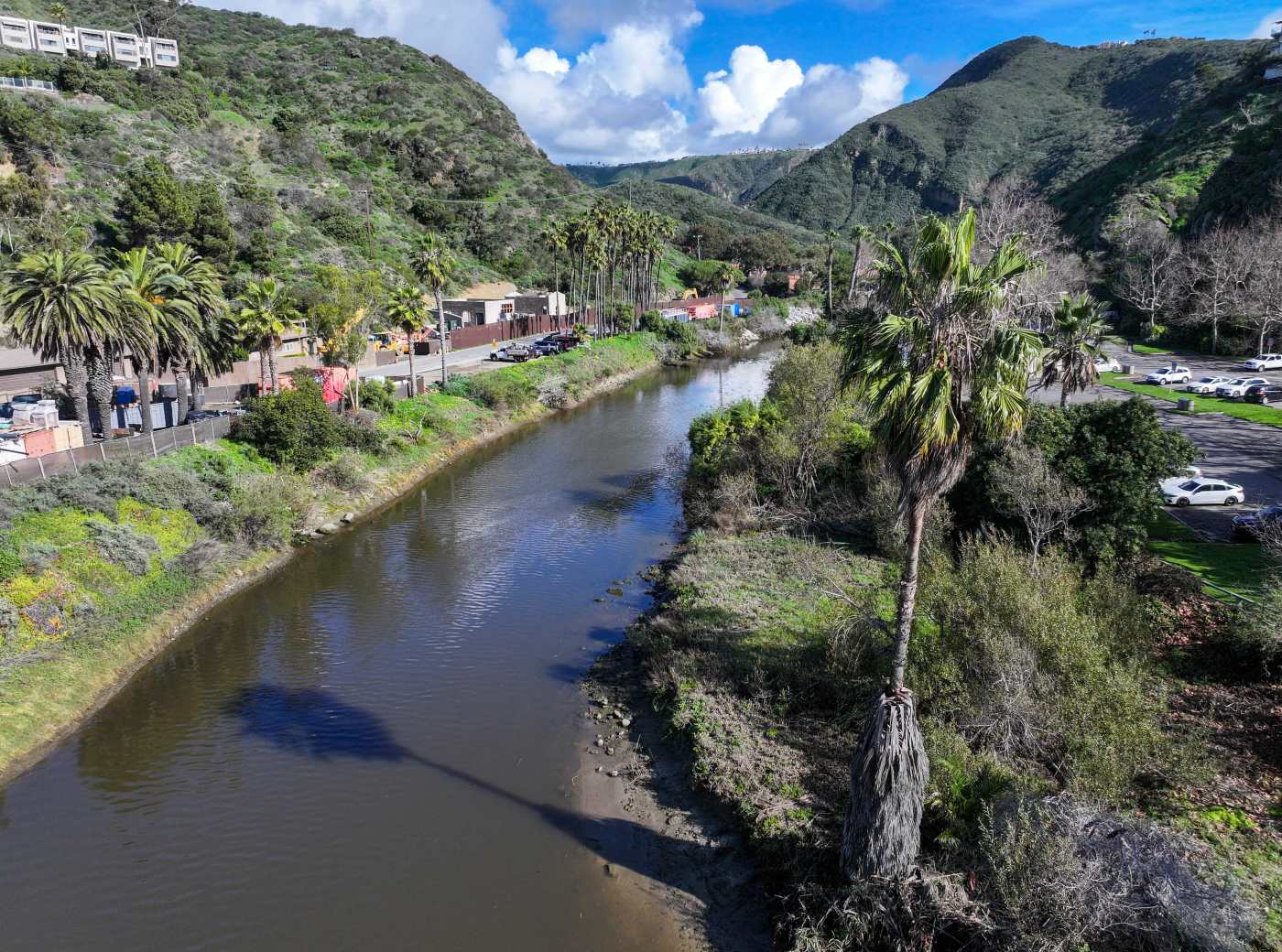
The Aliso Creek estuary where Aliso Creek north of Pacific Coast Highway right before Aliso Creek meets the Pacific Ocean in Laguna Beach, CA, on Monday, January 5, 2026. Efforts to restore the estuary are moving forward after the City Council approved plans for an environmental study that is the first step in getting the project underway. The study does not commit city officials to a final OK but gives the public a voice on questions related to the $20 million-plus project. (Photo by Jeff Gritchen, Orange County Register/SCNG)
The Aliso Creek estuary where Aliso Creek north of Pacific Coast Highway right before Aliso Creek meets the Pacific Ocean in Laguna Beach, CA, on Monday, January 5, 2026. Efforts to restore the estuary are moving forward after the City Council approved plans for an environmental study that is the first step in getting the project underway. The study does not commit city officials to a final OK but gives the public a voice on questions related to the $20 million-plus project. (Photo by Jeff Gritchen, Orange County Register/SCNG)
The Aliso Creek estuary where Aliso Creek north of Pacific Coast Highway right before Aliso Creek meets the Pacific Ocean in Laguna Beach, CA, on Monday, January 5, 2026. Efforts to restore the estuary are moving forward after the City Council approved plans for an environmental study that is the first step in getting the project underway. The study does not commit city officials to a final OK but gives the public a voice on questions related to the $20 million-plus project. (Photo by Jeff Gritchen, Orange County Register/SCNG)
The Aliso Creek estuary where Aliso Creek north of Pacific Coast Highway right before Aliso Creek meets the Pacific Ocean in Laguna Beach, CA, on Monday, January 5, 2026. Efforts to restore the estuary are moving forward after the City Council approved plans for an environmental study that is the first step in getting the project underway. The study does not commit city officials to a final OK but gives the public a voice on questions related to the $20 million-plus project. (Photo by Jeff Gritchen, Orange County Register/SCNG)
The Aliso Creek estuary where Aliso Creek north of Pacific Coast Highway right before Aliso Creek meets the Pacific Ocean in Laguna Beach, CA, on Monday, January 5, 2026. Efforts to restore the estuary are moving forward after the City Council approved plans for an environmental study that is the first step in getting the project underway. The study does not commit city officials to a final OK but gives the public a voice on questions related to the $20 million-plus project. (Photo by Jeff Gritchen, Orange County Register/SCNG)
The Aliso Creek estuary where Aliso Creek north of Pacific Coast Highway right before Aliso Creek meets the Pacific Ocean in Laguna Beach, CA, on Monday, January 5, 2026. Efforts to restore the estuary are moving forward after the City Council approved plans for an environmental study that is the first step in getting the project underway. The study does not commit city officials to a final OK but gives the public a voice on questions related to the $20 million-plus project. (Photo by Jeff Gritchen, Orange County Register/SCNG)
The Aliso Creek estuary where Aliso Creek north of Pacific Coast Highway right before Aliso Creek meets the Pacific Ocean in Laguna Beach, CA, on Monday, January 5, 2026. Efforts to restore the estuary are moving forward after the City Council approved plans for an environmental study that is the first step in getting the project underway. The study does not commit city officials to a final OK but gives the public a voice on questions related to the $20 million-plus project. (Photo by Jeff Gritchen, Orange County Register/SCNG)
The Aliso Creek estuary where Aliso Creek north of Pacific Coast Highway right before Aliso Creek meets the Pacific Ocean in Laguna Beach, CA, on Monday, January 5, 2026. Efforts to restore the estuary are moving forward after the City Council approved plans for an environmental study that is the first step in getting the project underway. The study does not commit city officials to a final OK but gives the public a voice on questions related to the $20 million-plus project. (Photo by Jeff Gritchen, Orange County Register/SCNG)
The Aliso Creek estuary where Aliso Creek north of Pacific Coast Highway right before Aliso Creek meets the Pacific Ocean in Laguna Beach, CA, on Monday, January 5, 2026. Efforts to restore the estuary are moving forward after the City Council approved plans for an environmental study that is the first step in getting the project underway. The study does not commit city officials to a final OK but gives the public a voice on questions related to the $20 million-plus project. (Photo by Jeff Gritchen, Orange County Register/SCNG)
The Aliso Creek estuary where Aliso Creek north of Pacific Coast Highway right before Aliso Creek meets the Pacific Ocean in Laguna Beach, CA, on Monday, January 5, 2026. Efforts to restore the estuary are moving forward after the City Council approved plans for an environmental study that is the first step in getting the project underway. The study does not commit city officials to a final OK but gives the public a voice on questions related to the $20 million-plus project. (Photo by Jeff Gritchen, Orange County Register/SCNG)
The Aliso Creek estuary where Aliso Creek north of Pacific Coast Highway right before Aliso Creek meets the Pacific Ocean in Laguna Beach, CA, on Monday, January 5, 2026. Efforts to restore the estuary are moving forward after the City Council approved plans for an environmental study that is the first step in getting the project underway. The study does not commit city officials to a final OK but gives the public a voice on questions related to the $20 million-plus project. (Photo by Jeff Gritchen, Orange County Register/SCNG)
The Aliso Creek estuary where Aliso Creek north of Pacific Coast Highway right before Aliso Creek meets the Pacific Ocean in Laguna Beach, CA, on Monday, January 5, 2026. Efforts to restore the estuary are moving forward after the City Council approved plans for an environmental study that is the first step in getting the project underway. The study does not commit city officials to a final OK but gives the public a voice on questions related to the $20 million-plus project. (Photo by Jeff Gritchen, Orange County Register/SCNG)
1 of 12
The Aliso Creek estuary where Aliso Creek north of Pacific Coast Highway right before Aliso Creek meets the Pacific Ocean in Laguna Beach, CA, on Monday, January 5, 2026. Efforts to restore the estuary are moving forward after the City Council approved plans for an environmental study that is the first step in getting the project underway. The study does not commit city officials to a final OK but gives the public a voice on questions related to the $20 million-plus project. (Photo by Jeff Gritchen, Orange County Register/SCNG)
Tidal wetlands such as Upper Newport Bay have an open connection to the ocean, with water filtering through freely. But the lagoons at the mouth of coastal creeks such as Aliso Creek and nearby San Mateo Creek are usually closed off from the sea by sand that builds up.
With modern development along the creek’s 35-mile watershed that starts in the foothills of the Santa Ana Mountains and drains to Aliso Beach, the area has become swamped by urban runoff. Local environmentalists have been sounding the alarm about growing pollution in the water, prompting discussions of restoring the lagoon to a healthy estuary ecosystem that supports native wetlands and wildlife.
On Jan. 9, the city will post on its website an initial summary of the topics staff think need to be studied in the EIR. Then, on Jan. 21 and 22, the public will have a chance to provide input at two meetings at City Hall on the proposed project’s viability.
Some of the topics already discussed include flooding in the area, sand movement, public access and the impact of mosquitoes.
“There’s been a tremendous amount of investment so far,” Councilmember Bob Whalen said last month when the council decided to proceed with the study. “This will give us the analysis we need. Even if we don’t do a project or a scaled-down project, it will integrate all the technical studies and peer reviews and give us options for the future.”
An environmental study “is a prerequisite of any activity there at Aliso Creek,” Whalen said, pointing out the existing degraded status of the habitat. “There are certain things we’re going to want to do to improve things there.”
In the Laguna Ocean Foundation’s proposal, the project would be divided into three phases: an estuary lagoon expansion and restoration; reducing the estuary mouth breach; and reducing dry-weather flow, which benefits water quality. The project is estimated to cost $20 million, of which a majority has been raised from grantors and donors, officials said.
The foundation’s plan includes increasing the wetlands area on the inland side of Coast Highway by removing grass and parking spaces and adding natural wetland plants. The same is proposed for the lagoon near the sandbar berm.
By removing invasive plants, the estuary’s ecosystem should be able to support tidal mudflats, salt marshes and shallow freshwater habitats that could host a wide diversity of fish and wildlife species, Ed Almanza, the foundation’s vice-chair and program manager, said.
Other amenities proposed include pedestrian loop trails, a pedestrian bridge, an ocean awareness center and playground areas.
Almanza said the area is a “tremendous natural resource of regional importance,” but with its habitat loss, it presently has little value except as a source of “polluted water.”
“This is the moment when the discourse for the public shifts gears,” Almanza said. “The (California Environmental Quality Act) process is all about describing its concerns in a public forum.”
With the council’s OK to hire the consultant, Almanza said he is confident that the city will produce an environmental report that “provides clarity on the project.”
“We’ll address impacts and multiple applications for the public to engage in the conversation,” he added.
The two public meetings are 9 to 10 a.m. on Jan. 21 and 3 to 4 p.m. on Jan. 22 at City Hall.
The city expects to have a public draft of the environmental impact report out by the end of April, and the public will then have 45 days to review it. By early August, a project plan could go to the Planning Commission for design and review.
“We’ll be able to present a project with plans,” Frimond said, “not just a concept.”