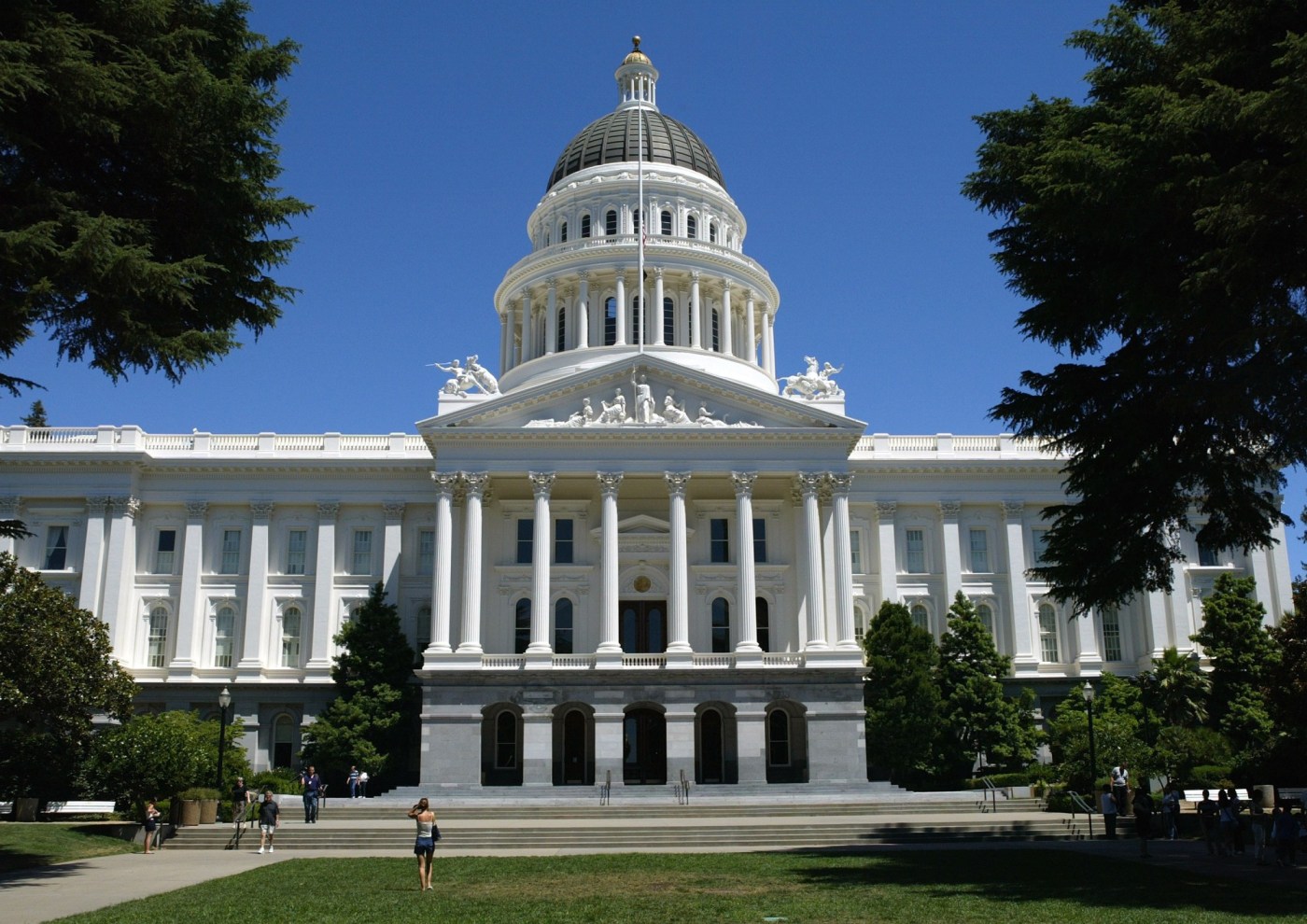
A new bill in the California Legislature aims to regulate state regulators a bit.
Sen. Tony Strickland, R-Huntington Beach, is pushing legislation that would limit the ability of state agencies and regulators to adopt unilaterally major regulations that cost $50 million or more.
State regulators — the California Air Resources Board, the Department of Insurance, and the Bureau of Gambling Control are just three examples of the more than 200 in California — are government entities that oversee, adopt or enforce rules for certain activities, professions or industries.
Senate Bill 885, the newly introduced bill from Strickland, notes state law already requires state agencies to assess the potential for adverse economic impacts when proposing to adopt, change or repeal a regulation and submit an analysis to the Department of Finance for comment should a major regulation be expected to have an impact of at least $50 million to California businesses or people.
The bill would add, however, a requirement that these agencies also submit a proposal to the legislature if an estimated impact is at least $50 million, and it would be up to lawmakers to give the final OK before the new, changed or repealed regulation could go into effect.

“Californians deserve to know who is responsible when major regulations raise costs, eliminate jobs or disrupt entire industries,” Strickland said in a statement.
“For too long, unaccountable boards and commissions have held too much power, allowing elected officials to dodge making tough votes while imposing sweeping regulations with massive economic consequences for working families,” he said.
Related: What Orange County legislators plan to address in 2026
Since the legislation was only recently introduced, it hasn’t been discussed in a committee hearing and does not yet have a bill analysis.
But a press release from Strickland’s office said the effort stems from comments Liane Randolph, then the chair of the California Air Resources Board, made during a hearing in May. (Randolph retired at the end of September.)
Randolph said then that the agency, known by the acronym CARB, calculates impacts to health and health disparities in certain communities but not the retail costs to consumers.
“Correct, we don’t analyze a retail cost,” Randolph said. “What we don’t do is take the next step to extrapolate how that cost would flow through to the consumer because in many instances that would be speculative.”
The remark angered lawmakers on both sides of the aisle at the time, and it was quickly walked back.
Randolph was asked about that remark in an August hearing by Assemblymember Laurie Davies, R-Laguna Niguel.
“We’ve always done that impact assessment,” Randolph said during that hearing, the remarks captured by CalMatters’ Digital Democracy project. “The conversation previously was about the question of retail prices, and retail prices are difficult to anticipate. However, the overall economic analysis is carefully considered in extensive economic analysis ….”
Lindsay Buckley, a spokesperson for CARB, said the agency does not comment on pending legislation. However, she pushed back again on the comments made in May.
“Former Chair Randolph specified and clarified again later in the hearing that CARB follows the full letter of the law and develops a Standardized Regulatory Impact Assessment (SRIA) for all major regulations with an economic impact exceeding $50 million,” Buckley said in an email. “This includes overall economic and fiscal impact assessments to ensure benefits outweigh costs. In addition to the state’s weekly public tracking of gas prices, costs of compliance — and benefits achieved — are transparently reported as part of regular evaluation.”
Strickland, meanwhile, said it should be up to elected officials to “be the ones accountable” for deciding whether a rule that costs Californians tens of millions of dollars should be implemented.
“SB 885 doesn’t stop regulation. It stops unaccountable regulation,” the Republican senator said.
“As an elected official, I answer directly to the people, but that’s not the case for these political appointees,” he added. “My legislation puts accountability back where it belongs: with the legislators who are elected by, and answer to, the people of California.”
CARB, which tackles air pollution and climate change, is comprised of 12 members, appointed by the governor and confirmed by the state Senate. That group includes six who serve on local air districts, four experts in fields that shape air quality rules, two public members and the chair, who serves as the only full-time member. In addition, it includes two who represent environmental justice efforts (one is appointed by the Assembly, the other by the Senate) as well as two nonvoting members for legislative oversight, one from each chamber.
In other news
• Sen. Bob Archuleta, a Democrat whose district includes Buena Park, is behind a new bill that would strengthen California’s DUI laws, particularly for repeat offenders. Archuleta’s granddaughter was killed in a car accident in 2024; the driver of the other vehicle involved in the accident was arrested, his blood alcohol content at 0.22%, the Apple Valley Police Department said. The legal blood-alcohol level limit for driving in California is .08%.
Archuleta has partnered with Orange County District Attorney Todd Spitzer on Senate Bill 907, which, among other things, increases the punishment for hit-and-runs if the driver has a prior DUI conviction within 10 years and implements penalty enhancements for repeat offenders who have prior felony DUI convictions upon a new felony DUI.
“We must strengthen California’s laws to better support law enforcement, and most importantly, we must stand with and support the families who are devastated by drunk drivers,” said Archuleta. “These are preventable tragedies, and California must step up.”
Assemblymember Cottie Petrie-Norris, D-Irvine, is a principal coauthor of the legislation. The pair had partnered on legislation extending California’s law requiring breathalyzers be installed in cars after DUI convictions last year.
• A new bill from Assemblymember Kate Sanchez, R-Rancho Santa Margarita, would allow Californians to deduct homeowners’ insurance premiums for their primary residence from their state taxable income for taxable years 2026 through 2031.
“California has become unaffordable for too many families who are doing everything right,” Sanchez said in a statement. “Between housing, gas, groceries and insurance, people are being squeezed from every direction. This bill is about keeping people in their homes, and making California liveable again.”