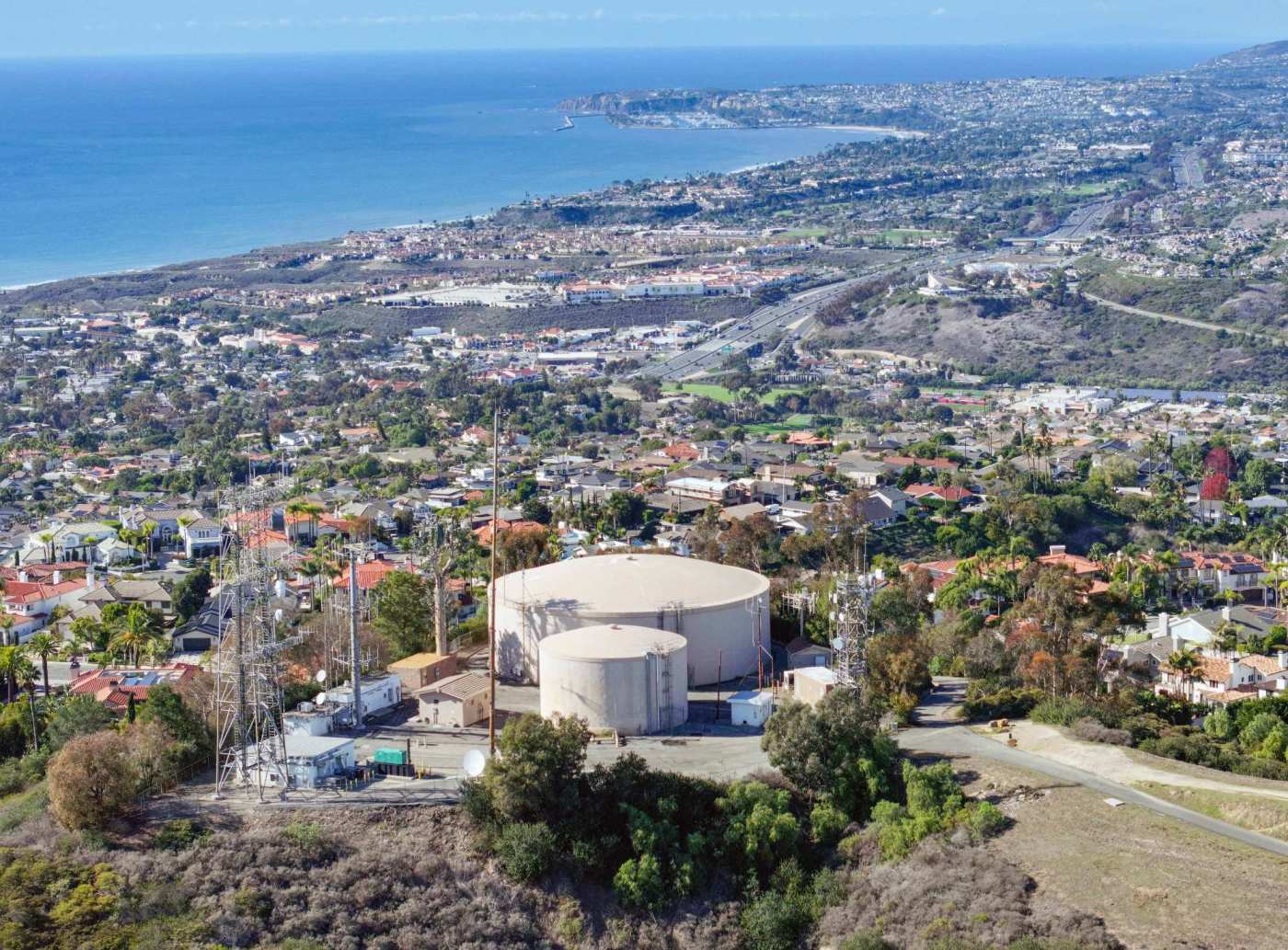
San Clemente is Orange County’s first city to partner with a federal agency on a surveillance plan to monitor beaches and ocean waters for illegal immigration activity with installed cameras.
The City Council on Tuesday, Jan. 20, agreed to the plan, a year in the making, to partner with U.S. Customs and Border Protection to get a $1 million camera and sensor monitoring system up and running on a hilltop at the Avenida Salvador Reservoir. The lease with the agency is for up to 30 years, and the camera can be deployed immediately. They are expected to be up by the end of February, officials said.
The agreement includes the city leasing a 12-by-12-foot spot on the hill to the federal agency for $10 a month, ensuring the agency has guaranteed access to the expensive equipment. The city has other lease agreements with commercial, utility, nonprofit and governmental groups for communication equipment in the same area.
The federal agency has agreed to finance and install the monitoring equipment. As part of the plan, Customs and Border Patrol will also pay for the electricity needed to run the system.
The system would be able to monitor vessel activity in the ocean off the city’s shoreline. There would also be no access by city staff or local law enforcement, officials said. However, if a vessel is observed in distress, that information could be shared with local law enforcement and first responders.
Councilmembers debated the pros and cons of the agreement, which has gone through at least three public hearings. About 21 people spoke against the lease with Customs and Border Protection, while three spoke in favor. Many who opposed the concept spoke about the invasion of their own privacy while the camera system is in use.
Councilmember Mark Enmeier agreed community’s security is important, but said he is concerned that placing the cameras on top of the hillside is too invasive of the surrounding public.
“I believe there is another path we can take that doesn’t have cameras overlooking our residents,” he said, suggesting a better collaboration with lifeguards and the Orange County Sheriff’s Department.
“I took a vow to protect the Constitution, and part of that is protecting civil liberties,” he said. “We can find a way that protects our beaches, protects our town, and protects our civil liberties. We can find a way that doesn’t put all our residents in worry and jeopardy.”
Councilmember Steve Knoblock, who initiated the idea of working with immigration officials on installing cameras a year ago, reminded the council and the public that the decision to go with the system being placed on the hillside was a way to get cameras without the city spending money.
Instead of installing multiple cameras along the shoreline, the federal agency in 2025 proposed that a spot at a higher elevation in the city could provide a superior vantage point, city officials said during the council’s previous review in November.
The system would include a base with a tower approximately 20 to 25 feet tall. Since it’s a costly endeavor, city staff said previously that the federal government would only move forward with the project if the area where the camera would be located had a 20-year lease with two five-year extensions.
In the end, Knoblock, Councilmember Victor Cabral and Mayor Rick Loeffler voted to support the lease. Councilmember Zhen Wu abstained from the vote, saying he also hoped for a different solution.
“This is not a swap for civil liberties versus privacy,” Knoblock said. “Our civil liberties do not go away just because the federal government is doing their job in a way that some of us might not like.”