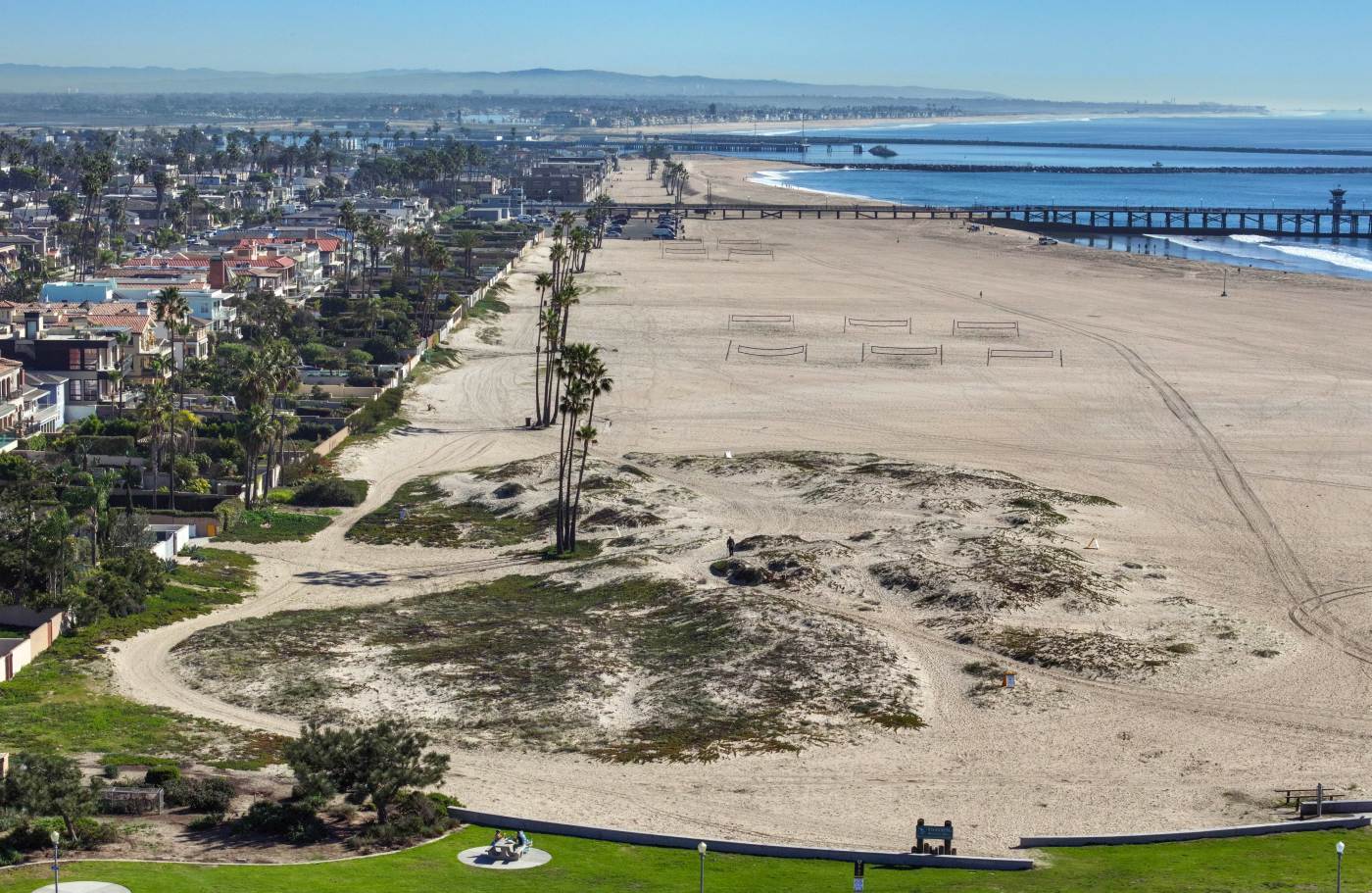
A restoration project spearheaded by the Surfrider Foundation to repair and care for coastal dunes is underway in northern Seal Beach.
The effort seeks to rebuild dunes, a nature-based solution, to help combat flooding, with the sand mounds covered with vegetation acting as a natural barrier between the sea and infrastructure. Natural dunes also create an environment where wildlife can live and thrive.


“Surfrider’s Climate Action program empowers and supports chapters and clubs to restore our coastlines and oceans, mitigating and adapting to climate change impacts and protecting coastal environments for all future generations through nature-based solutions,” Surfrider Southern California Regional Manager Michaela Coats said during a recent presentation to Seal Beach’s City Council.
The goal is to revive 2.3 acres of coastal dune between 1st and 3rd streets, at the same time engaging the local community through hands-on volunteering and restoration days, “all with the vision of strengthening Seal Beach’s natural coastal resilience and biodiversity,” Coats said.
“Healthy dunes can be a natural protector for storm surge and erosion,” Coats added, “that protects not just the coast, but the infrastructure we have built around it.”
This area is prone to flooding during big storms and high tides — a storm two years ago sent waves that soaked The Beach House restaurant.
The dunes were once common across the coastal landscape, but have nearly all disappeared as homes and buildings overtook sand space. Manhattan Beach and Santa Monica have done dune restoration projects in recent years with the help of an environmental nonprofit group, the Bay Foundation, and a project at Capistrano Beach hopes to build a dune system to help combat severe erosion troubles there.
The dunes can also play a critical role in helping native habitat and wildlife, with endangered bird species such as the Least tern and Western snowy plovers found in the native sandscape.
There have been complaints recently about foot traffic damaging vegetation, as well as e-bikes riding through and destroying the dunes. And, invasive species have been growing and need to be removed, Coats said.
The hope is to install “symbolic fencing,” with distinct walking areas that maintain pedestrian access, she said.
Surfrider is in the process of securing permits for the first phase, and if funding is acquired, it can start working with a restoration consulting company by December 2027.
“We will be installing native plants and seeding, to give native species a bit of a boost,” Coats said. “There are already many residents who are willing to support the project and bring it to life.”