The Orange County Rescue Mission helps people make fresh starts — the same philosophy behind New Story, a new onsite tattoo removal clinic at its Village of Hope in Tustin.
“People can come in here and literally have their life turned around,” Bryan Crain, the rescue mission’s CEO and president, said. “They’re writing a new story, but in many cases they still bear images of their past. Sometimes it’s a gang tattoo. Sometimes it’s branding tied to trafficking. Wouldn’t it be great if we could help people just be done with that?”
Already, 27 people have enrolled in the clinic, its official launch celebrated by the organization with an event on Thursday, Feb. 26.
The 5-acre Village of Hope provides a faith-based housing program for individuals as they transition out of homelessness. The New Story clinic now open there is fully equipped and staffed — entirely by licensed medical volunteers, including two doctors, one physician assistant and a registered nurse.
“It’s painful, but it’s worth it,” said Addy Sanchez, 29, who is currently having two tattoos removed.
Alex Torres, left, a resident at the OC Rescue Mission’s Village of Hope campus in Tustin, and a patent at the new New Story Tattoo Removal center, sits through a tattoo removal session on his finger, conducted by medical volunteers John Le and Thuy Nguyen, following a grand opening of the new facility on Thursday, February 26, 2026. (Photo by Jeff Antenore, Contributing Photographer)
The New Story Tattoo Removal center, converted from what was previously a bathroom, at the OC Rescue Mission’s Village of Hope Campus in Tustin opened to patients following a ribbon cutting ceremony on Thursday, February 26, 2026. (Photo by Jeff Antenore, Contributing Photographer)
Robert Phillips, a resident at the OC Rescue Mission’s Village of Hope campus in Tustin for the past 8 months, and a patent at the New Story Tattoo Removal center, sits through a tattoo removal session on his hands, with tattoos on his face in various stages of removal, at the new facility on Thursday, February 26, 2026. (Photo by Jeff Antenore, Contributing Photographer)
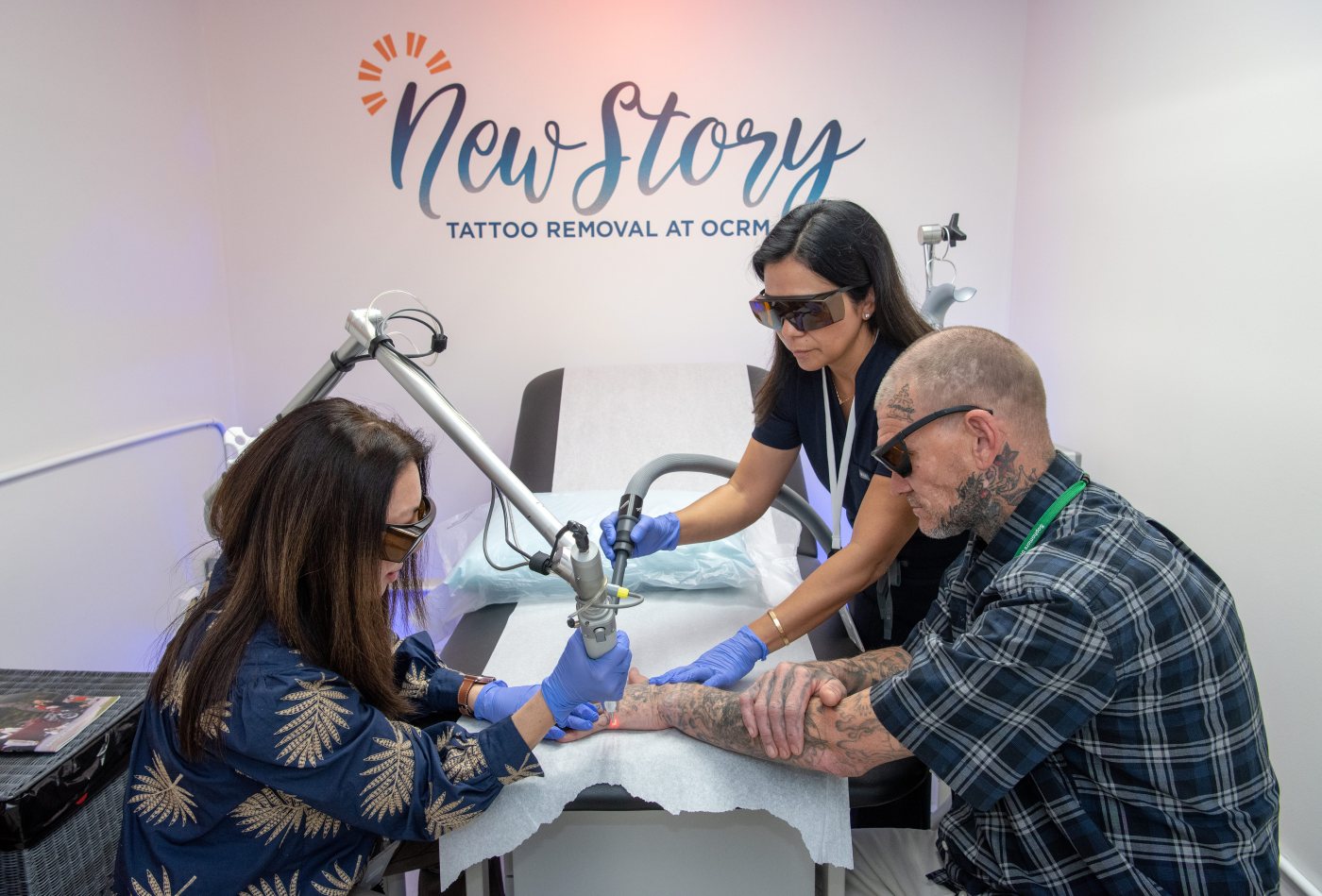
Robert Phillips, a resident at the OC Rescue Mission’s Village of Hope campus in Tustin for the past 8 months, and a patent at the New Story Tattoo Removal center, sits through a tattoo removal session on his hands, conducted by medical volunteers Thuy Nguyen, left, and Melissa Garvall, following a grand opening of the new facility on Thursday, February 26, 2026. (Photo by Jeff Antenore, Contributing Photographer)
Robert Phillips, a resident at the OC Rescue Mission’s Village of Hope campus in Tustin for the past 8 months, holds out his tattoo covered hands before the start of a removal session at the new facility on Thursday, February 26, 2026. (Photo by Jeff Antenore, Contributing Photographer)
Robert Phillips, a resident at the OC Rescue Mission’s Village of Hope campus in Tustin for the past 8 months, and a patent at the New Story Tattoo Removal center, sits through a tattoo removal session on his hands, conducted by medical volunteers Thuy Nguyen, left, and Melissa Garvall, following a grand opening of the new facility on Thursday, February 26, 2026. (Photo by Jeff Antenore, Contributing Photographer)
Robert Phillips, a resident at the OC Rescue Mission’s Village of Hope campus in Tustin for the past 8 months, holds up his tattoo covered hands following a removal session at the new facility on Thursday, February 26, 2026. Phillips said that “the pain of tattoo removal is worth it, because it’s going to help me achieve my goals.” (Photo by Jeff Antenore, Contributing Photographer)
Robert Phillips, a resident at the OC Rescue Mission’s Village of Hope campus in Tustin for the past 8 months, and a patent at the New Story Tattoo Removal center, sits through a tattoo removal session on his hands, conducted by medical volunteers Thuy Nguyen, left, and Melissa Garvall, following a grand opening of the new facility on Thursday, February 26, 2026. (Photo by Jeff Antenore, Contributing Photographer)
Addy Sanchez, a resident at the OC Rescue Mission’s Village of Hope campus in Tustin for the past 2 years, and a survivor of human trafficking, stands in front of the campus during a grand opening of the new New Story Tattoo Removal center, where Sanchez looks forward to getting tattoos removed, on Thursday, February 26, 2026. (Photo by Jeff Antenore, Contributing Photographer)
Robert Phillips, a resident at the OC Rescue Mission’s Village of Hope campus in Tustin for the past 8 months, speaks during the grand opening of the New Story Tattoo Removal center at the campus, saying that “the pain of tattoo removal is worth it, because it’s going to help me achieve my goals,” during a ribbon cutting ceremony in Tustin on Thursday, February 26, 2026. (Photo by Jeff Antenore, Contributing Photographer)
Alex Torres, left, a resident at the OC Rescue Mission’s Village of Hope campus in Tustin, and a patent at the new New Story Tattoo Removal center, sits through a tattoo removal session on his finger, conducted by medical volunteers John Le and Thuy Nguyen, following a grand opening of the new facility on Thursday, February 26, 2026. (Photo by Jeff Antenore, Contributing Photographer)
Robert Phillips, a resident at the OC Rescue Mission’s Village of Hope campus in Tustin for the past 8 months, and a patent at the New Story Tattoo Removal center, squeezes a rubber ball to help him manage pain during a tattoo removal session on his hands on Thursday, February 26, 2026. (Photo by Jeff Antenore, Contributing Photographer)
Robert Phillips, a resident at the OC Rescue Mission’s Village of Hope campus in Tustin for the past 8 months, and a patent at the New Story Tattoo Removal center, sits through a tattoo removal session on his hands, conducted by medical volunteers Thuy Nguyen, left, and Melissa Garvall, following a grand opening of the new facility on Thursday, February 26, 2026. (Photo by Jeff Antenore, Contributing Photographer)
Bryan Crain, right, the President and CEO of Orange County Rescue Mission, presents an honorary sword to John Tracy, Special Services Coordinator, who was instrumental in realizing the completion of the new New Story Tattoo Removal center at the Village of Hope campus in Tustin, during a ribbon cutting ceremony on Thursday, February 26, 2026. (Photo by Jeff Antenore, Contributing Photographer)
Robert Phillips, a resident at the OC Rescue Mission’s Village of Hope campus in Tustin for the past 8 months, and a patent at the New Story Tattoo Removal center, sits through a tattoo removal session on his hands, conducted by medical volunteers Thuy Nguyen and Melissa Garvall, following a grand opening of the new facility on Thursday, February 26, 2026. (Photo by Jeff Antenore, Contributing Photographer)
Bryan Crain, the President and CEO of Orange County Rescue Mission, welcomes guests to a grand opening of the New Story Tattoo Removal center at the Village of Hope campus in Tustin on Thursday, February 26, 2026. (Photo by Jeff Antenore, Contributing Photographer)
A collection of Orange County Rescue Mission leaders, medical volunteers and patients cut a ribbon to officially open the new New Story Tattoo Removal center at the Village of Hope campus in Tustin on Thursday, February 26, 2026. (Photo by Jeff Antenore, Contributing Photographer)
Alex Torres, a resident at the OC Rescue Mission’s Village of Hope campus in Tustin, and a patent at the new New Story Tattoo Removal center, points to a wrist tattoo on one hand, and a middle finger tattoo on the other, that he is having removed, during a session at the new facility on Thursday, February 26, 2026. (Photo by Jeff Antenore, Contributing Photographer)
1 of 18
Alex Torres, left, a resident at the OC Rescue Mission’s Village of Hope campus in Tustin, and a patent at the new New Story Tattoo Removal center, sits through a tattoo removal session on his finger, conducted by medical volunteers John Le and Thuy Nguyen, following a grand opening of the new facility on Thursday, February 26, 2026. (Photo by Jeff Antenore, Contributing Photographer)
“Those tattoos tell a story,” said Sanchez, who spent 14 years in the foster care system, “but they don’t define my story.”
Moving between placements and group homes in the system, she said, “I didn’t get a chance to be a kid. I had to grow up so fast.”
After becoming pregnant, Sanchez said she entered the rescue mission’s trafficking survivor program in 2022 while still dealing with addiction. Now a two-year resident of the program, she is in the process of removing tattoos she says represent a past she is ready to move beyond.
Sanchez said gaining full custody of her son, Jaden, now 18 months old, motivates her to “keep my feet on the ground” and give him the life she couldn’t have. She said she had previously considered getting her tattoos removed, but couldn’t afford it.
Participants in New Story include former gang members seeking to sever ties to past identities, markings that can also be a barrier to employment.
“I want my outside appearance to match my inner appearance,” said Robert Phillips, who has been in the program for eight months.
“It’s a barrier because my tattoos are carried over from prison,” he said. “People are just like, ‘Oh, he’s another gang member.’ I don’t want to be that person.”
He said his tattoos are racially and politically charged, including one on his back that he’s working to remove. Like Sanchez, Phillips credited fatherhood and his love for his 8-month-old daughter, Reagan, for driving his dedication to completing the program.
“I realized I was the problem. I had to fix myself. If I didn’t do that, I would just go right back out there,” he said. “If this place has it to offer, I’m getting it. This place has really done a lot for me.”
The rescue mission also helps participants address sobriety and offers supportive services for residents who want to continue their education, navigate legal barriers such as record expungement, and secure stable employment.